Clear Sky Science · en
The role of multi-level policy interactions in the formation of new environmental firms: evidence from the Yangtze River Delta in China
Why new green businesses do not grow on their own
Across the world, governments hope that new green companies will clean up pollution while keeping economies humming. Yet these firms rarely appear just because markets demand them. This study looks at the Yangtze River Delta in China, one of the country’s richest industrial regions, to ask a simple question: how do different layers of government policy, from provinces down to cities, help or hinder the birth of environmental businesses?
Policies from many layers of government
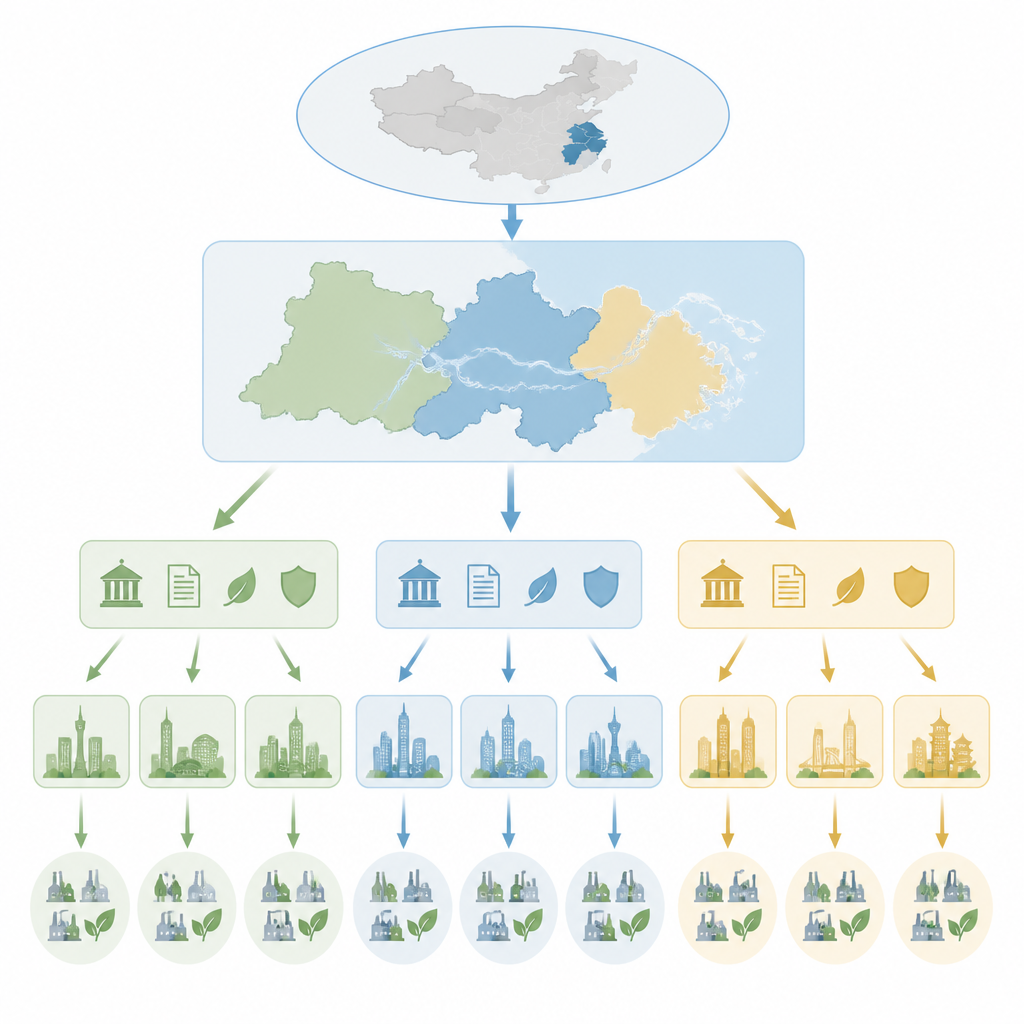
In the Yangtze River Delta, national leaders, provincial governments and city authorities all issue plans and rules related to green development. Some policies focus on helping industries grow through funding, land use and support programs. Others tighten environmental standards and raise the cost of pollution. The authors call the first group industrial policies and the second environmental policies. They argue that what truly matters for new green firms is not just the big goals written in these documents, but the concrete tools and actions that local governments put in place.
Tracking policies with data tools
To study this, the researchers collected about 380 official planning documents from provinces and cities in the Yangtze River Delta between 2010 and 2020. Using text mining, they picked out key words and phrases that reveal policy goals, tools, target sectors, time frames and more. They built a Policy Modelling Consistency index, based on 51 simple yes-or-no checks, to summarize how detailed and coherent each policy package is. They then linked these scores to company records, focusing on how many new environmental firms appeared each year compared with the number already in business in each city.
When upper and lower levels do not match
The study distinguishes vertical interactions, between provinces and their cities, from horizontal interactions, among cities at the same level. Ideally, a strong regional plan should line up with city actions, and neighboring cities should avoid wasteful competition. In reality, misalignment is common. Sometimes city governments do less than higher level plans suggest because they lack money or prefer short term growth. Other times they do more, pushing policies aggressively in a race for promotion or investment. The authors find that some extra effort by cities on industrial support can help local green startups, but large gaps between provincial and city policies eventually hold firm creation back.
Supportive industry tools beat strict pollution rules
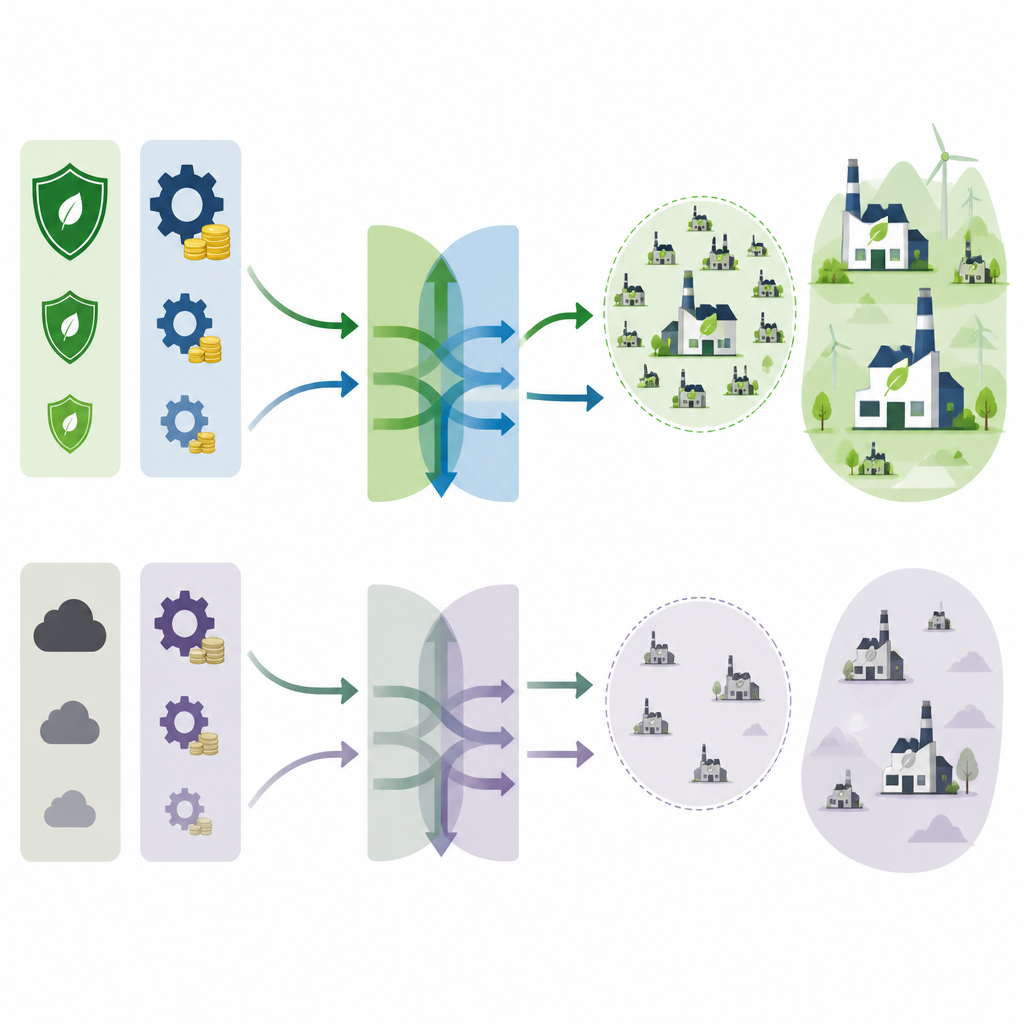
One striking finding is that industrial policies, which offer forward pull through support programs, matter more for new environmental firms than environmental policies, which create backward push by raising pollution costs. Detailed tools such as finance, land access and project support are closely tied to higher startup rates, while broad green slogans or distant goals have little effect. Strict environmental rules do not always lead polluting companies to hire environmental service providers; they may instead shut down or move. The impact of both kinds of policy also depends on place and time, differing between richer core cities and less developed peripheral cities, and between earlier and later five year planning periods.
Why coordination counts for smaller cities
The authors show that poorer or peripheral cities benefit especially from active policy interactions rather than from heavy handed support alone. Where these cities align their industrial policies with provincial directions and coordinate with neighbors, they are better able to tap shared resources and attract green entrepreneurs. In contrast, when cities simply copy each other’s measures or ignore regional plans, they fall into costly competition without much gain in new firms. Over time, the push to meet growth and environmental targets has reinforced vertical control, while horizontal cooperation has lagged behind.
What this means for greener growth
For a general reader, the takeaway is that new environmental firms in China’s Yangtze River Delta grow less from slogans about green development and more from the nuts and bolts of policy design. Concrete tools that support young firms, combined with sensible coordination between higher and lower levels of government, are more reliable drivers of green business formation than relying on strict pollution rules alone. For smaller and poorer places, learning to plug into wider regional strategies and work with neighbors may matter more than simply asking for stronger subsidies or tougher standards.
Citation: Li, Y., Mao, X. & Shen, T. The role of multi-level policy interactions in the formation of new environmental firms: evidence from the Yangtze River Delta in China. Humanit Soc Sci Commun 13, 721 (2026). https://doi.org/10.1057/s41599-026-07123-0
Keywords: environmental firms, industrial policy, environmental regulation, Yangtze River Delta, regional governance