Clear Sky Science · en
Awareness and concerns of ethnic subcultures regarding their mother tongue, identity and culture: the case of Circassians in Turkey
Why this story matters
Across the world, families who migrated generations ago are still wrestling with the same question: how do you fit into a new country without losing who you are? This study looks closely at one such community—the Circassians living in Antalya, Turkey—to understand how they hold on to their language, customs, and sense of self while also becoming part of Turkish society. Their experiences shed light on the wider challenge of living together peacefully in multicultural countries.
A people between two homes
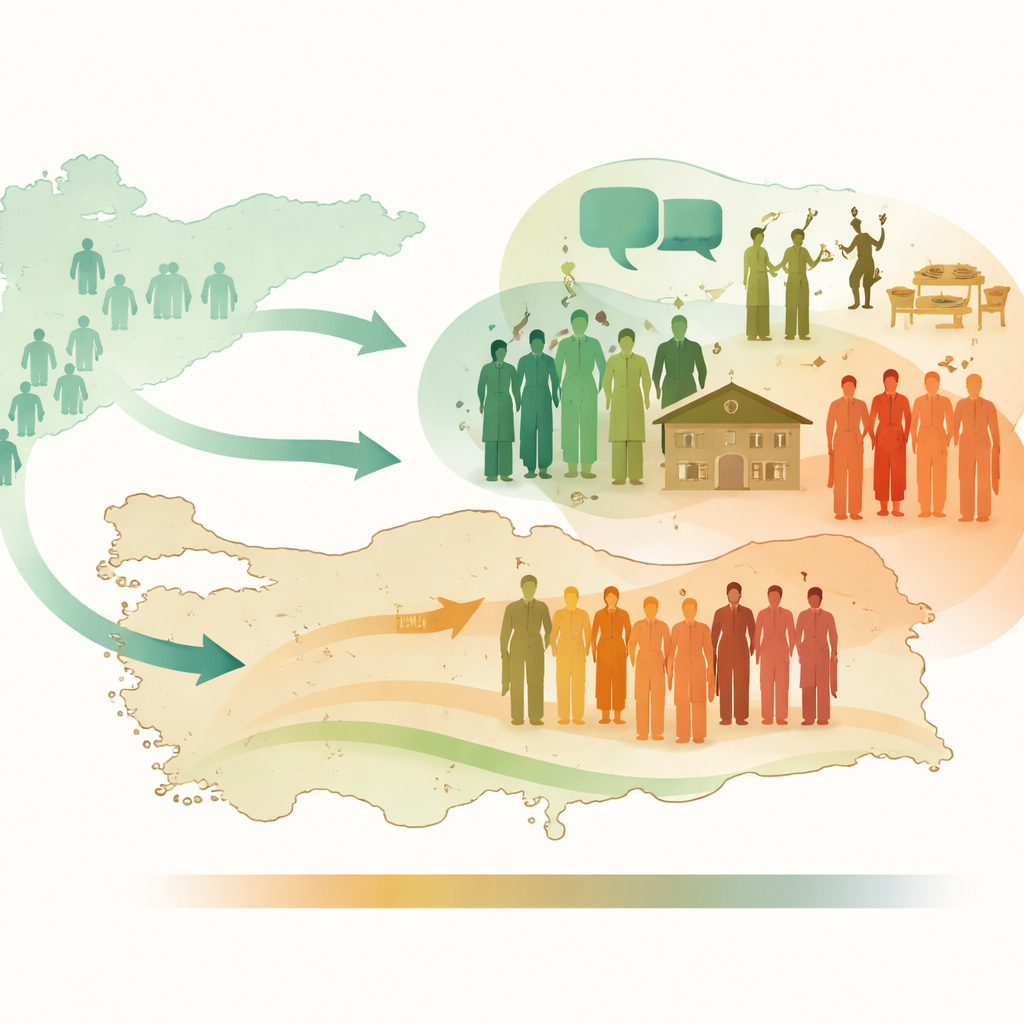
The Circassians originally come from the Caucasus region but were pushed into exile in the nineteenth century, with many settling in what is now Turkey. In Antalya, they have built villages, families, and community organizations over more than a century. Yet many Circassians still feel a deep emotional tie to their ancestral homeland alongside a strong attachment to Turkey. Interviewed villagers described themselves in blended ways—such as Turkish citizens of Circassian origin—and proudly display both Turkish and Circassian flags in their homes. This dual sense of belonging captures the heart of the study: how to be fully at home in one country while honoring roots in another.
Daily life, customs, and quiet worries
Researchers conducted in-depth interviews and observations with 20 Circassian men and women from different ages and professions in two Antalya villages. They found that awareness of Circassian culture is very strong. Family life is guided by respect for elders, shared decision-making, and a powerful moral code known as Xabze, which emphasizes responsibility, hospitality, and social harmony. Weddings, dances, music, special foods, and commemorations—especially the annual remembrance of the 1864 exile—remain central to community life. At the same time, participants voiced a shared anxiety: they fear that these customs, though still vivid today, may fade with younger generations who grow up more fully immersed in mainstream Turkish culture.
The fragile thread of language
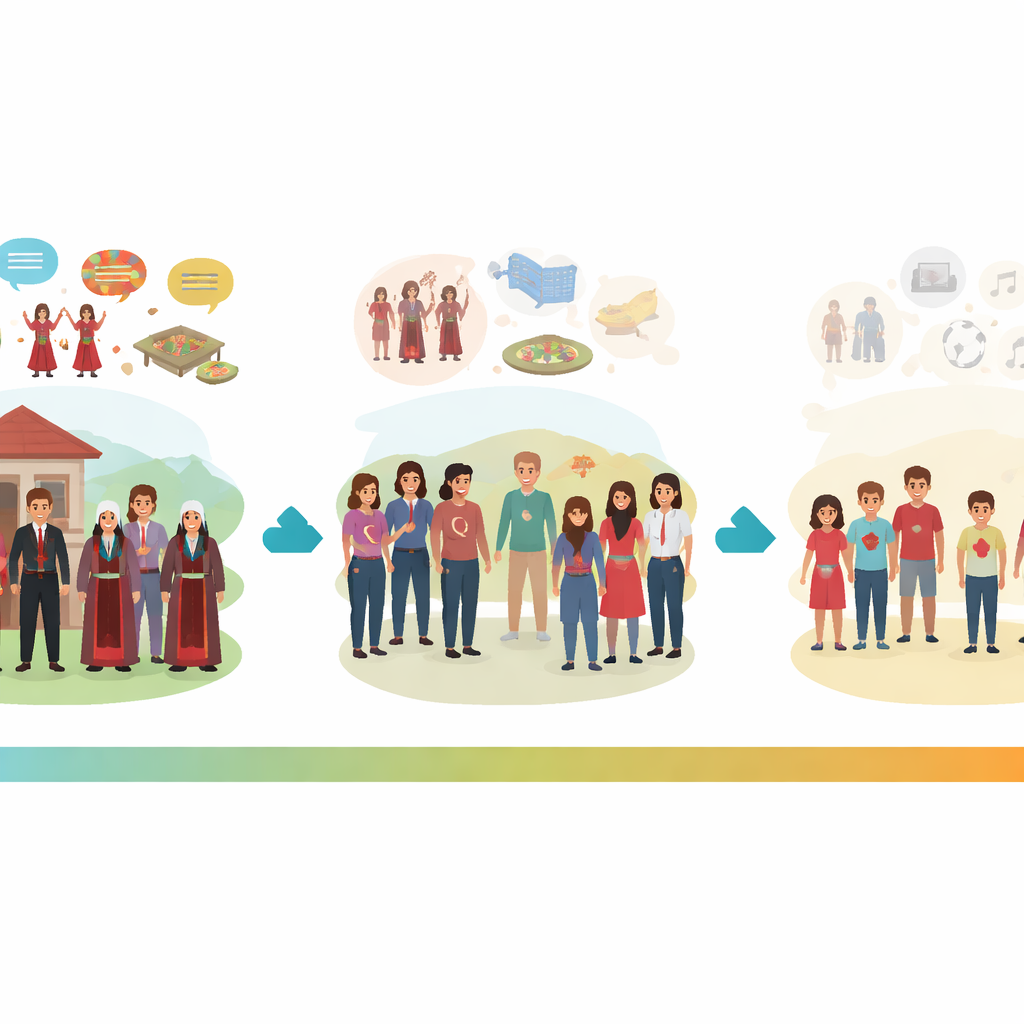
The clearest point of concern is the Circassian language itself. Older villagers, especially those over 60, usually speak it fluently. People in middle age often understand it but rely more on Turkish, while many young people know only a few words or none at all. Within families, elders may speak Circassian to each other but switch to Turkish with children, who find it easier and more natural. Strikingly, some participants still called Circassian their “mother tongue” even though they barely speak it, revealing a strong symbolic attachment to the language as a core part of identity. This pattern mirrors broader global trends, where minority languages are cherished in principle but used less in everyday life.
Living together without disappearing
Despite these worries, the study shows that Circassians are not withdrawing from Turkish society; they are deeply engaged in it. They serve in public roles, take part in national institutions such as the military, and participate in local festivals and civic life. Community associations, culture houses, youth camps, and culinary events help keep traditions visible while also inviting non-Circassians to experience them. The researchers argue that when local governments and public institutions treat such cultural expressions as a shared richness—by including Circassian music, dance, and food in public events or supporting language courses—they can both ease minority anxieties and strengthen social cohesion.
What this tells us about shared futures
In plain terms, the study concludes that Circassians in Antalya are successfully balancing two lives: they adapt to Turkish language and customs while striving to keep their own heritage alive. Their main fear is not rejection today but slow loss tomorrow—especially of their language and the unwritten moral code that binds their community. The authors suggest that peaceful coexistence requires effort from all sides. Minority groups must respect the laws and common life of the countries they live in, while states and majorities must see cultural differences not as threats but as assets. Policies and everyday practices that open space for minority languages and traditions can transform potential tensions into mutual enrichment, offering lessons for many other societies shaped by migration.
Citation: Şimşek, P., Demirkaya, H. Awareness and concerns of ethnic subcultures regarding their mother tongue, identity and culture: the case of Circassians in Turkey. Humanit Soc Sci Commun 13, 409 (2026). https://doi.org/10.1057/s41599-026-06971-0
Keywords: Circassians, mother tongue, cultural identity, migration, multiculturalism