Clear Sky Science · en
The influence of spirituality on perceived role of ethics and social responsibility: Pakistan versus China
Why this question matters
When managers make choices about profit, pollution, or fair pay, they draw not only on laws and company rules but also on their inner beliefs about right and wrong. This study asks whether spirituality, broadly understood as a sense of connection to something higher and meaningful, actually nudges businesspeople toward caring more about ethics and social responsibility. By comparing Pakistan and China, two neighbors with very different religious and political traditions, the researchers show how the same inner drive can play out differently across cultures.

How companies think about doing the right thing
The authors focus on a well known idea in business research called the perceived role of ethics and social responsibility, or PRESOR. It captures how strongly a person believes that ethics and concern for society matter when running a company. People with a narrow view see the firm’s main duty as making money for owners, as long as it stays within the law. Those with a broader view think companies also owe something to workers, communities, and the environment, and that caring about these groups can support long term success. Earlier studies linked spirituality to stronger support for this broader view, but the results were mixed and came mostly from Western countries.
Different paths to spiritual life in Pakistan and China
Pakistan and China offer a natural test of how culture shapes spirituality and business values. In Pakistan, where most people are Muslim, spiritual life is closely tied to religious teaching. Ideas such as charity, fairness in trade, and responsibility to the poor are built into everyday moral education and business advice. In China, by contrast, official life is largely secular. Many people draw on Confucian, Taoist, or Buddhist ideas that stress harmony, self cultivation, and social order rather than a personal relationship with a divine power. Both settings value moral behavior, but the sources and language of that morality differ sharply.
What the survey of managers revealed
To see how these differences play out in practice, the researchers surveyed 317 working managers enrolled in part time MBA programs in both countries. Participants rated how important spirituality was in their lives and how strongly they supported various views about business ethics and social responsibility. Overall, spirituality and PRESOR scores were high in both countries, but the details varied: responses showed that Chinese managers, on average, voiced stronger support for ethics and social responsibility in business than Pakistani managers. At the same time, the nature of spirituality itself differed across the two settings, reflecting their distinct religious and cultural backgrounds.
When spirituality helps ethics and when it does not
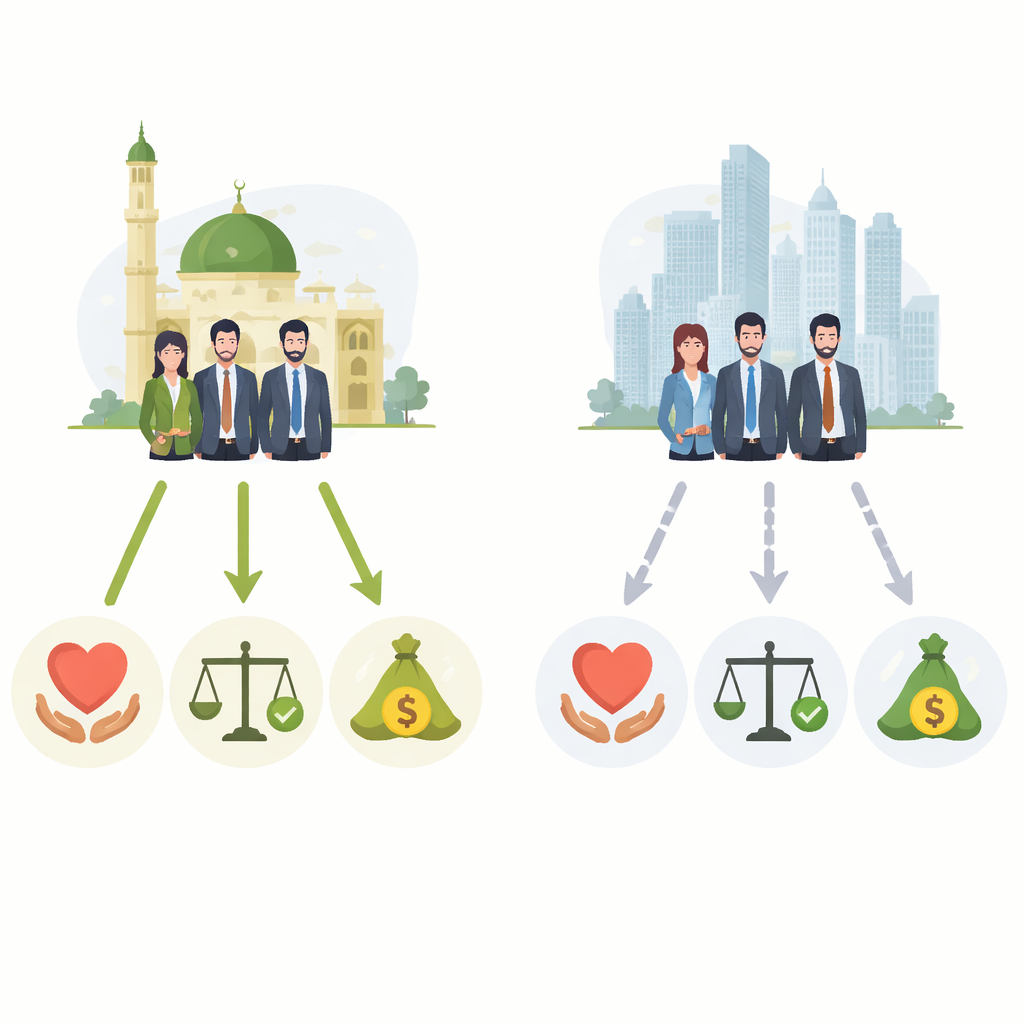
The key question was whether more spiritual managers were also more likely to see ethics and social responsibility as central to business success. When the researchers analyzed all responses together, they found a clear positive link: higher spirituality went hand in hand with stronger support for ethical and socially responsible business. But when they separated the data by country, a striking contrast appeared. In Pakistan, spirituality clearly predicted stronger PRESOR scores, suggesting that spiritually inclined managers were more likely to back fair, community oriented business practices. In China, the relationship was weak and not statistically meaningful, indicating that other forces such as political ideals, workplace norms, or secular philosophies may shape views on responsibility more than personal spirituality.
What this means for business and society
For readers, the main takeaway is that spirituality does not have a single, universal effect on business ethics. In Pakistan, where spiritual life is closely woven into religious teachings about charity, justice, and accountability, it seems to push managers toward supporting social responsibility in companies. In China, where spirituality is more varied and often less tied to formal religion, it does not reliably predict whether managers will favor ethical or purely profit focused decisions. The study shows that inner beliefs can support responsible business behavior, but only in ways that make sense within each country’s broader moral and cultural story.
Citation: Chen, Z., Chen, S., Shao, Q. et al. The influence of spirituality on perceived role of ethics and social responsibility: Pakistan versus China. Humanit Soc Sci Commun 13, 596 (2026). https://doi.org/10.1057/s41599-026-06831-x
Keywords: spirituality, business ethics, corporate social responsibility, Pakistan, China