Clear Sky Science · en
Evolution and proximity analysis of oil and natural gas trade networks among the Belt and Road Initiative countries
Why these energy links matter
Oil and natural gas do far more than fuel cars or heat homes. They knit countries together through a dense web of trade that shapes prices at the pump, the reliability of winter heating, and even the course of international politics. This paper looks at how oil and gas move among 65 countries involved in the Belt and Road Initiative (BRI), a broad cooperation framework stretching from East Asia to Europe and Africa. By treating trade as a network of connections rather than a set of isolated deals, the authors show who really holds influence, how robust these energy links are to crises, and what kinds of partnerships make trade more secure.
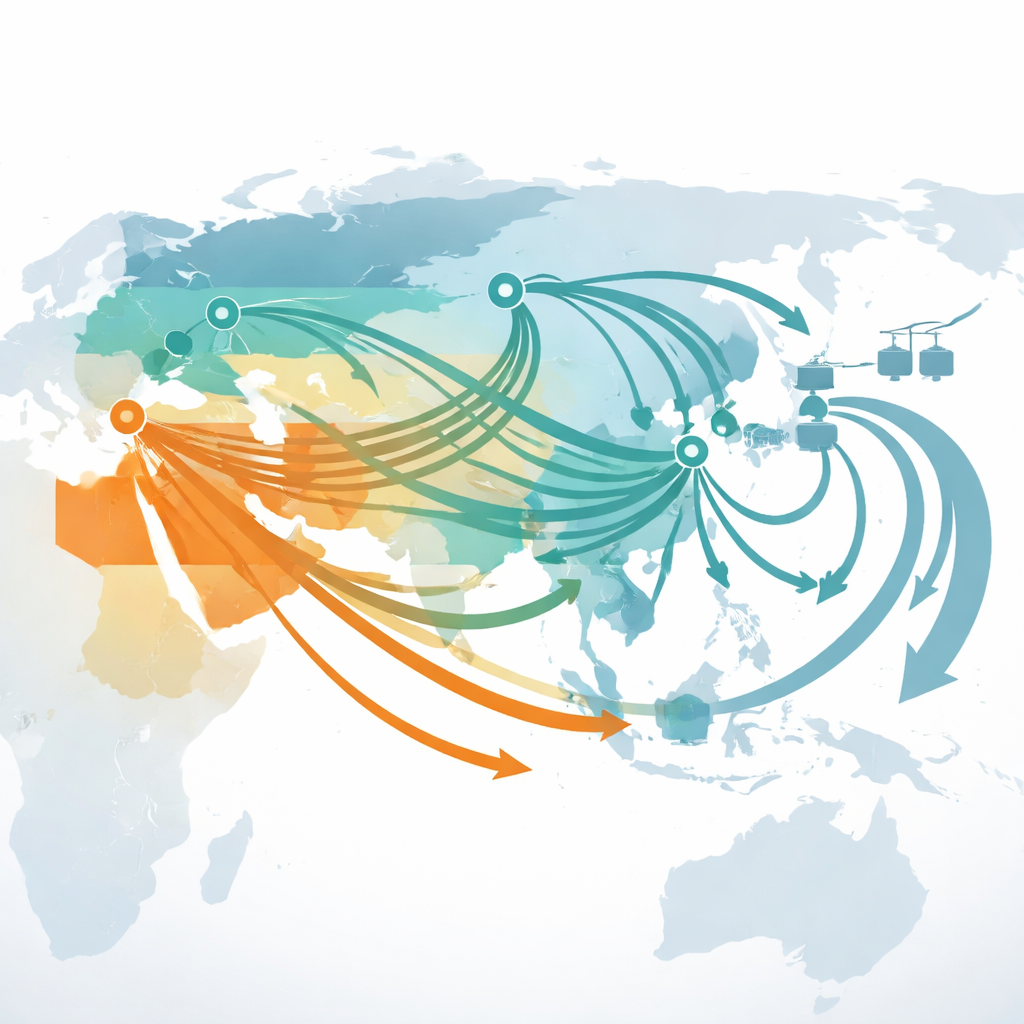
Mapping the web of energy flows
The researchers view each BRI country as a node in a network, with oil or gas shipments represented as weighted, one-way links between them. Using data from 2009 to 2018, they calculate how dense and interconnected these webs have become, how many alternative paths exist, and how far any one country is from another in trade terms. They also group countries into “communities” that trade more intensely with each other than with outsiders, revealing regional blocs and shifting alliances. This network lens highlights patterns that simple import–export tables would miss, such as how a small set of countries can quietly dominate flows across the entire region.
Oil as an old highway, gas as a growing side road
Both oil and gas trade networks have thickened over time, but not equally. Oil trade among BRI countries is more widespread, better connected, and easier to reroute than gas. Oil flows follow a stable pattern: a pair of export hubs, mainly Russia and Saudi Arabia, serve three big import centers in China, India, and Singapore. Gas trade, by contrast, is more uneven and volatile. Early on, Russia towered over gas exports, but by the mid‑2010s Qatar rose to become a co‑hub, and China emerged as the single dominant gas importer. The result is a “rich club” structure in both fuels: a small group of exporters and importers controls the vast majority of trade, leaving many smaller countries dependent on a few powerful partners.
Blocs, shocks, and weak spots
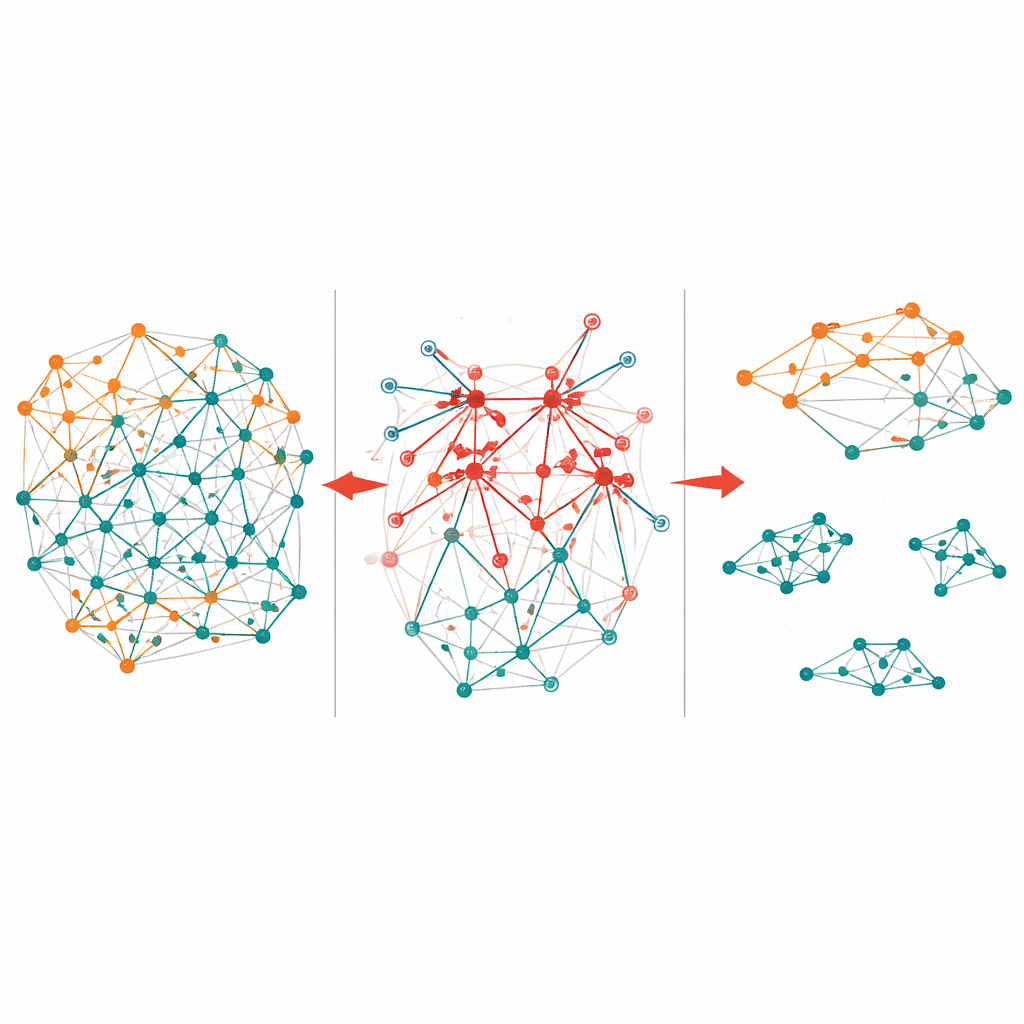
When the authors cluster countries by their trade ties, oil divides into four stable regional groups, while gas splits into six groups that shift markedly over time. Political upheavals, sanctions, and changes in energy strategy—such as Syria’s loss of European oil customers or China’s turn toward cleaner gas—show up clearly as countries switch blocs. To test resilience, the authors simulate two types of disruptions: random shocks, like natural disasters, and targeted attacks on the most central traders, akin to wars or sanctions on key suppliers. Both oil and gas networks cope well with random losses but prove highly vulnerable when core countries are removed. Oil, however, holds together longer and retains more of its ability to move energy around, while the gas network fragments quickly, mirroring its reliance on fixed pipelines and long‑term contracts.
What brings countries closer—or pushes them apart
Beyond geography, the study asks why some country pairs trade heavily while others do not. Using an extended “gravity” model of trade, the authors evaluate several kinds of closeness: economic (similar income levels), geographic (distance between capitals), cultural (shared language or colonial ties), institutional (similar quality of governance), and organizational (membership in the same energy‑related clubs and treaties). Surprisingly, being physically closer does not boost oil or gas trade within the BRI; in fact, longer distances often coincide with larger flows, reflecting the pull of large, distant resource deposits rather than nearby neighbors. Cultural and organizational closeness, however, strongly encourage trade in both fuels by lowering communication and trust barriers. Economic similarity helps oil trade but not gas, while similar governance systems matter more for gas, whose projects demand stable, rule‑bound, long‑term cooperation.
What this means for everyday energy security
For non‑specialists, the core message is that the BRI’s oil and gas systems are tightly knit but fragile in uneven ways. Oil travels through a mature, relatively robust network where multiple routes and partners can cushion shocks, though concentrated dependence on a few hubs still poses risks. Gas flows through a more fragmented and sensitive network, where troubles in a small set of countries or pipelines can quickly ripple outward. Because cultural affinity, shared institutions, and joint membership in energy organizations consistently support trade, the authors recommend a DURC policy approach: diversify suppliers and routes, build coordinated alliances among importers and producers, strengthen common rules and dispute‑resolution systems, and invest in cross‑border pipelines, terminals, and storage. Such steps, they argue, are essential to keep homes warm and economies running in a world where politics and energy are ever more tightly intertwined.
Citation: Yang, W., Shi, W. & Guo, W. Evolution and proximity analysis of oil and natural gas trade networks among the Belt and Road Initiative countries. Humanit Soc Sci Commun 13, 446 (2026). https://doi.org/10.1057/s41599-026-06806-y
Keywords: energy trade networks, Belt and Road Initiative, oil and gas security, geopolitics of energy, network resilience