Clear Sky Science · en
Does the venture philanthropy of community service enhance older adults’ service accessibility?—Evidence from China
Why this story about aging and care matters
As people live longer, families and governments everywhere are struggling with a simple question: who will help older adults with daily life when they can no longer manage alone? This article looks at one bold answer tried in China—using business-style philanthropy to build community services—and asks whether it actually makes it easier for older people to get the help they need, and whether it does so fairly.
A new way to fund help close to home
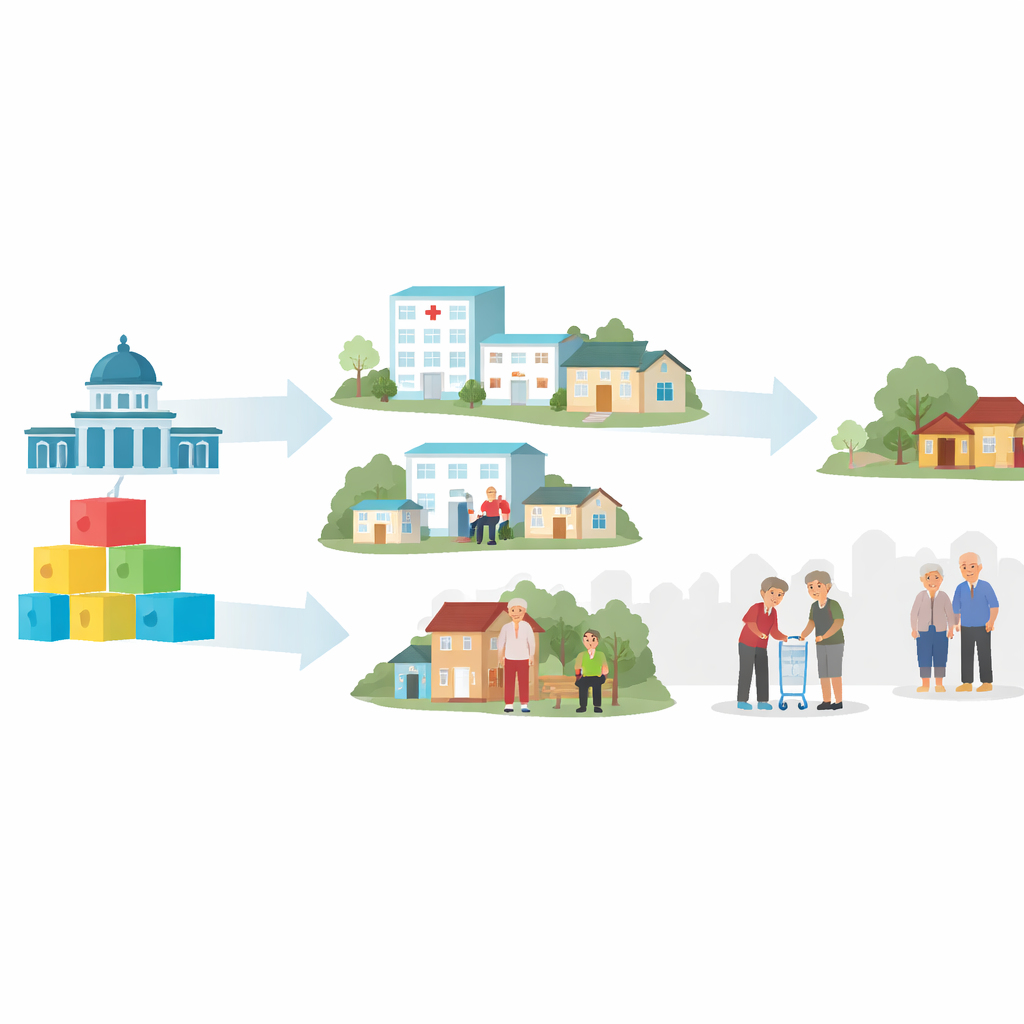
China, like many countries, wants more care to be provided in people’s homes and neighborhoods rather than in institutions. To speed this up, local governments began using a model called venture philanthropy. Instead of running all services themselves, officials invite non-profit and private groups to propose projects, then support selected groups with money, tax breaks, training, and networking. The hope is that these “social enterprises” will create a lively market for home and community-based services, from basic daily help and home visits by health workers to social activities and legal advice. This approach is meant to combine the energy of the market with the social goals of government.
Tracking real lives over time
To see if this experiment worked, the authors combined two large sources of information. One is a national long-term survey that has followed tens of thousands of Chinese people aged 60 and over across many years, asking what kinds of community services they would like and whether those services are actually available where they live. From this, the researchers created a simple measure of “unmet needs”: when an older person says they want a type of service but cannot get it in their community. The second source is an original dataset the authors built that records when each province in China started venture philanthropy projects targeting community services.
Testing cause and effect, not just coincidence
The key challenge is to show that changes in unmet needs are really linked to venture philanthropy, and not just to other shifts in society. To tackle this, the authors used a quasi-experimental design often applied in economics. They compared older adults living in provinces that launched these projects with those in provinces that did not, before and after the start dates. By accounting for personal characteristics, time trends, and fixed differences between regions, they estimated how much unmet need changed specifically after venture philanthropy began. They also ran multiple checks—such as pretending the policy started earlier than it did, or looking at groups unlikely to be affected, like people already in nursing homes—to make sure the results were not due to chance.
More services overall, but not for everyone
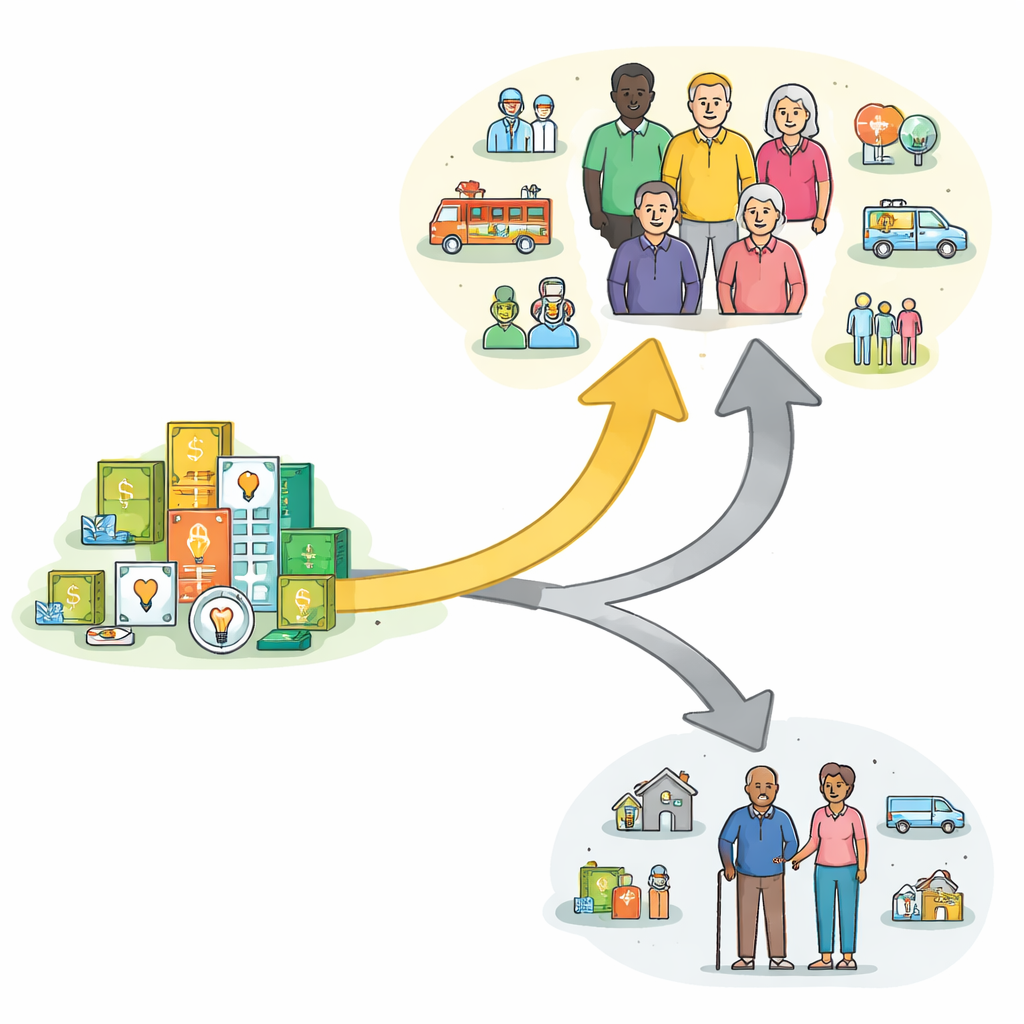
The study finds that, on average, venture philanthropy does what its champions hoped: it reduces unmet needs for community services among older adults. In simple terms, once these projects get going in a province, more older people can actually obtain the help they say they want. The effect is not huge but is consistent across different statistical approaches. The picture changes, however, when the authors look more closely at who benefits. Older people with higher household incomes see clear gains: their unmet needs fall. By contrast, those in the bottom 5 to 10 percent of the income distribution show little or no improvement, and in some analyses their unmet needs may even rise slightly. Similar patterns appear across places. Rural older adults, who often have fewer alternatives to community services, seem to gain more than their urban peers overall. Yet within rural areas, better-off households again benefit more than those living in deep poverty, even after national poverty reduction campaigns draw more providers into the countryside.
What this means for aging societies
For readers interested in how to care for aging populations, this study offers a mixed verdict. Market-style tools like venture philanthropy can be powerful engines for expanding services: they help get more providers into communities and reduce the gap between what older adults want and what they can find, especially where basic services were lacking. But left on their own, these tools tend to favor those who already have some advantages—higher incomes, better local options, or stronger communities. The authors argue that policymakers should not abandon market approaches, but should pair them with targeted public measures that directly support low-income and otherwise disadvantaged older people. In their view, the most promising path is a “dual track” system that keeps using venture philanthropy to boost overall supply, while adding special projects, subsidies, and technology-enabled solutions focused on those most at risk of being left behind.
Citation: Li, H., Liu, H. Does the venture philanthropy of community service enhance older adults’ service accessibility?—Evidence from China. Humanit Soc Sci Commun 13, 450 (2026). https://doi.org/10.1057/s41599-026-06795-y
Keywords: aging and community care, venture philanthropy, China social policy, marketization of eldercare, health equity for older adults