Clear Sky Science · en
The sweet side of stress: food craving sex disparities among elite soccer players
When Pressure on the Field Reaches the Dinner Table
Elite soccer might look like a story of strength, speed, and skill, but there is a quieter battle going on off the field: what and how players eat when they are under pressure. This study looks at how competitive stress is linked to intense food desires—known as cravings—in top-level male and female soccer players. The researchers were especially interested in women’s teams, who are often left out of sports nutrition research, to see whether stressful matches might push them more strongly toward certain comfort foods, particularly sweets.
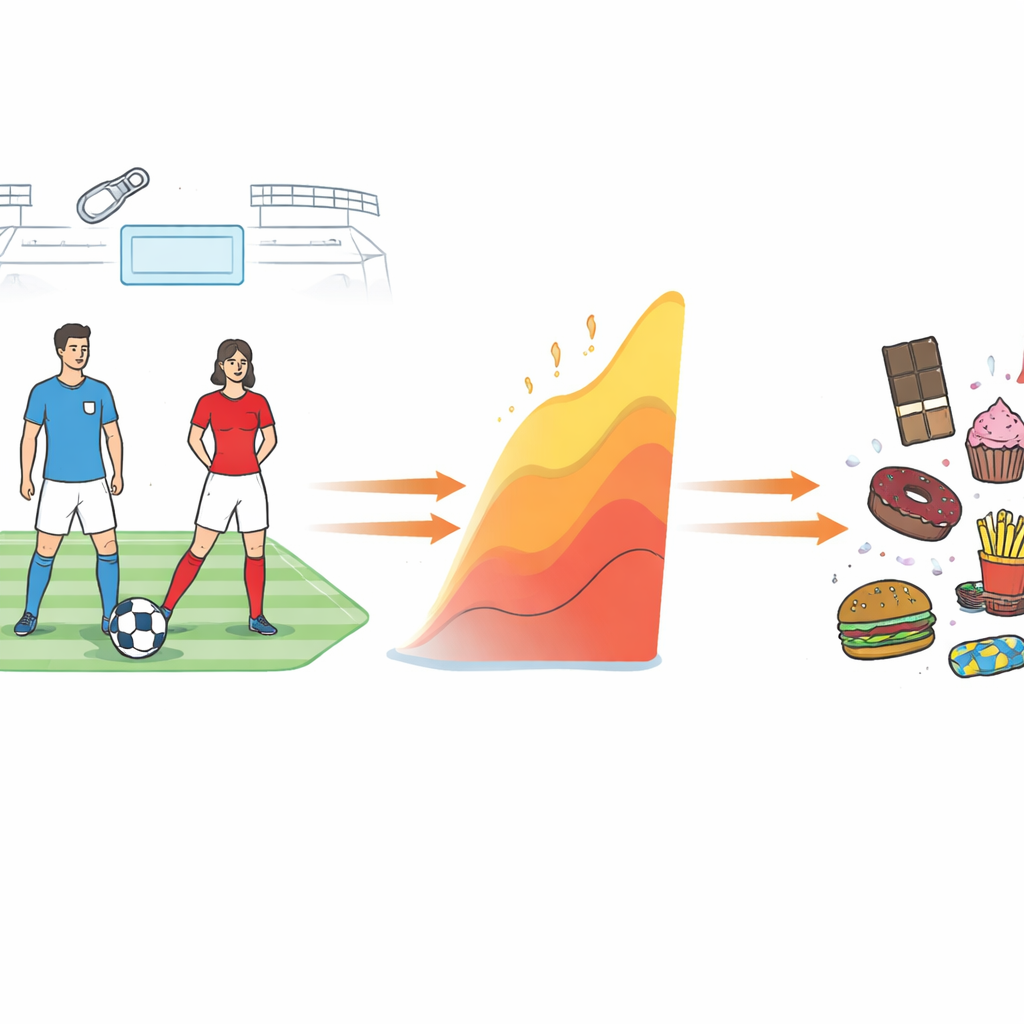
Why Women Players Deserve Their Own Playbook
Soccer is the world’s most popular sport, and women’s participation has grown rapidly. Yet most sports nutrition guidelines still come from studies on men. That matters, because men and women do not experience food cravings in the same way. Past research shows that women are more likely to crave sweet foods like chocolate, and their cravings tend to be stronger and more frequent. At the same time, women soccer players must meet strict body composition targets to perform at the highest level, and may practice more restrained eating. This combination—tight control over eating plus intense competition—creates a situation where cravings and stress might interact in powerful ways.
How the Study Was Set Up
The research team studied 75 elite players from top clubs in Seville, Spain: 33 women and 42 men aged 16 to 34. All were playing at an elite level and trained and competed regularly. Each player completed several established questionnaires. One measured how strongly and how often they experienced food cravings in general and in response to cues like sights and smells. Another asked how frequently they craved specific types of food, such as sweets, fatty foods, or fast food, over the previous month. A third measured competitive anxiety just before games, including worry-filled thoughts, body sensations like tension or nerves, and feelings of self-confidence. The researchers then compared men and women and looked for links between stress and cravings.
What the Researchers Found
The results painted a clear pattern. Women players reported stronger overall food cravings than men and were especially drawn to sweet foods. They also scored higher on measures of competitive stress and showed lower self-esteem. In other words, they not only felt more pressure around competition, but they also tended to feel less confident. Statistical analyses showed that higher competitive anxiety went hand in hand with stronger cravings, particularly for sweets and for ultra-processed fast foods. Specific aspects of craving—such as feeling out of control around food or constantly thinking about it—were also tied to higher anxiety scores. These relationships appeared in both men and women, but were more pronounced in women.
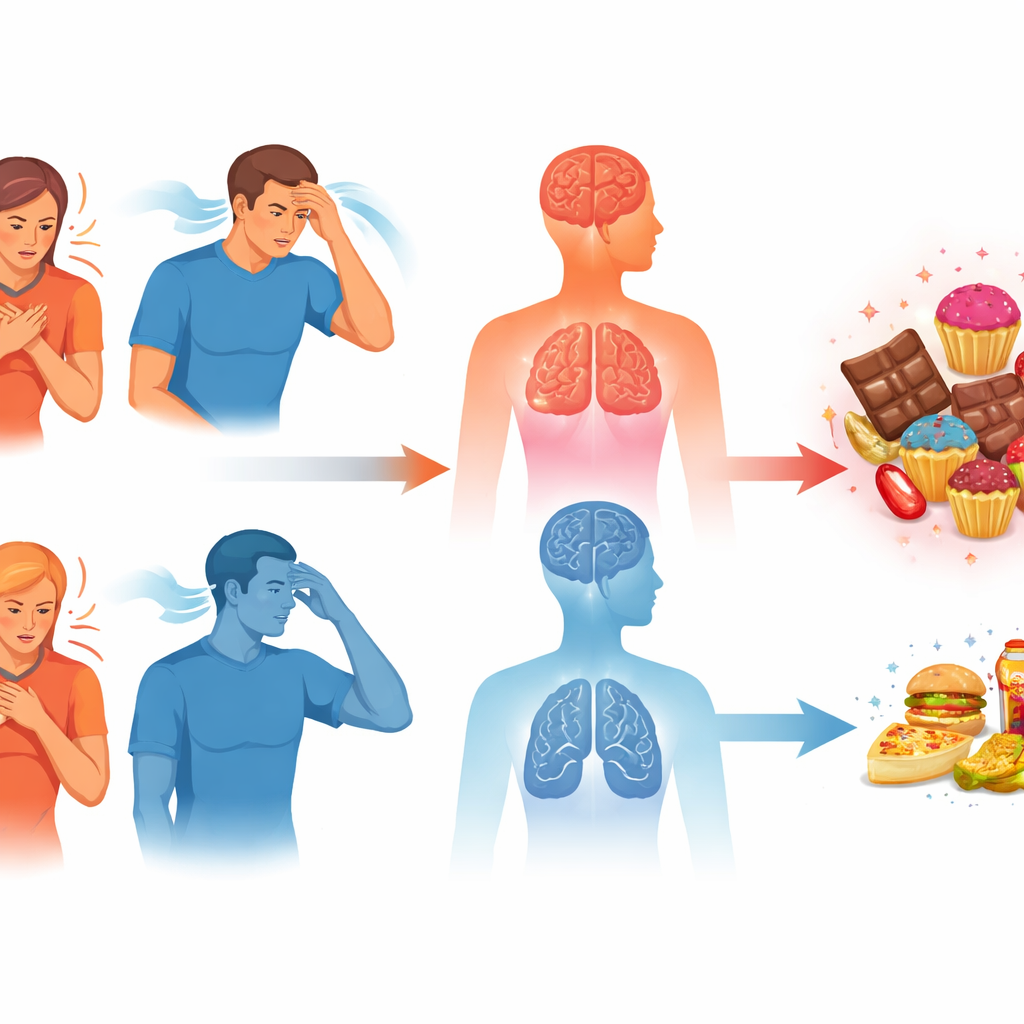
Stress, Sweets, and the Mind–Body Link
The findings suggest that the mental strain of elite sport does not stay confined to the locker room or the pitch; it may spill over into eating behavior. Stress and anxiety are known to trigger hormonal and emotional changes that can make sugary or high-calorie foods more appealing. For women players, who already show stronger sweet cravings and face more competitive anxiety and lower self-esteem, this link may be especially important. The study’s authors caution that their work is preliminary, based on a relatively small sample and one sport, and it cannot prove cause and effect. Still, the consistent associations between stress and cravings hint at a meaningful mind–body connection in how athletes cope with pressure.
What This Means for Players and Coaches
To a layperson, the takeaway is straightforward: when elite soccer players feel more stressed and anxious, they are more likely to want comfort foods, and this effect is stronger in women, especially for sweets. For coaches, nutritionists, and sports psychologists, that means support plans should not simply copy what works for men. Instead, women players may benefit from strategies that tackle both sides of the issue: managing competitive stress and anxiety while also helping them handle cravings in a healthy way. Tailored nutrition guidance and psychological support could protect performance, body composition, and mental well-being—ensuring that the pressures of the game do not quietly undermine players at the dinner table.
Citation: Amian, J.G., Alarcon, D., Fernandez-Portero, C. et al. The sweet side of stress: food craving sex disparities among elite soccer players. Humanit Soc Sci Commun 13, 401 (2026). https://doi.org/10.1057/s41599-026-06771-6
Keywords: women soccer, food craving, competitive stress, sports nutrition, athlete mental health