Clear Sky Science · en
The future of long-term care financing in Ghana: preferences among dual-role unorganised caregivers of older adults
Why this story matters for everyday families
Across Ghana and many other countries, families quietly shoulder the day-to-day care of older relatives, often paying costs out of their own pockets. This article looks at what these family caregivers think about different ways to share the financial weight of long-term care, and what their views might mean for how Ghana designs support for ageing citizens.
The growing strain on family care
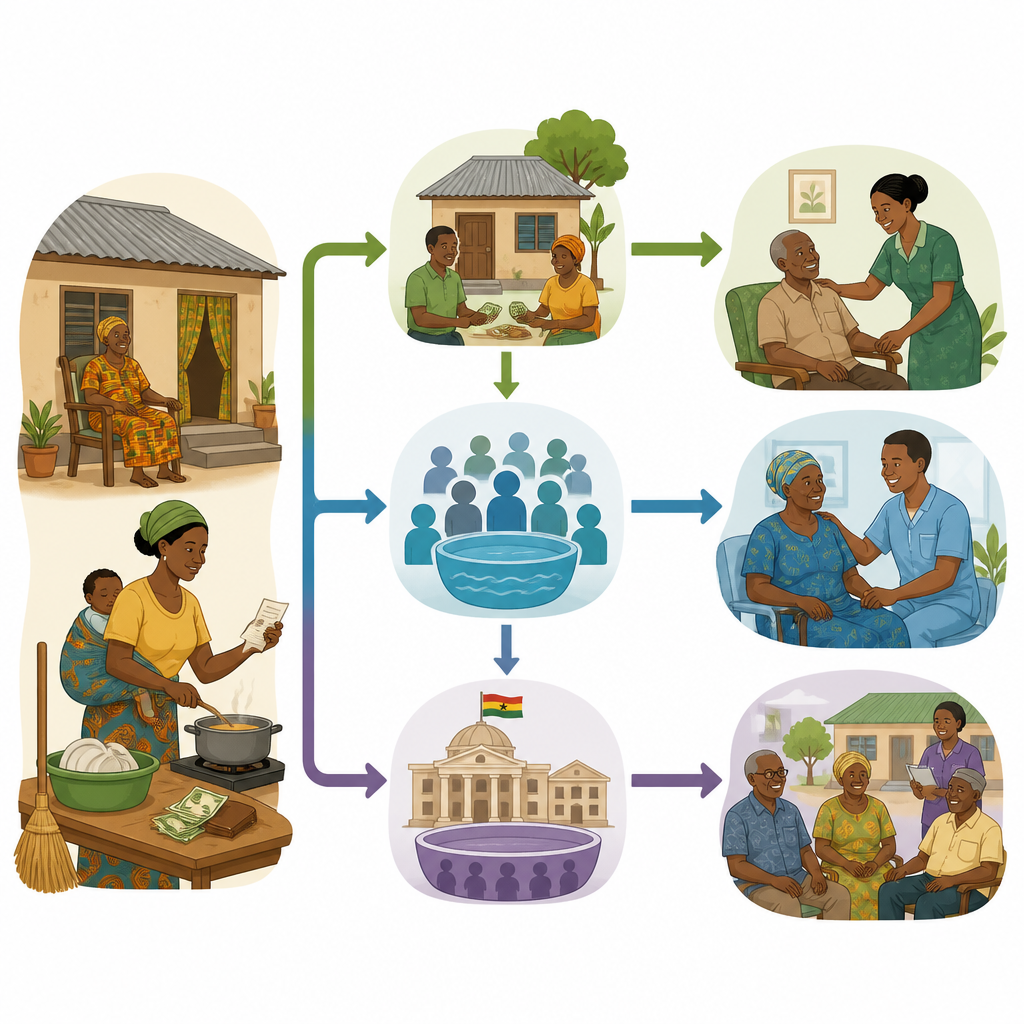
Ghana’s population is getting older, but the country does not yet have a formal long-term care system. Most hands-on help for older adults comes from relatives who also cover medical bills, transport, food, and other needs. These “dual-role” caregivers face emotional and financial pressures with little structured support from the state. The study set out to understand how such caregivers would like long-term care to be financed in the future and which factors shape their preferences.
Three different ways to pay for care
Researchers surveyed 1116 caregivers in three regions representing urban, mixed, and rural areas. Each caregiver regularly helped an older person with daily life and also contributed money to that person’s care. They were asked which of three models they preferred: families paying themselves, an insurance scheme that people pay into in advance, or care financed through general taxes and organized by government. About one third favoured sticking with family or out-of-pocket payment, one fifth preferred an insurance model, and almost half supported tax-financed care.
How types of help shape opinions
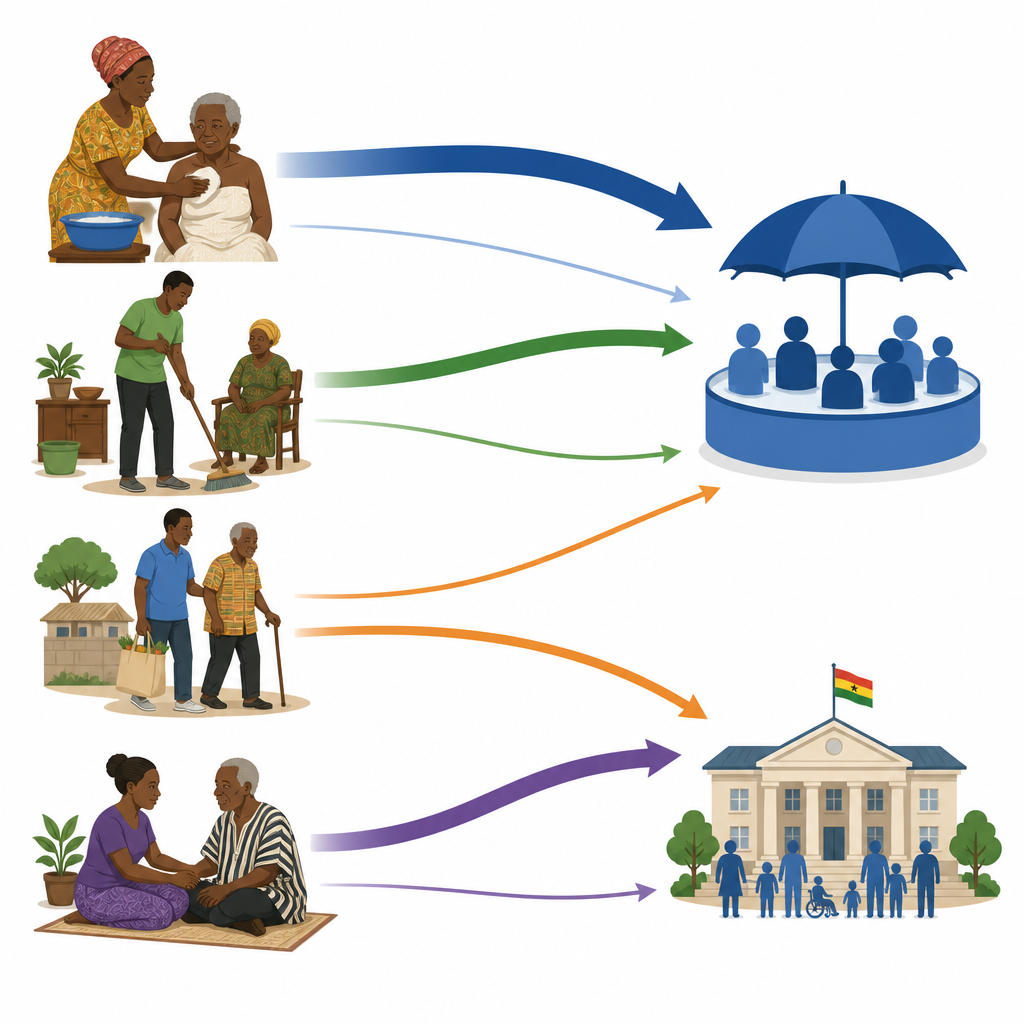
The team then examined how the intensity of different caregiving tasks related to these choices. Caregivers who spent more time on personal care, such as bathing, dressing, and feeding, were more likely to prefer insurance-based financing. These tasks are physically and emotionally demanding, and they often last many hours each week. In contrast, spending more time on household chores like cooking and cleaning was linked to a lower preference for tax-financed care, perhaps because such duties are seen as part of normal family life. Emotional support, such as companionship and reassurance, showed a different pattern: caregivers who invested more time in this kind of support tended to favour tax-financed models, suggesting they saw emotional strain as a shared social concern.
The role of money, beliefs, and family ties
Caregivers’ beliefs about who should be responsible for older people’s care powerfully shaped their views. Those who felt that care is mainly a family duty were much less likely to support either insurance or tax-based systems. Yet even among this group, people with higher incomes who were providing intensive personal care became more open to insurance as their workload increased, possibly viewing it as a way to back up family efforts rather than replace them. Relationship also mattered. Caregivers looking after parents or spouses, who often face stronger emotional ties and longer-term duties, were more inclined toward insurance than those caring for more distant relatives. Factors such as age, marital status, employment, and income also played a part, reflecting differences in financial capacity and life stage.
What this means for future support
Taken together, the findings suggest that there is no single solution that will suit all caregivers in Ghana. Many still value family responsibility, but intensive and emotionally heavy care increases interest in formal financial support, especially through insurance and tax-funded services. The authors argue that Ghana is likely to need a mix of options: contributory insurance linked to existing schemes, public services funded through taxes, and better recognition and support for unpaid caregivers. Such a balanced approach could help families continue to care for their elders while reducing the health and financial strain on those who currently carry the load alone.
Citation: Offei, D., Enemark, U., Osei, R.D. et al. The future of long-term care financing in Ghana: preferences among dual-role unorganised caregivers of older adults. npj Health Syst. 3, 33 (2026). https://doi.org/10.1038/s44401-026-00093-0
Keywords: long-term care, family caregiving, Ghana ageing, care financing, social insurance