Clear Sky Science · en
Antarctic Sanctuary: fishing effort responses to an international MPA in the Southern Ocean
Why protecting remote seas matters to us
The high seas may seem far from daily life, but they help regulate climate and provide food to people around the world. This article looks at what happened when a huge protected area was created in the Ross Sea near Antarctica. By tracking how fishing boats changed their behavior, the study offers clues about whether large ocean sanctuaries can work in remote waters where no single country is in charge.
A giant safe zone in the Southern Ocean
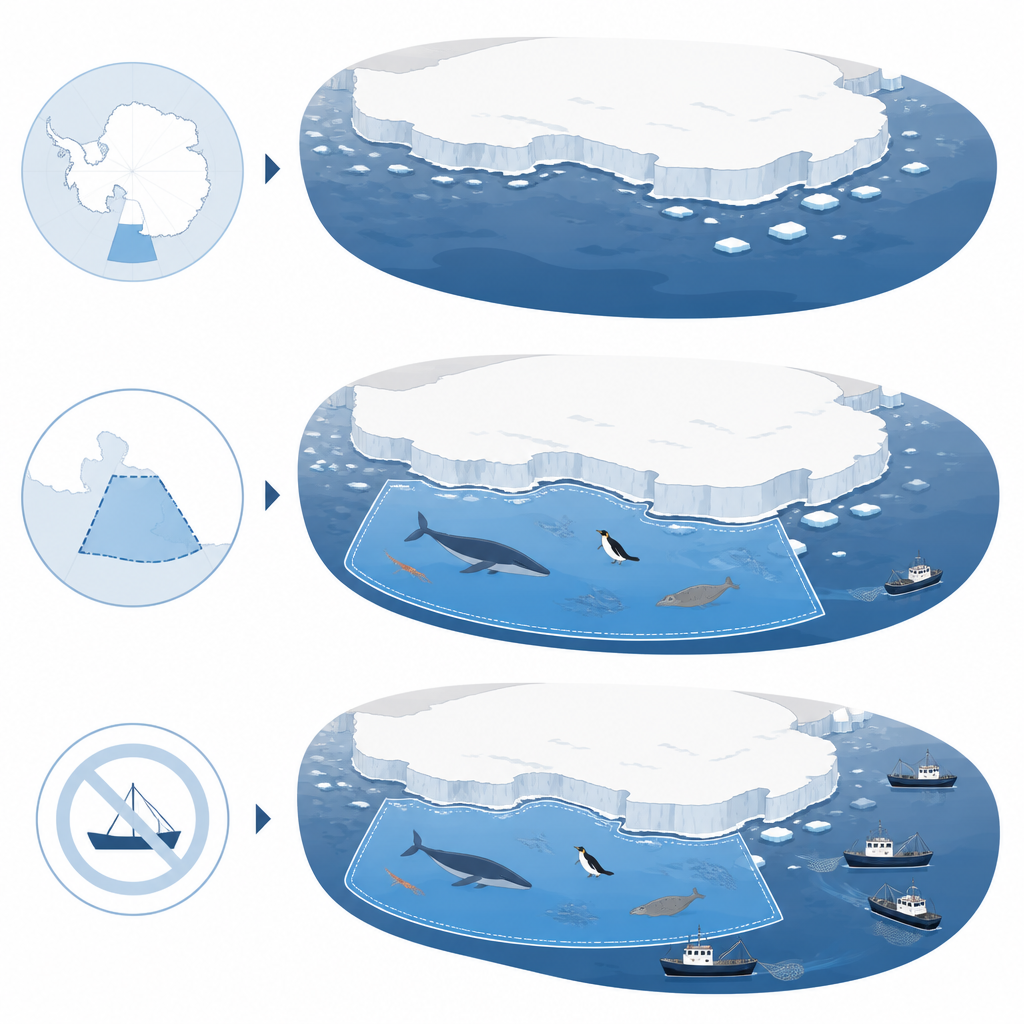
The Ross Sea Marine Protected Area is the largest ocean sanctuary in international waters, covering about half of the Ross Sea region. Agreed by countries that fish in the Southern Ocean, it came into force in late 2017. Inside most of this area, commercial fishing is banned, while some parts allow tightly limited research and toothfish catch. Because these waters lie beyond national borders, enforcing rules is harder than in coastal zones, and there has been little real-world evidence on whether such large offshore protected areas can truly keep fishing out.
Watching fishing boats from space
To understand how the new rules changed fishing, the authors used satellite signals sent by ships, known as the automatic identification system. These signals reveal where and when vessels travel and whether they appear to be fishing or just moving. The researchers examined data from 2012 to 2019, covering years before and after the Ross Sea area was closed. By comparing activity just inside and just outside the sanctuary boundary, they could separate the effect of the protected area from natural changes in ocean conditions like productivity, wind, waves, and sea ice.
Fishing pulled back from the boundary
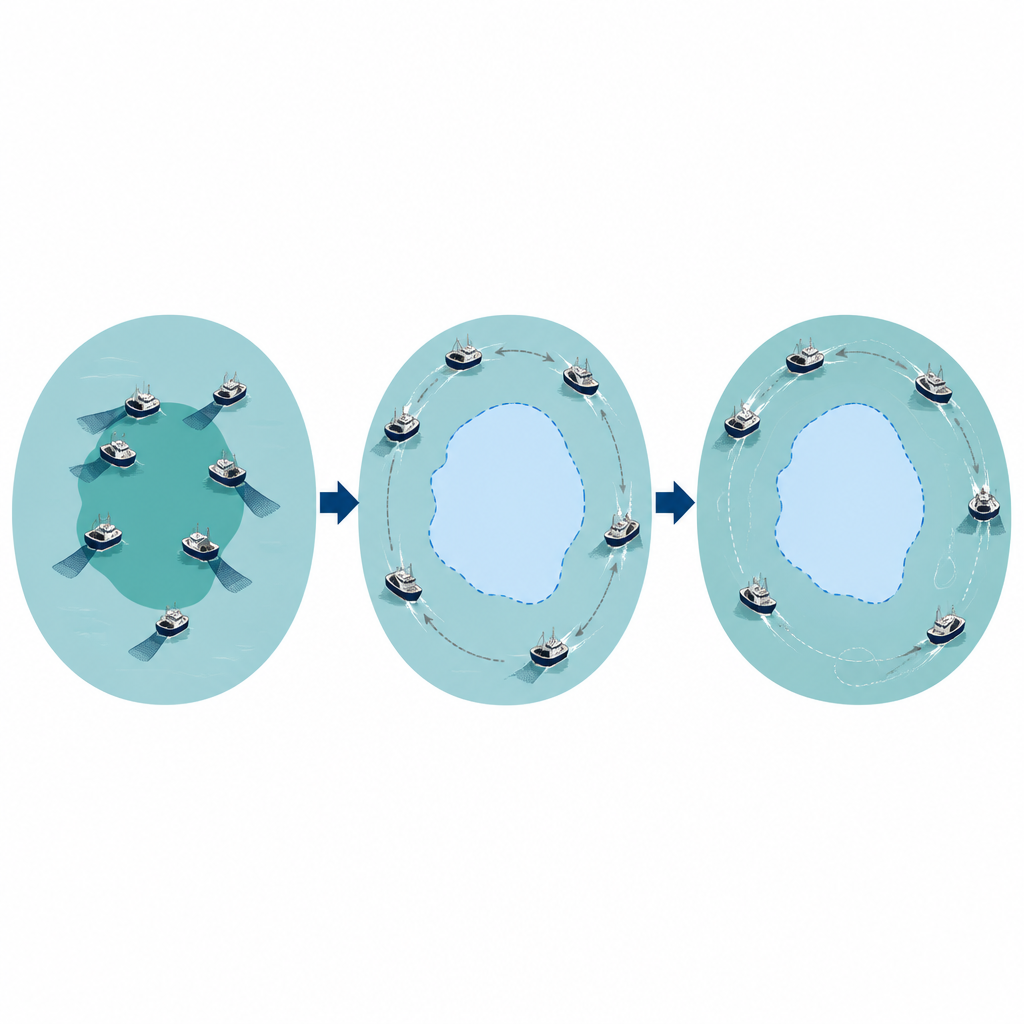
The analysis shows a sharp drop in fishing effort inside the protected area after the rules took effect. In the years following the creation of the sanctuary, fishing hours near the boundary were on average much lower on the protected side than on the open-sea side, even though no such difference existed beforehand. The authors estimate that between about two thirds and three quarters of the fishing that would have occurred along the boundary was deterred. They also find no sign that fleets rushed in to fish heavily between the public announcement and the start of protection, a pattern known as the blue paradox in other regions.
Boats stay in the game but change how they work
The study then follows individual vessels that had worked near the Ross Sea before the sanctuary was created and compares them to similar boats fishing for krill in another Antarctic region. After the protected area came into force, the Ross Sea vessels spent roughly 18 percent less time actually fishing each day, but about 15 percent more time on non-fishing activities such as traveling and searching. Total time at sea changed very little, and there is little evidence that boats quit the fishery altogether. Instead of leaving, they appear to have shifted their effort to areas outside the sanctuary, absorbing higher operating costs as they lost some of their most familiar and productive grounds.
What this means for future ocean sanctuaries
For a non-specialist, the key message is that a large protected area in one of the most remote parts of the ocean can succeed in keeping most commercial fishing out, as long as countries coordinate and monitoring systems are strong. In the short term, this does not seem to cut overall fishing activity or catches very much, but it likely makes fishing more expensive by forcing vessels to travel farther. The Ross Sea case suggests that international ocean sanctuaries can help shield marine life from direct fishing pressure, even where no nation holds sole authority, provided similar cooperation, enforcement tools and environmental conditions are in place.
Citation: Lu, Y., Yamazaki, S. Antarctic Sanctuary: fishing effort responses to an international MPA in the Southern Ocean. npj Ocean Sustain 5, 26 (2026). https://doi.org/10.1038/s44183-026-00193-2
Keywords: Ross Sea MPA, high seas fisheries, Antarctic toothfish, marine protected areas, satellite vessel tracking