Clear Sky Science · en
Effect of exercise therapy and self-management support on multimorbidity: Secondary analysis of the MOBILIZE trial
Why Moving More Matters When You’re Living with Many Illnesses
Many people today live with more than one long-term illness at the same time—a situation doctors call multimorbidity. That might mean a mix of heart disease, diabetes, arthritis, lung disease, high blood pressure, or depression. These overlapping problems raise the risk of heart attacks, strokes, disability, and high medical bills. This study asks a practical question with big real-world relevance: if we add a structured program of exercise and group support to people’s usual medical care, can we measurably improve their bodies’ key health signals, especially blood pressure? 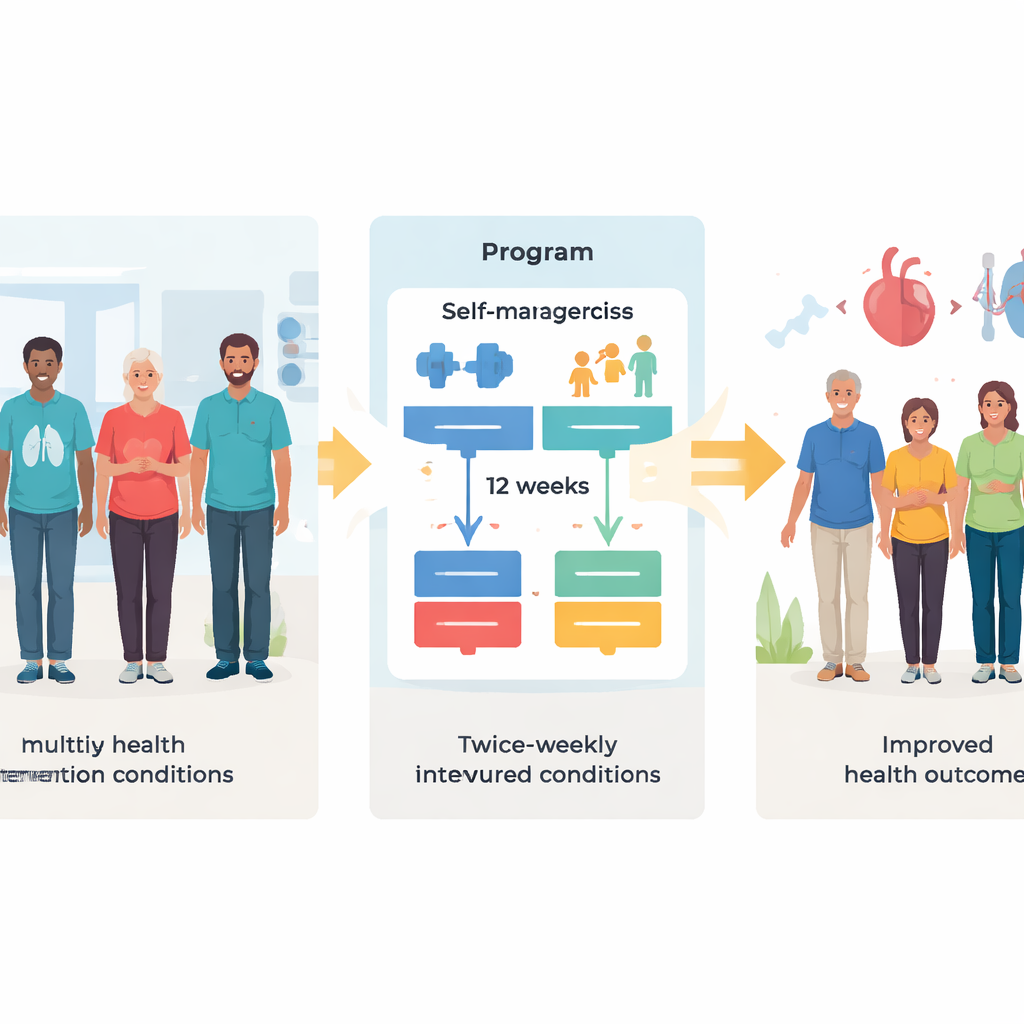
A Common but Overlooked Health Challenge
About one in three adults lives with at least two chronic conditions. Together, these illnesses create a constant strain on the body. Low-level inflammation simmers in the background, blood sugar and blood fats can drift out of balance, and blood pressure often creeps up. Each of these shifts raises the chance of serious events like heart attacks and strokes. Yet, despite how common multimorbidity is, most treatment guidelines and studies still focus on one disease at a time. That leaves a major gap: we don’t know enough about which non-drug treatments actually help this complex group in everyday life.
A 12-Week Program Built Around Real People’s Lives
The MOBILIZE trial, conducted in Denmark, set out to test a realistic, clinic-ready approach. Researchers enrolled 228 adults, average age about 70, each living with at least two conditions such as knee or hip osteoarthritis, chronic lung disease, heart disease, high blood pressure, type 2 diabetes, and depression. Everyone continued to receive their usual medical care. Half were randomly assigned to also complete a 12-week program with two supervised sessions per week. Each visit combined an hour of group exercise—warm-up, balance, strength training, and individually chosen activities like walking or cycling—with a half-hour self-management session. These discussions covered topics like sleep, pain management, staying active, and coping with daily life when you have multiple health problems. 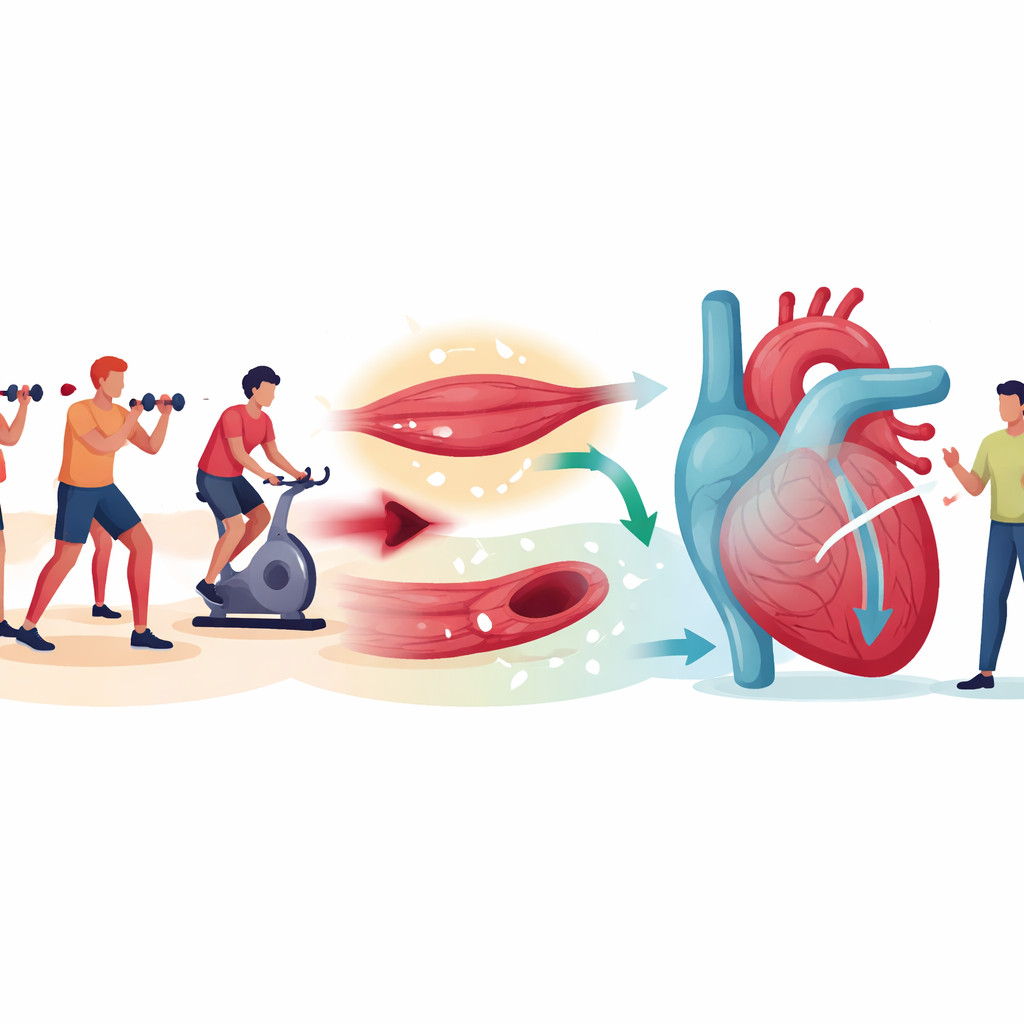
What the Researchers Measured Inside the Body
To see whether the program changed more than just how people felt, the team drew blood samples at the start and again after four months. They measured markers of inflammation (such as C-reactive protein and several immune-signaling molecules), blood fats (including “good” and “bad” cholesterol and triglycerides), blood sugar control (long-term sugar levels and fasting glucose and insulin), and blood pressure. These measures are important because they help predict future heart and blood vessel disease. By comparing changes in the exercise group with those in the usual-care group, the researchers could test whether the added program truly made a difference beyond normal treatment.
The Main Change: Lower Top Number Blood Pressure
After four months, one result clearly stood out. People who took part in the exercise and support program lowered their systolic blood pressure—the “top” number—by almost 6 millimetres of mercury on average, while those receiving only usual care changed very little. The difference between groups was about 4.7 points and was statistically reliable. That may sound modest, but large international analyses show that a 5-point drop in systolic blood pressure can cut the risk of major heart and blood vessel events by around 10 percent. Other measures, including inflammation, cholesterol, blood fats, and blood sugar, generally moved in a slightly better direction in the exercise group, but these shifts were small and not strong enough to rule out chance. The relatively short 12-week duration and moderate exercise “dose” may not have been enough to shift these deeper markers in a clear way.
What This Means for People Living with Many Conditions
For people juggling several chronic illnesses, this study offers an encouraging but measured message. A realistic, twice-weekly program of supervised exercise plus group-based self-management support, added to usual medical care, can meaningfully lower systolic blood pressure—a key risk factor shared by many conditions. At the same time, the program did not clearly change blood sugar, cholesterol, or inflammation in the short term. The findings support including structured exercise therapy as a non-drug addition to care plans for people with multimorbidity, particularly to help manage blood pressure. They also highlight that to reshape other internal risk markers, we may need longer, more intensive programs—and more research focused on the real-world needs of people living with several long-term conditions at once.
Citation: Bricca, A., Nyberg, M., Legaard, G.E. et al. Effect of exercise therapy and self-management support on multimorbidity: Secondary analysis of the MOBILIZE trial. Commun Med 6, 213 (2026). https://doi.org/10.1038/s43856-026-01479-9
Keywords: multimorbidity, exercise therapy, blood pressure, chronic disease management, self-management support