Clear Sky Science · en
A systematic review of nature-positive climate risk transfer and financing instruments
Why Protecting Nature Can Also Protect Our Wallets
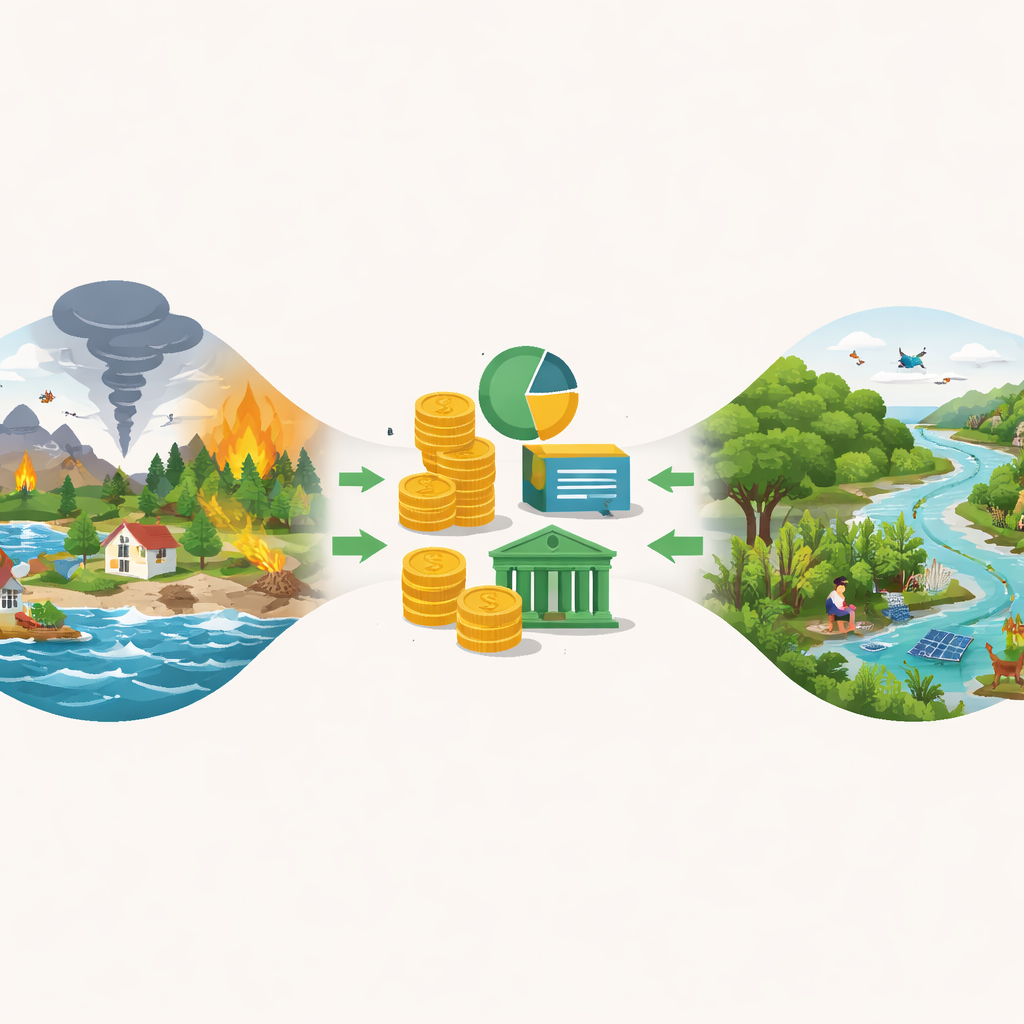
Floods, storms, wildfires, and heat waves are becoming more frequent and costly. At the same time, forests, wetlands, coral reefs, and other ecosystems that help shield us from these dangers are under pressure and badly underfunded. This article explores a new idea at the crossroads of ecology and finance: using insurance and other financial tools not only to pay for disasters after they happen, but also to invest in nature so that disasters do less damage in the first place. It is a systematic review of how money can be steered toward “nature-based solutions” that reduce climate risks while restoring the natural world we depend on.
How Nature Can Act Like a Safety System
Nature-based solutions are actions such as protecting mangroves, restoring floodplains, replanting forests, or conserving coral reefs so they can buffer waves, soak up floodwaters, cool cities, and stabilize slopes. Compared with concrete walls or drainage pipes, these living defenses can tackle several problems at once: limiting floods and storms, supporting food and water supplies, storing carbon, and offering recreation and cultural value. Yet they receive only a small slice of global climate and nature spending. The authors note that although governments have pledged to scale up these measures, actual investments in nature remain far below what is needed to meet climate and biodiversity goals.
New Ways to Pay for Green Protection
To understand how finance could close this gap, the researchers screened more than 3,200 academic papers and 78 institutional databases. They identified 33 distinct “climate risk transfer and financing instruments” that can channel money into nature-based solutions while also managing disaster risk. These tools fall into seven broad groups: traditional-looking insurance products that reward or fund nature projects; debt instruments like green, blue, and resilience bonds; credit enhancements that make it easier or cheaper for governments to borrow for green projects; performance-based contracts that pay only when agreed environmental results are delivered; farm-focused schemes that pay or give tax breaks to landowners who adopt conservation practices; actively managed funds that pool money for risk reduction; and emerging market-style credits that treat risk reduction itself as a tradable asset.
Real-World Examples Around the Globe
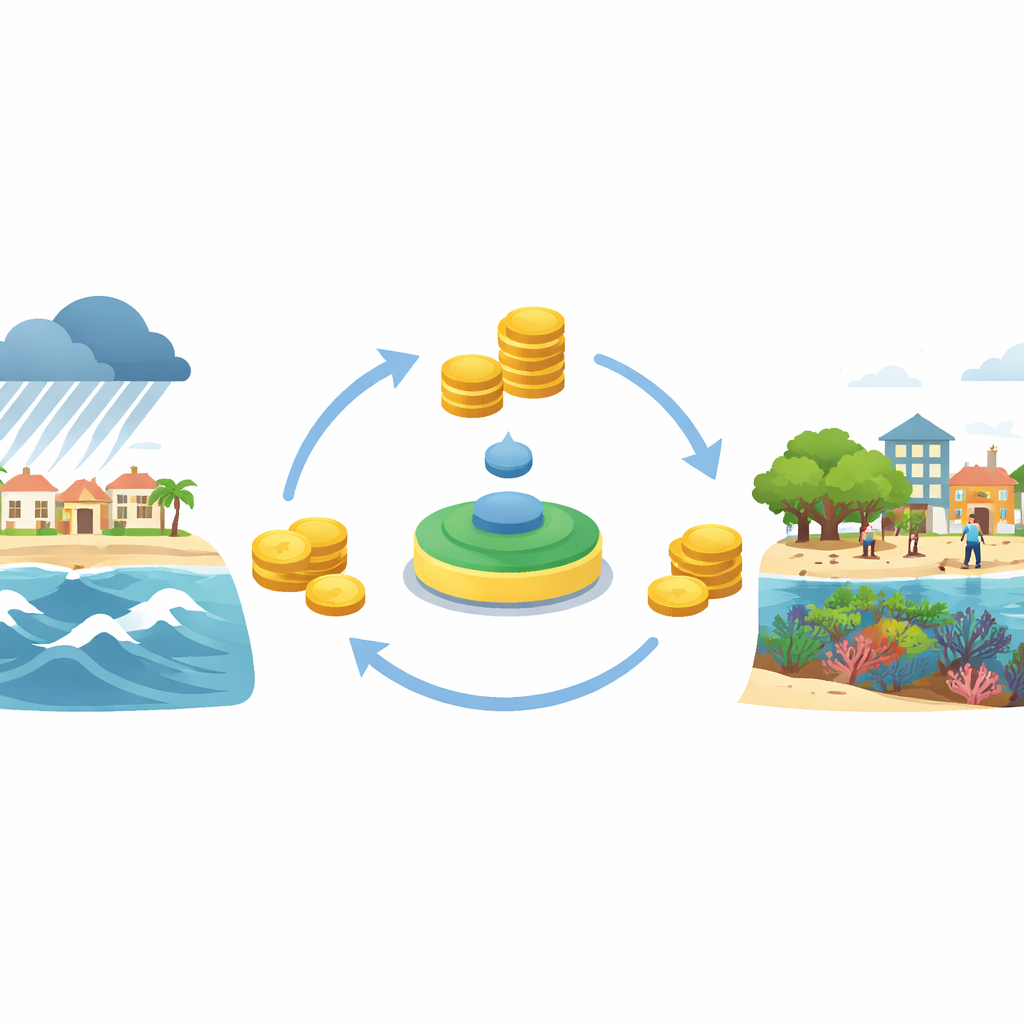
Two families of instruments stand out because they already have multiple working examples. One is “ecosystem insurance,” in which an insurer promises rapid payouts to help restore a natural asset after a damaging event. A flagship case is the coral reef insurance in Quintana Roo, Mexico, where funds collected from local tourism and government sources pay for an insurance policy. When a hurricane strikes, fast payouts finance teams of divers who repair the reef so it can continue protecting hotels and communities from waves. Similar reef policies now exist in other parts of the Caribbean and the Pacific, and a pilot wetland insurance project has begun in China. The second standout is “nature-positive resilience insurance,” where policyholders receive premium discounts if they or their communities invest in nature-based risk reduction, such as preserving floodplains or installing green roofs. The U.S. National Flood Insurance Program’s incentives for communities that maintain open space in floodplains are a large-scale example of this approach.
What We Know—and Don’t Know—About Results
Despite the creative financing designs, the review finds that evidence on how well these nature-based projects actually perform is often thin. For more than two-thirds of the projects studied, the reduction in hazards such as flooding or erosion was not measured in detail. Only about a quarter of projects put a monetary value on avoided damage, and very few used probabilistic risk modeling that accounts for a full range of possible storms or floods over time. Social aspects are even less well documented: most studies do not break down who benefits by income, gender, or other factors, so it is hard to tell whether these instruments help the most vulnerable or risk deepening existing inequalities. Many papers briefly mention added benefits like recreation or biodiversity, but rarely quantify them. Economic appraisals, when they exist, usually focus on the nature project itself rather than on how the financial instrument performs over the long run.
Opportunities, Risks, and the Road Ahead
The review highlights promising but still underused tools, such as resilience bonds, environmental impact bonds, and resilience credits that would reward measurable risk reduction, much like carbon credits reward avoided emissions. It also warns of potential pitfalls. Poorly designed debt deals could worsen financial strains in poorer countries, and insurance that favors high-value properties could sideline low-income communities. Parametric policies that pay out based on a trigger like wind speed can miss real damage on the ground, undermining trust. To move forward wisely, the authors call for better measurement of hazard reduction, fuller accounting of nature’s many benefits, attention to who pays and who gains, and more studies from the Global South. Done well, they argue, these nature-positive financial tools could help shift the global system toward a “win–win” path where investing in healthy ecosystems becomes a mainstream strategy for protecting both people and economies from a changing climate.
Citation: Bill-Weilandt, A., Lallemant, D., Chan, V. et al. A systematic review of nature-positive climate risk transfer and financing instruments. Commun Earth Environ 7, 318 (2026). https://doi.org/10.1038/s43247-026-03388-0
Keywords: nature-based solutions, climate risk finance, ecosystem insurance, green bonds, disaster risk reduction