Clear Sky Science · en
Interior Antarctica is undergoing marked climate change
Why the Heart of Antarctica Matters to All of Us
Antarctica may seem like a distant, frozen world, but what happens there helps set the pace of global sea-level rise and shapes weather patterns around the planet. This study looks closely at how temperatures have changed across Antarctica since the late 1950s, using a carefully stitched-together record of observations. It finds that the icy continent is not warming evenly: some regions are heating up quickly, others are barely changing, and a few are even cooling in certain seasons. Most importantly, the work shows that the high, cold interior of Antarctica is already undergoing marked climate change, with average temperatures and extreme warm events on the rise.
A Patchwork of Warming and Cooling
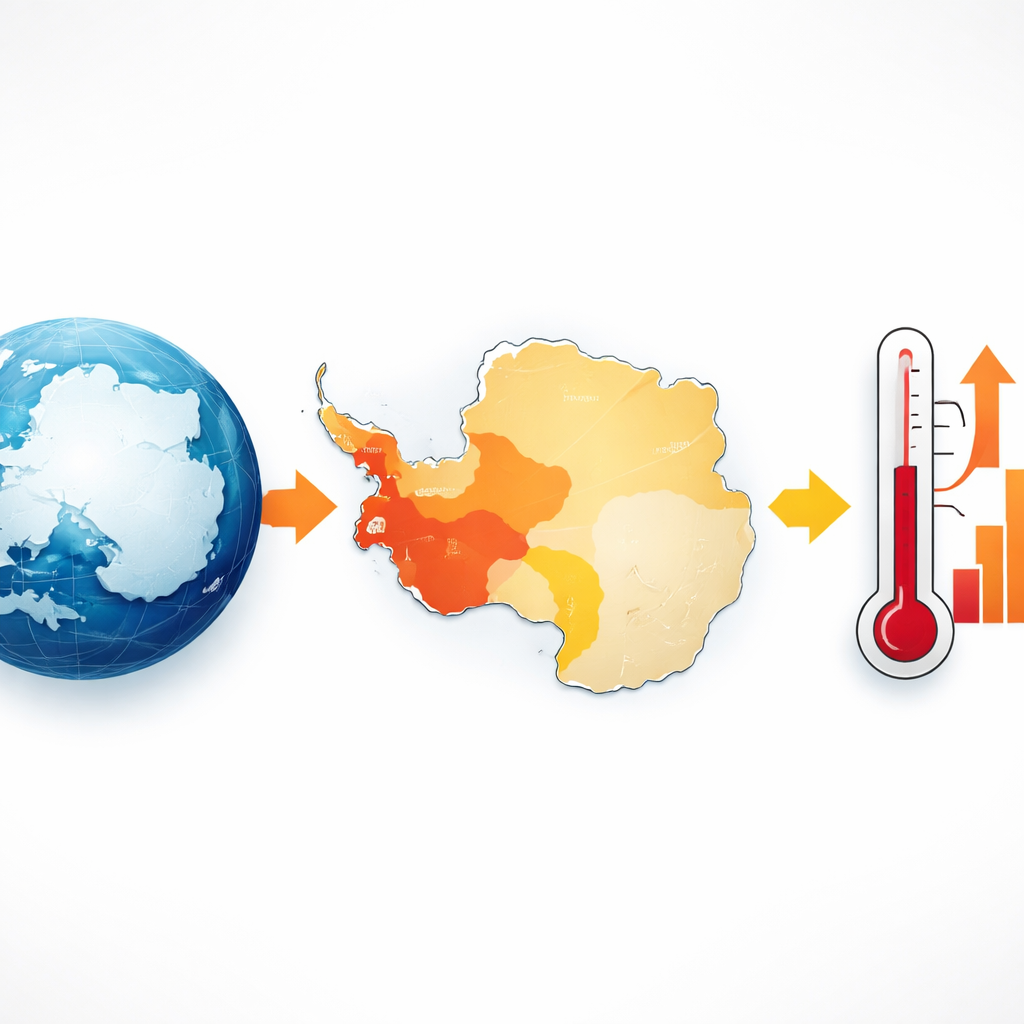
The researchers combined long-term records from weather stations, satellites, and climate reanalyses into a reconstruction of Antarctic surface air temperature from 1958 to 2022. On average, the continent warmed modestly over this period, but the pattern is highly uneven. The Antarctic Peninsula and much of West Antarctica show strong warming, especially in autumn and winter. In contrast, parts of East Antarctica display slight cooling in autumn and only weak warming in other seasons. When they removed the influence of a major wind pattern that circles the Southern Hemisphere, the Southern Annular Mode, a hidden background warming emerged almost everywhere, and the continent’s average warming rate roughly doubled.
Climate Models Run Too Hot
The team then compared their reconstruction with the latest generation of global climate models, known as CMIP6. These models, taken together, show Antarctica warming nearly three times faster than the observations, with especially strong heating over the interior ice sheet and in autumn and winter. While both the models and observations agree that the Peninsula and West Antarctica are warming, the models simulate widespread, year-round warming across East Antarctica that is not yet seen in the data. Even after removing the effect of the Southern Annular Mode from both, the models still warm the continent at about twice the observed rate, especially after the mid-1990s.
Why Some Models Overdo the Heat
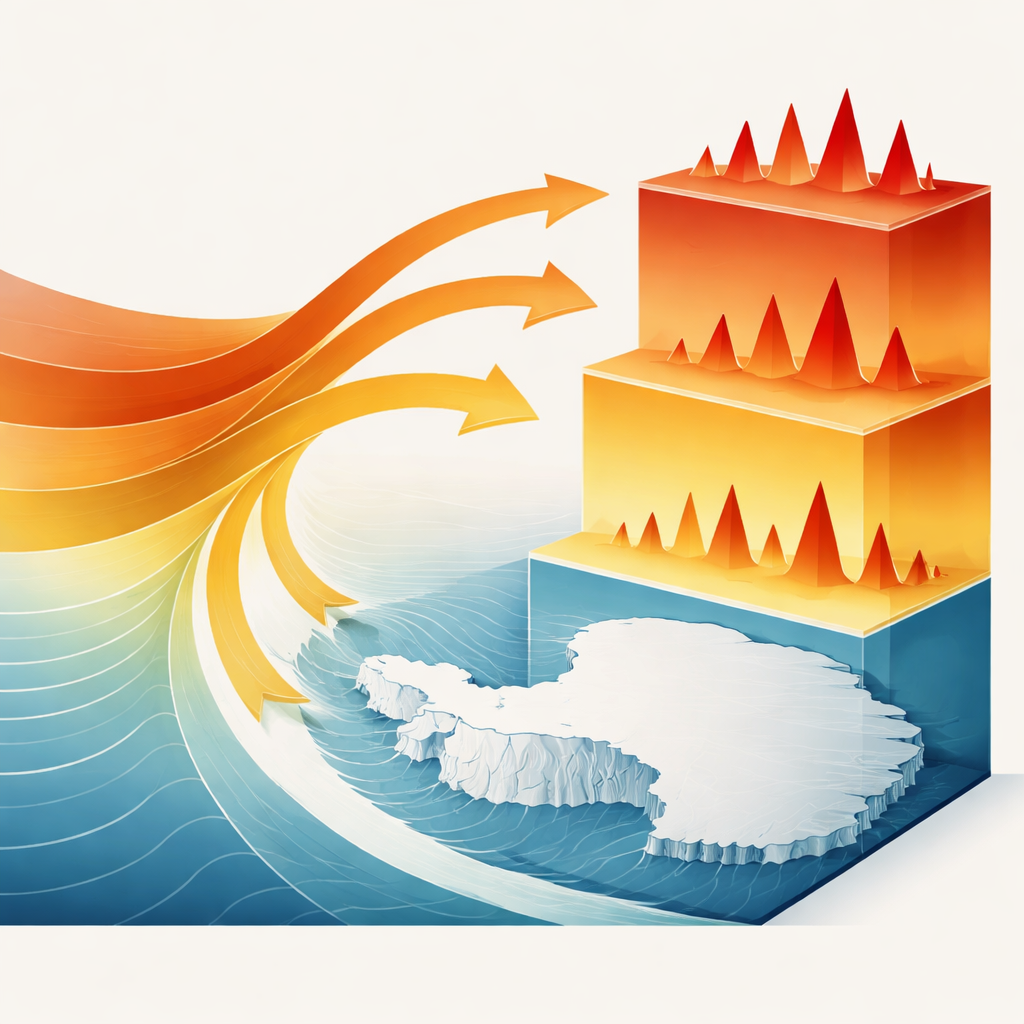
To understand why, the authors examined two representative climate models in detail. One "hot" model shows rapid Antarctic warming linked to stronger transport of moist air from lower latitudes, more downward longwave radiation, and faster loss of sea ice. This combination amplifies warming over the Southern Ocean and spills onto the ice sheet. A "normal" model produces a temperature trend closer to observations but still runs too warm overall, again tied to excessive atmospheric moisture and cloud-related heating. These findings point to how sensitive Antarctic climate is to how models handle clouds, ocean temperatures, and the flow of heat and moisture from lower latitudes.
Rising Extremes in the Cold Interior
Beyond slow changes in average temperature, the study also tracks extreme warm events using a modern reanalysis data set and records from interior weather stations. Since 1979, many parts of East Antarctica and the Antarctic Peninsula have seen more frequent warm extremes, particularly in spring. Interior sites such as the South Pole, Vostok, and Concordia show clear upward trends in the number of unusually warm days, with the reanalysis reproducing these changes well. Dramatic spikes, like the record-breaking warm spell over East Antarctica in March 2022, fit into this broader pattern of increasingly frequent heat episodes over what was once thought to be an almost unchanging deep-freeze.
What This Means for Our Future
The study concludes that climate change is already firmly underway in interior Antarctica, even though some coastal areas of East Antarctica have changed little so far. The latest models appear to capture the direction of change but tend to exaggerate how fast and how much the continent warms, likely because they overheat the surrounding Southern Ocean and transport too much heat and moisture southward. Still, the growing background warming and rising number of extreme warm events over the polar plateau suggest that the conditions projected by models may be starting to appear. What happens next in these remote regions will strongly influence the stability of Antarctic ice shelves and, ultimately, the rate at which global sea level rises.
Citation: Bromwich, D.H., Zou, X. & Wang, SH. Interior Antarctica is undergoing marked climate change. Commun Earth Environ 7, 389 (2026). https://doi.org/10.1038/s43247-026-03384-4
Keywords: Antarctic warming, climate models, temperature extremes, Southern Ocean, sea ice change