Clear Sky Science · en
Material values, environmental attitudes, and pro-environmental behaviors among future physicians in a coastal setting
Why our stuff and our planet both matter
Medical students today will soon be caring for patients in a world increasingly stressed by climate change and pollution. Yet like everyone else, they live in a culture that often celebrates having more things and more money. This study asks a simple but important question: among future doctors in a coastal Egyptian city, does wanting more possessions go hand in hand with doing less for the environment? And do quieter personal habits, like saving water, differ from more visible actions, like joining environmental groups?
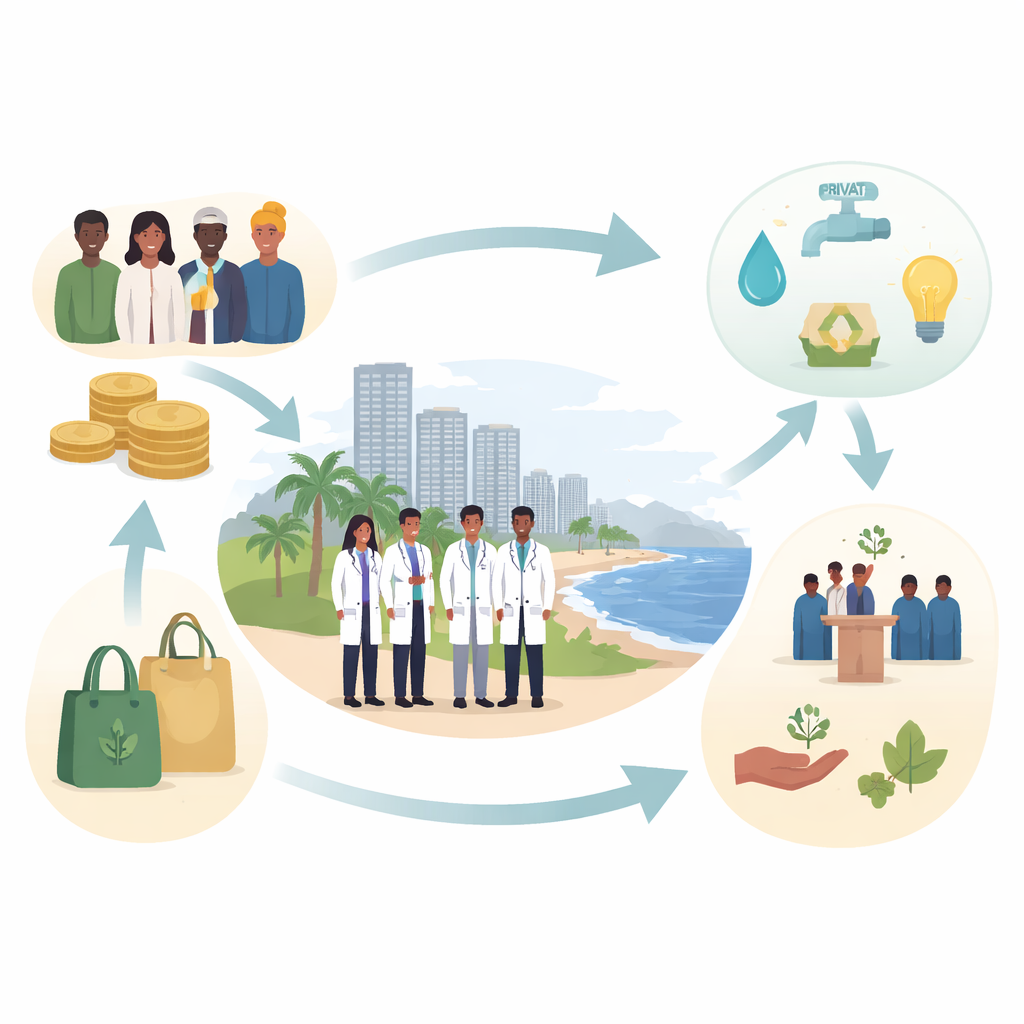
Who was studied and what was measured
The research focused on 405 fifth‑year medical students at Alexandria University, drawn from Egypt and other Arab countries, including Gulf states. These students are close to entering professional life, when their daily decisions can affect both patients and the health system’s environmental footprint. The team used an online Arabic questionnaire to measure three main areas: how strongly students valued material possessions and financial success; how positively they felt about environmental protection; and how often they engaged in environmentally friendly behaviors. These behaviors were split into private actions, such as conserving water and energy or recycling at home, and public actions, such as joining environmental groups, donating to environmental causes, or attending events on environmental issues.
How material values and green attitudes are connected
Students, on average, showed moderate levels of materialism and private green habits, but strong support for protecting the environment. Public actions, however, were rare: only small minorities belonged to environmental groups, donated money, or attended environmental events. When the researchers examined how these patterns fit together, they found that students who placed more importance on possessions and success tended to report weaker environmental attitudes and fewer private green behaviors. By contrast, those with stronger environmental attitudes were more likely to report everyday eco‑friendly habits. These links suggest that what students value and how they feel about environmental issues are closely intertwined with how they behave in their personal lives.
Private versus public green choices
The story became more complex when the researchers separated out private and public actions. Private behaviors—like turning off unused lights or carefully using water—were most strongly tied to students’ overall values and their backgrounds. Nationality and one specific aspect of materialism, the degree to which possessions are central in one’s life, were key predictors of these everyday choices. Students from other Arab countries outside Egypt and the Gulf tended to report more private eco‑friendly habits, possibly reflecting life in more resource‑strained settings. Public behaviors, on the other hand, were influenced more by who students were and where they came from than by how green they felt internally. Belonging to an environmental group was linked to seeing material success as important, hinting that status or social expectations may sometimes motivate visible green involvement. Donations and conference attendance were shaped mainly by nationality, gender, age, and available spending money, underscoring the role of culture and resources.
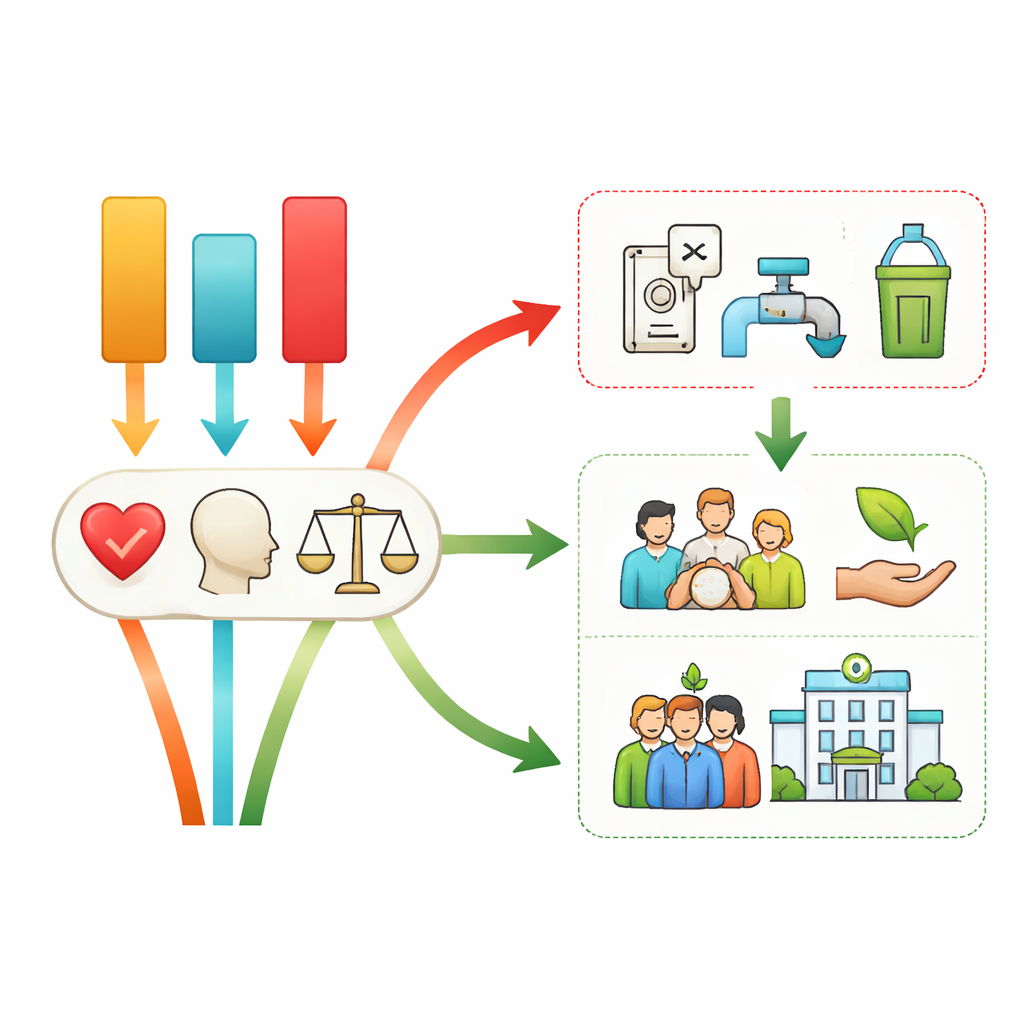
What this means for training future doctors
By looking at both private and public actions, the study shows that there is no single pathway from caring about the environment to acting on it. Quiet, home‑based habits among these medical students seem to depend strongly on deeper personal values, including how central possessions are in their lives. Public actions, such as joining groups or donating, are more strongly steered by social and economic circumstances. For medical education, this means that simply adding facts about climate change is not enough. Training programs that encourage students to reflect on their own values, experience hands‑on sustainability projects, and find culturally appropriate ways to engage in public life may be more effective. In plain terms, helping future doctors to care less about owning more, and more about the world around them, could translate into greener choices both at home and in the hospitals where they will soon work.
Citation: Abdulla, M.M., Ghandy, A.M., Ibrahim, A.H. et al. Material values, environmental attitudes, and pro-environmental behaviors among future physicians in a coastal setting. Sci Rep 16, 13259 (2026). https://doi.org/10.1038/s41598-026-47832-9
Keywords: materialism, medical students, environmental attitudes, pro-environmental behavior, sustainability education