Clear Sky Science · en
Repurposing FDA-approved drugs as multi-target neuroprotective agents for Alzheimer’s disease via computational screening and experimental validation
Why Old Medicines Might Help a Fading Memory
Alzheimer’s disease robs millions of people of their memories and independence, and today’s medicines can only ease symptoms for a limited time. Developing brand‑new drugs is slow, costly, and risky. This study asks a simple but powerful question: can we search among medicines that are already approved and safety‑tested for other conditions, and find ones that quietly protect the aging brain on several fronts at once?
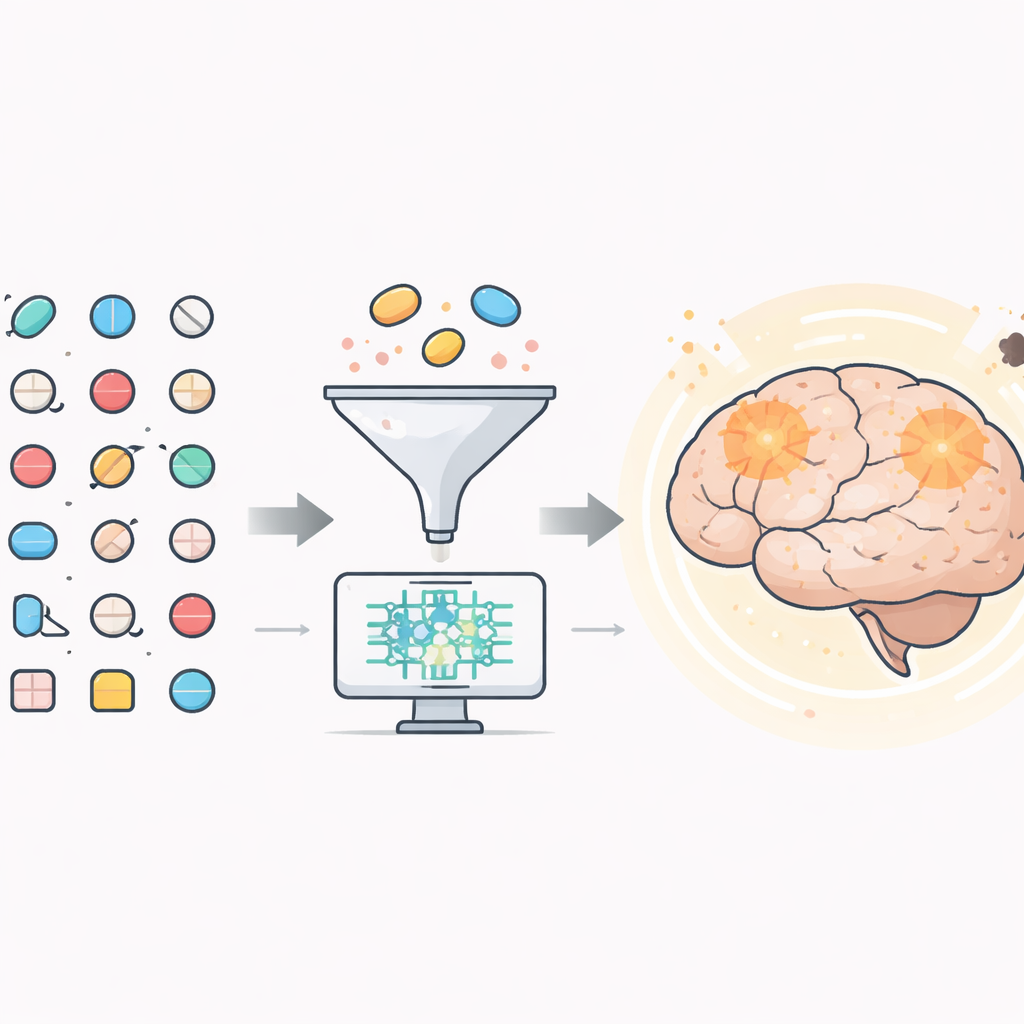
Looking for Hidden Helpers in Existing Drugs
The researchers began with more than 1,500 drugs that have already been approved by the U.S. Food and Drug Administration. Using computer tools, they first filtered out any compounds unlikely to reach the brain, since a treatment for Alzheimer’s must cross the blood–brain barrier. About 600 candidates passed this test. Next, they used detailed 3D models of a key brain enzyme, called BACE1, to see which drugs could latch onto its active site in a stable and snug way. BACE1 is important because it helps cut a larger protein into amyloid‑beta, the sticky fragment that clumps into plaques in the brains of people with Alzheimer’s.
Finding a Multi‑Tasking Drug Candidate
From this virtual screening, 14 promising hits were identified, and four were chosen for closer study based on how well they fit the enzyme, their chemical features, and their known safety in long‑term use. The team then ran long computer simulations to watch how each candidate behaved while bound to BACE1 over time. All four held steady in the enzyme’s pocket, but one compound, labeled ZINC000019796155, stood out for its favorable interactions with the most critical regions of BACE1. These simulations suggested that the drug could reduce the enzyme’s ability to produce amyloid‑beta without destabilizing the protein itself.
Testing How the Drug Protects Brain Chemistry
Computer predictions are only a first step, so the scientists tested the four candidates in laboratory experiments. All of them slowed BACE1 activity, and ZINC000019796155 showed the strongest effect, though still weaker than highly potent experimental inhibitors. Importantly, when they examined other processes tied to Alzheimer’s, they found that this same compound inhibited another enzyme, butyrylcholinesterase, which becomes more active as the disease progresses and breaks down a memory‑related chemical messenger. It also reduced the clumping of amyloid‑beta in a test tube and showed strong antioxidant activity, meaning it could neutralize damaging free radicals that contribute to brain cell death.
Shielding Nerve Cells from Damage
To see how these actions translate inside living cells, the team exposed human‑derived nerve‑like cells to hydrogen peroxide, a chemical that mimics the oxidative stress seen in Alzheimer’s brains and normally kills many cells. When the cells were pretreated with ZINC000019796155, many more survived. Further analysis of cell proteins revealed that the compound dampened markers of programmed cell death and lowered levels of key players in plaque and tangle formation, including the precursor of amyloid‑beta, the BACE1 enzyme itself, and a modified form of the tau protein that tends to form twisted fibers inside neurons. At the same time, it boosted signals along pathways known to keep tau in a healthier, less sticky state.
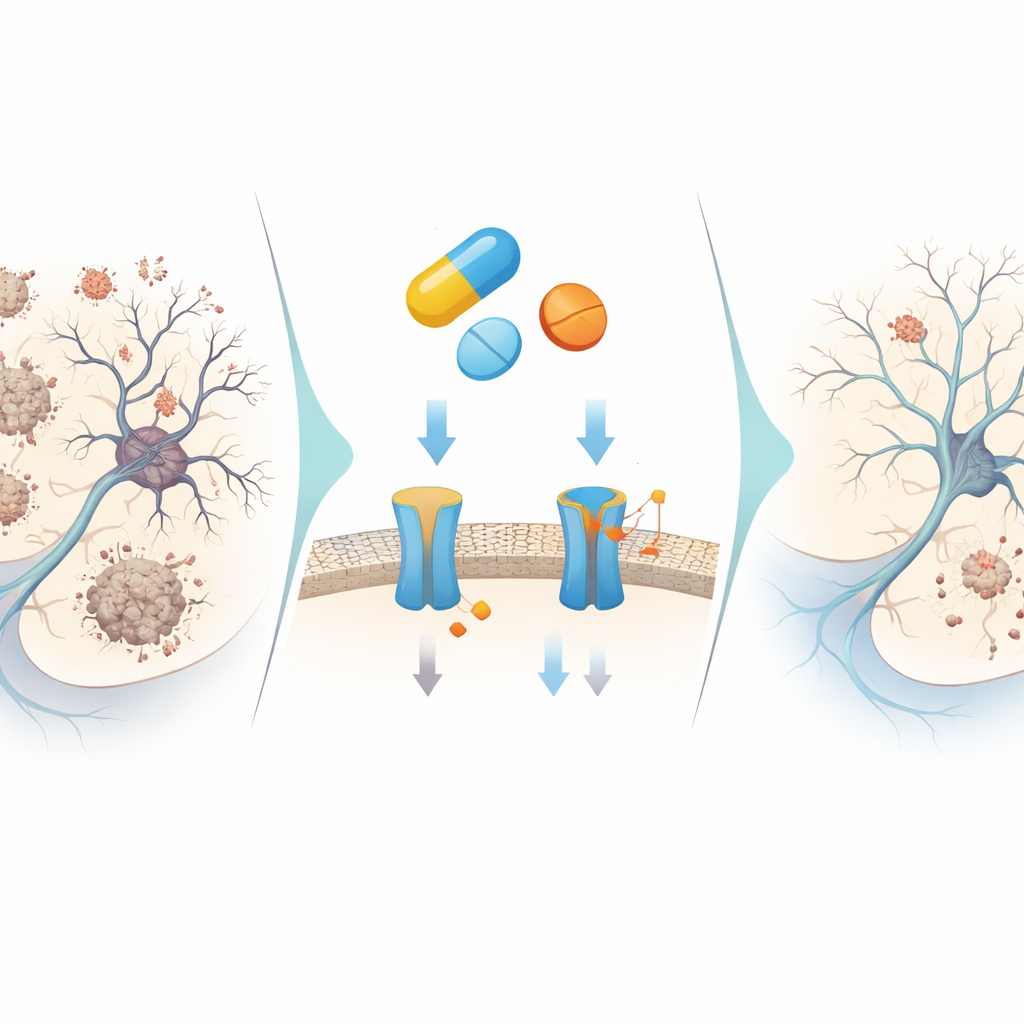
What This Could Mean for Future Treatment
Taken together, the results suggest that ZINC000019796155, an already approved drug, can act like a small molecular multitool: it partially blocks the production of amyloid‑beta, slows its aggregation, limits breakdown of a key memory messenger, quenches harmful oxidants, and helps steer nerve cells away from self‑destruct pathways and tangle formation. Its effects are moderate rather than extreme, which may actually be safer given past failures of overly strong BACE1 blockers. Although the compound will need chemical fine‑tuning and careful testing in animals and eventually people, this study illustrates how smart computer screening combined with targeted lab experiments can uncover new brain‑protective roles for familiar medicines, opening a more efficient route toward future Alzheimer’s therapies.
Citation: Phemphunananchai, K., Waiwut, P., Phetcharaburanin, J. et al. Repurposing FDA-approved drugs as multi-target neuroprotective agents for Alzheimer’s disease via computational screening and experimental validation. Sci Rep 16, 11688 (2026). https://doi.org/10.1038/s41598-026-46708-2
Keywords: Alzheimer’s disease, drug repurposing, BACE1 inhibition, multi-target therapy, neuroprotection