Clear Sky Science · en
Homologous MVA and heterologous DREP/MVA vaccine regimens induce robust and durable immune responses against SARS-CoV-2
Why longer lasting vaccines matter
Many people have grown weary of repeated COVID 19 booster shots. One reason boosters are needed so often is that the protection from current vaccines fades with time, especially against new variants of the virus. This study explores different vaccine designs in mice to see which combinations can keep the immune system ready for much longer, potentially reducing how often boosters are required in the future.
Testing new vaccine building blocks
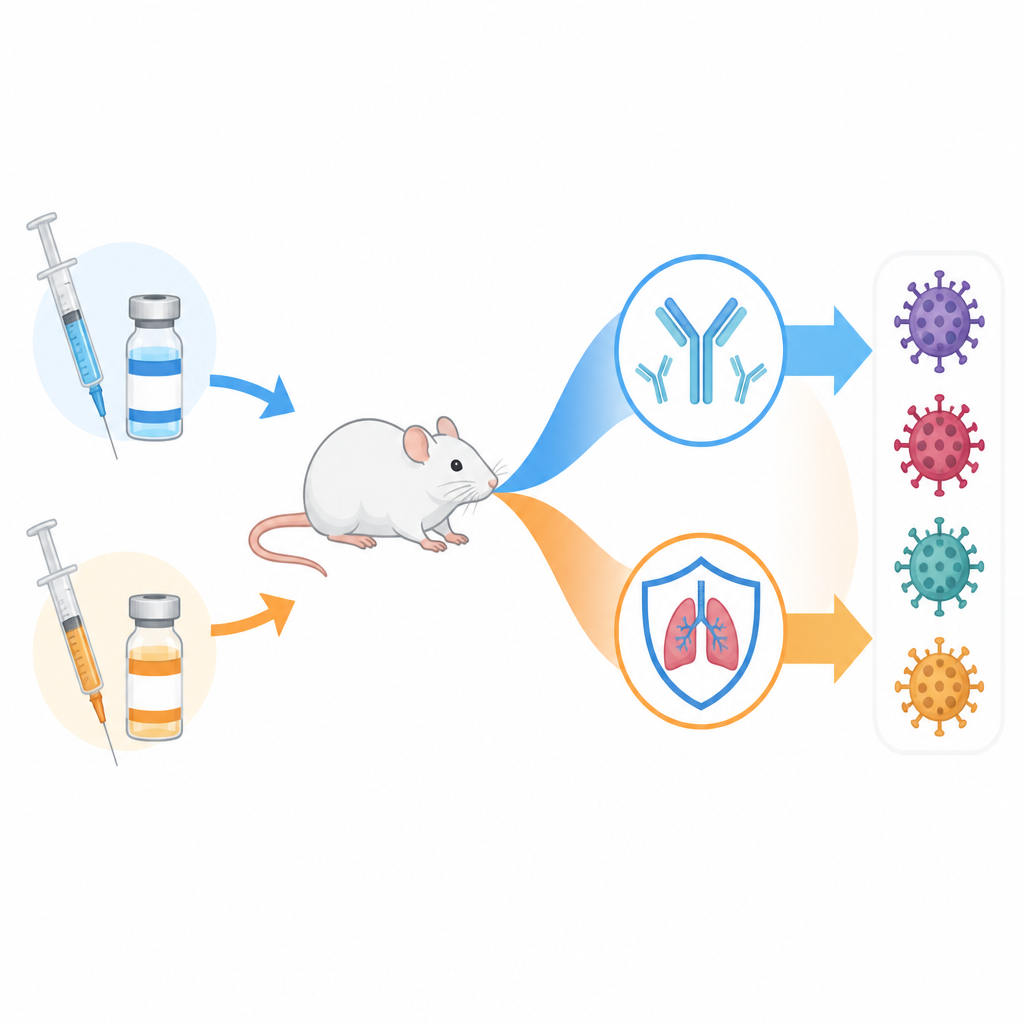
The researchers focused on two experimental vaccine types. One is called DREP, a DNA based approach that makes cells produce self amplifying RNA, which in turn drives strong immune responses. The other is MVA, a weakened poxvirus that has already been used safely in humans for other diseases. Both were engineered to show the immune system the spike protein from either the original Wuhan strain of SARS CoV 2 or the newer Omicron XBB.1.5 variant. Mice received either the same vaccine twice or a mix of DREP followed by MVA and were then followed for six months.
Antibodies that stay strong and recognize many variants
After the booster dose, the groups that received an MVA based booster developed very high levels of antibodies against the spike protein. These antibodies were not only strong, they also remained high for at least six months with only modest decline. Importantly, they could bind spike proteins from several variants, including Beta and multiple Omicron forms. However, when the booster MVA carried the Wuhan spike, it mainly neutralized early virus strains, while the version carrying the XBB.1.5 spike was especially good at neutralizing Omicron subvariants. In contrast, mice that received DREP twice without an MVA boost produced far fewer useful antibodies.
More than blocking the virus
Protection is not just about antibodies that stop the virus from entering cells. Antibodies can also act like flags that call in other parts of the immune system. The team measured three of these helper roles: helping cells swallow virus particles, turning on the complement system, and activating natural killer cells that destroy infected cells. In all of these tests, sera from mice boosted with MVA showed stronger and more durable activity than sera from mice given DREP only. These functions often improved or stayed stable over six months, suggesting that the quality of the antibodies continued to mature.
Training long lived immune memory cells
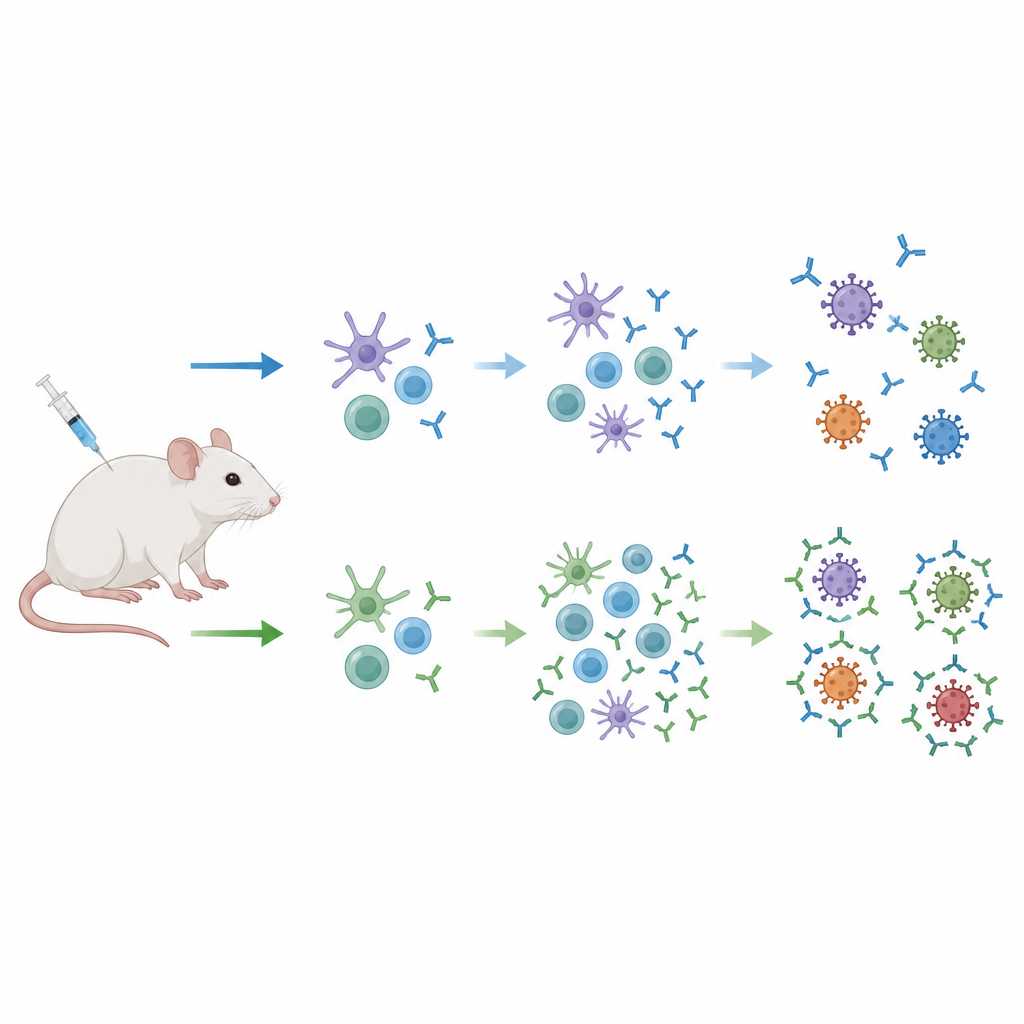
The study also looked deeply at immune cells that support long term protection. Mice that received MVA boosters had more germinal center B cells and class switched memory B cells, which are associated with producing better and longer lasting antibodies. They also had more specialized helper T cells that guide B cells, and robust populations of killer and helper T cells that could recognize spike peptides, perform several jobs at once, and persist for months. These T cells mainly showed an effector memory profile, which is suited for quick action when the virus appears again.
What this means for future COVID 19 boosters
Taken together, the results show that using MVA based vaccines as boosters, whether after an MVA or DREP first shot, creates stronger, broader, and more durable immune responses in mice than repeating DREP alone. While this work was done in animals and does not yet prove how people will respond, it suggests that carefully chosen prime and boost combinations could extend protection against SARS CoV 2 and its variants and reduce how often boosters are needed.
Citation: Pérez, P., Esteso, G., Noriega, M.A. et al. Homologous MVA and heterologous DREP/MVA vaccine regimens induce robust and durable immune responses against SARS-CoV-2. Sci Rep 16, 16207 (2026). https://doi.org/10.1038/s41598-026-46699-0
Keywords: COVID-19 vaccines, SARS-CoV-2 variants, booster shots, immune memory, vaccine combinations