Clear Sky Science · en
Occupational health and safety culture in coal mining: a comparative study of underground and surface workers in Türkiye
Why safety culture in mines matters to everyone
Coal mines supply power and jobs, but they are also among the most dangerous workplaces in the world. This study looks beyond hard hats and warning signs to ask a deeper question: how do miners think and feel about safety, and how does that mindset differ between crews working far below ground and those on the surface? Understanding these patterns can help prevent accidents, protect workers, and inform safer practices in other high-risk jobs.
A closer look at one mining community
The research focused on a coal mine in Edirne, a province in Türkiye, where 168 employees took part in a detailed survey. Most were men and more than half worked underground, with the rest on the surface or in workshops. Instead of counting only accidents, the team measured three aspects of safety culture: how alert workers felt about dangers in general, how they viewed safety training and communication at the mine, and how risky they felt their jobs were. By using a well-tested questionnaire and careful statistical methods, the authors aimed to capture the shared safety mindset inside this single mining organization.
Underground work and fading sense of danger
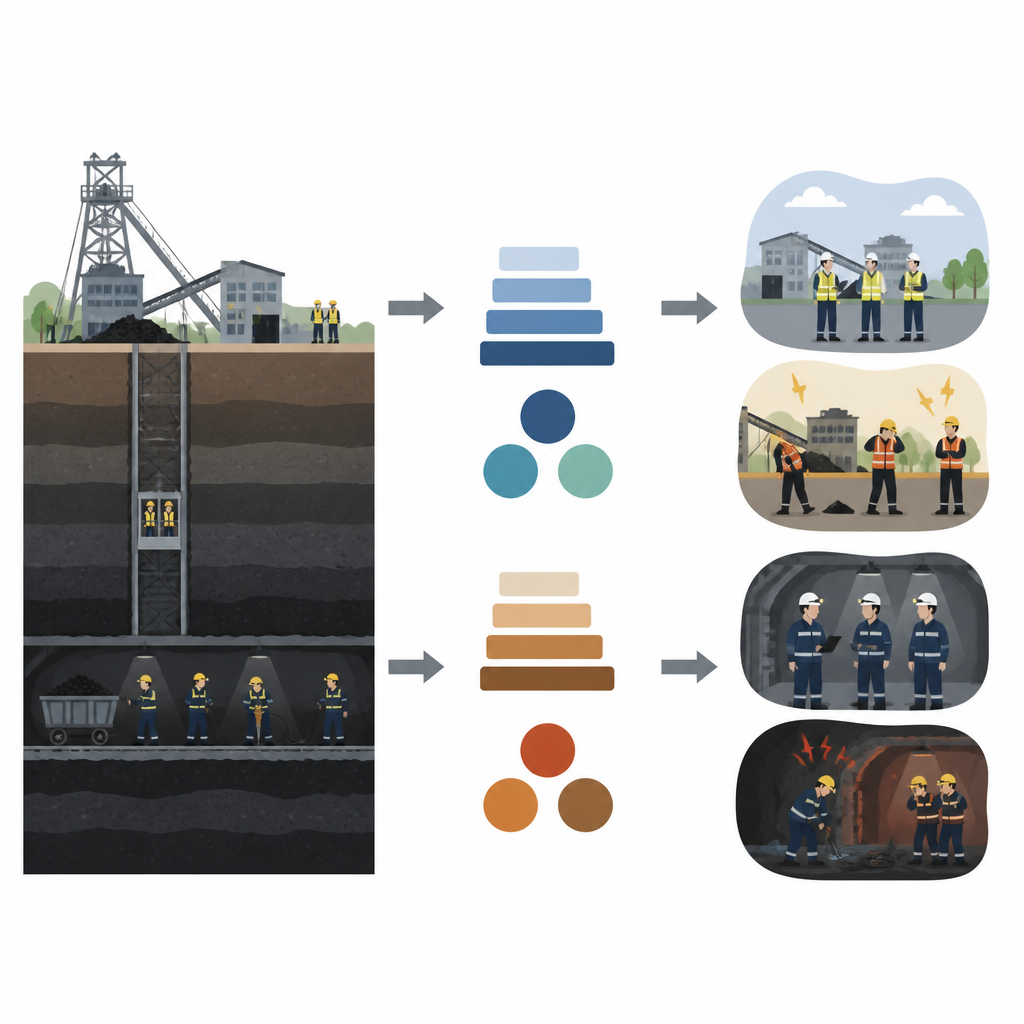
On paper, the mine’s overall safety culture looked fairly strong, yet important cracks appeared when the researchers compared different groups. The biggest gap was between underground and surface staff. Miners working in tunnels reported lower general safety awareness and weaker overall safety culture than their colleagues above ground, even though they face higher day-to-day danger. The authors link this to “risk normalization,” where constant exposure to hazards gradually makes them feel ordinary. Similar patterns seen in mines in other countries suggest that this dulling of risk perception is a widespread issue wherever people work in extreme conditions.
How education and training shape perceptions
Education level also played a key role. Workers with an associate degree or higher showed stronger safety awareness and more positive views of safety culture. Better schooling may make it easier to understand rules, question unsafe habits, and absorb complex instructions. Women in the mine scored somewhat higher on general safety awareness than men, although gender differences were otherwise small. Training told a more nuanced story. Miners who had attended ten or more safety courses reported sharper risk perception, meaning they better recognized hazards. However, this extra training did not clearly lift other parts of safety culture, such as everyday communication about safety, hinting that simply adding more courses is not enough.
Lessons from accidents and near-misses
One surprising finding involved previous accidents and close calls. Workers who had already been in an accident rated safety training and communication more harshly than those without such a history. Rather than feeling reassured, their experience seems to have made them more critical of how safety is managed. In contrast, near-miss events, where an accident almost happens but is avoided, did not seem to change how workers viewed safety culture at all. This suggests that the mine may not yet have strong systems for learning from these warning signs or sharing lessons from them across the workforce.
What these results mean for safer mines
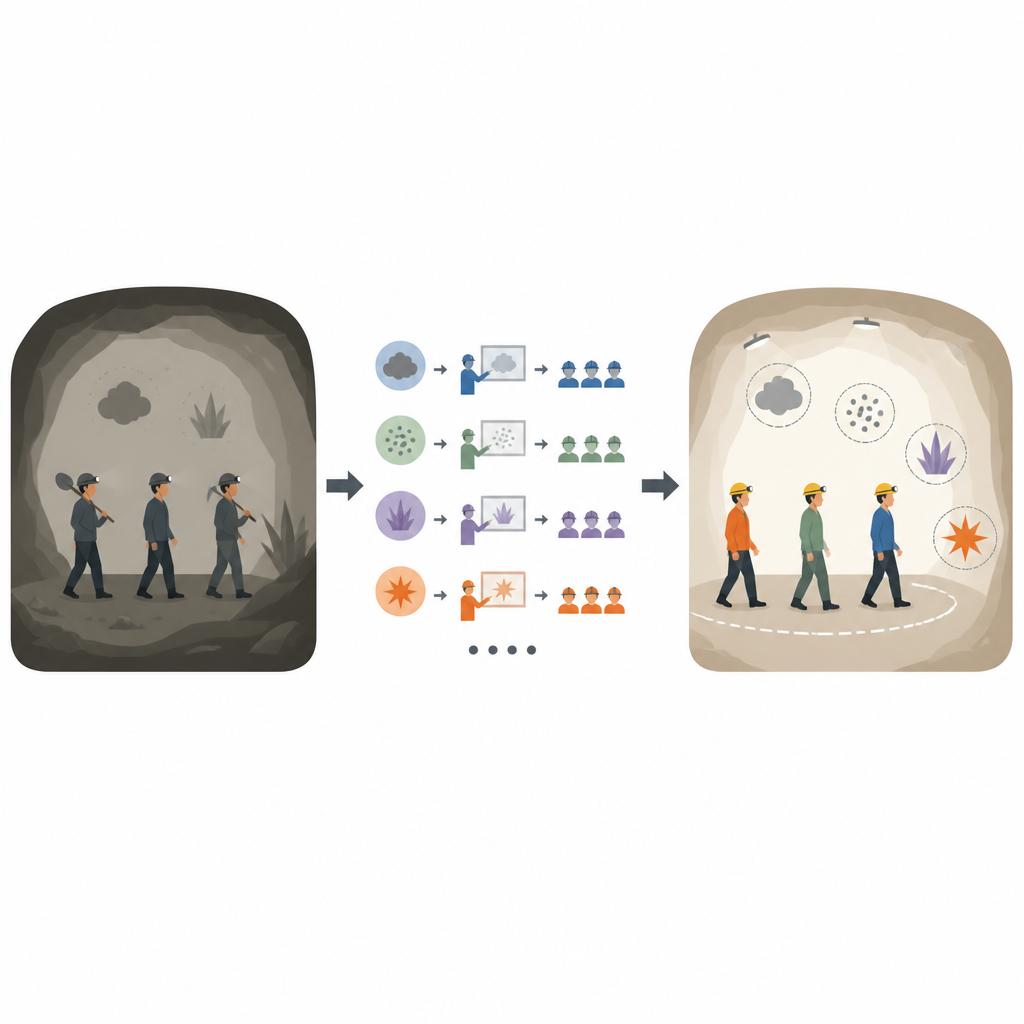
For mining companies, the study sends a clear message: one-size-fits-all safety programs are not enough. Underground crews need targeted drills and realistic practice scenarios that directly address the creeping effect of risk normalization. Training should be adapted to different education levels and focus on real-life problem solving, not just classroom lectures. The authors also argue for open, blame-free reporting of near-miss events so the organization can learn before people get hurt. In plain terms, the study shows that a strong safety culture is more than rules on paper; it depends on how different groups of workers experience their jobs, how they are trained, and whether the organization truly listens when things go wrong.
Citation: Sezer, F., Tuylu, S., Eker, H. et al. Occupational health and safety culture in coal mining: a comparative study of underground and surface workers in Türkiye. Sci Rep 16, 15694 (2026). https://doi.org/10.1038/s41598-026-46488-9
Keywords: coal mining safety, safety culture, risk perception, occupational health, underground workers