Clear Sky Science · en
Longitudinal association of circulating inflammatory biomarkers with epigenetic ageing in the Young Finns Study
Why inflammation and aging matter to you
Getting older is not just about counting birthdays. Some people stay healthy and active longer than others of the same age, and scientists are trying to understand why. This study from the Young Finns Study asks whether quiet, long-lasting inflammation in the body is linked to how fast our cells grow older, using blood tests that act like an internal age meter.
Two clocks that measure inner age
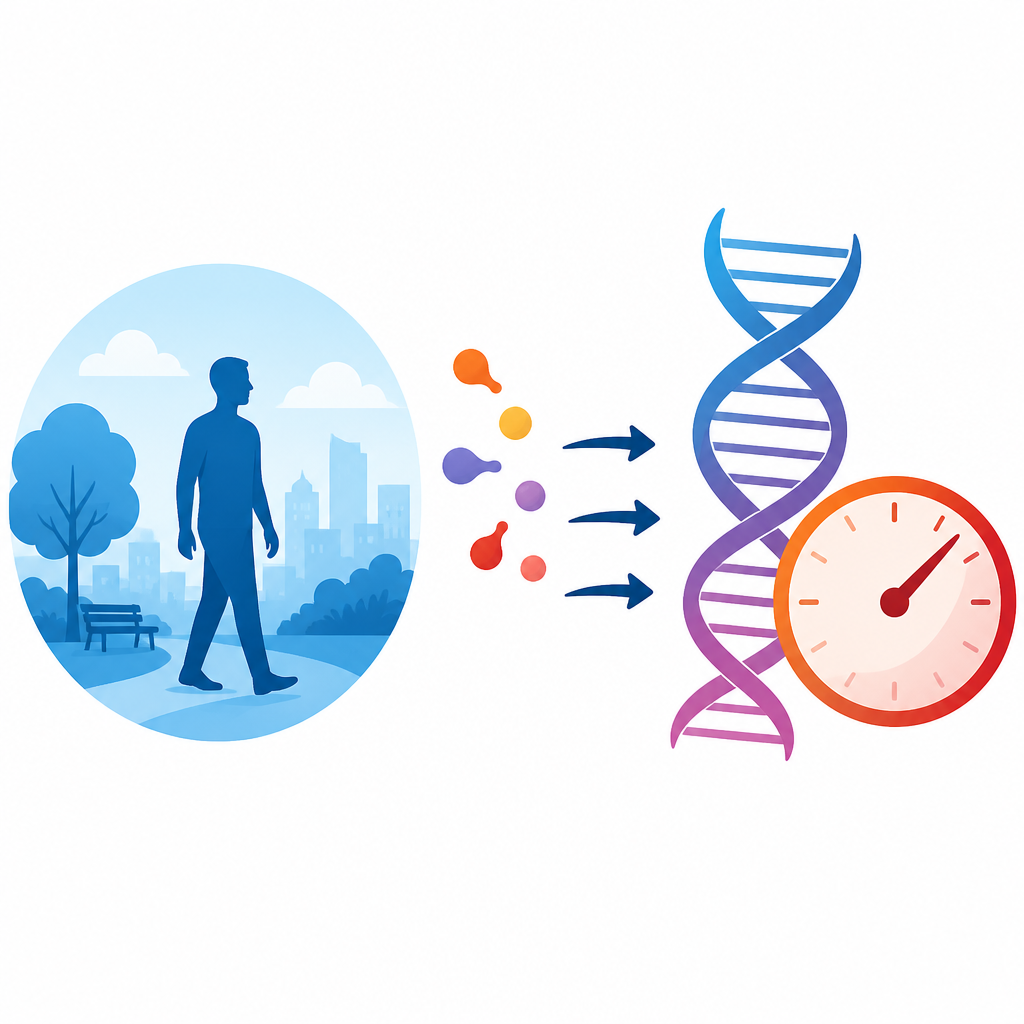
Researchers now use chemical tags on DNA, called DNA methylation, to build “epigenetic clocks” that estimate biological age. In this work, the team focused on two such clocks measured from blood samples: DunedinPACE, which reflects how quickly a person is aging at the moment, and PCGrimAgeDev, which captures how far ahead or behind someone is compared with their actual age. These clocks have been tied to risks of heart disease, cancer, and other conditions, so understanding what speeds them up could reveal why some bodies wear out earlier than others.
Following Finns from early adulthood to midlife
The scientists used data from over 1,300 adults in Finland who have been followed since childhood. When participants were in their thirties and early forties, blood was drawn to measure 38 different inflammatory proteins, often called cytokines, along with C‑reactive protein, a common marker of inflammation. The same people then returned about four years later and again roughly eleven years later, when their epigenetic clocks were read from blood DNA. The researchers also collected information on smoking, body weight, exercise, alcohol use, education, and blood cell types, to make sure any links they saw were not simply due to lifestyle or cell mix.
What the inflammatory signals revealed
Across both follow-ups, higher levels of several inflammatory markers were linked to a faster pace of biological aging as measured by DunedinPACE. Eleven markers, including well-known ones such as C‑reactive protein and IL‑18 and lesser-studied ones like Eotaxin, IL‑5, IL‑7, and a growth factor called HGF, showed consistent positive links: people with more of these molecules tended to age faster according to this clock. For PCGrimAgeDev, which focuses more on long-term risk of death, seven markers were clearly related in the four-year follow-up, but these ties faded by the eleven-year mark, possibly because of smaller sample size and differences in how this clock is built.
A combined picture of body-wide inflammation
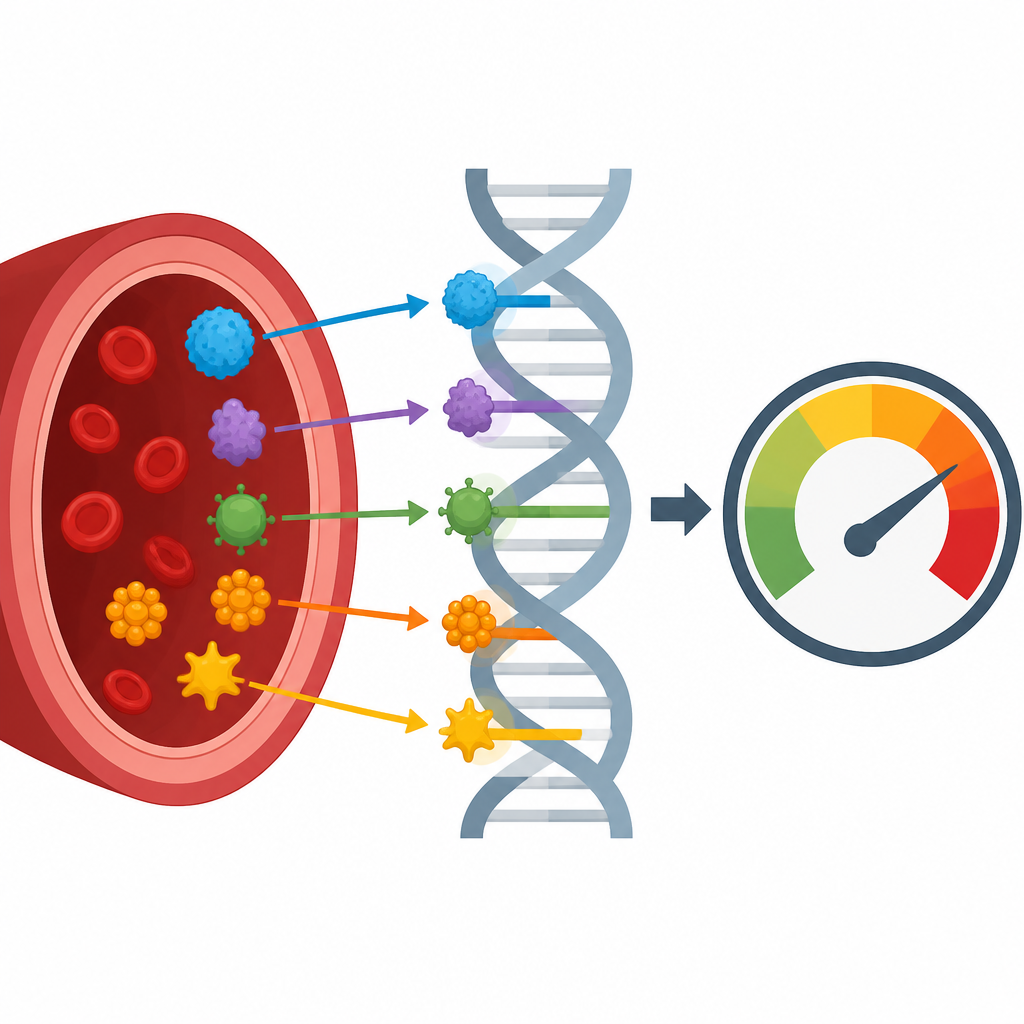
Because no single marker captures inflammation on its own, the researchers also built a combined score from five key blood proteins that were only weakly related to each other. This score was meant to reflect broader, body-wide inflammation. People with higher values on this combined measure tended to show faster biological aging on both epigenetic clocks, at both follow-up times, even after accounting for smoking, weight, and other factors. The findings suggest that several partly independent inflammatory pathways may work together to nudge the body toward faster aging.
What this means for understanding aging
The study shows that in generally healthy, middle‑aged adults, higher low‑grade inflammation is linked to “older” readings on DNA‑based aging clocks years later. It does not prove that inflammation causes aging, but it strengthens the idea that the immune system and its messenger molecules can influence how quickly our tissues wear down. Future work in other populations and with newer clocks may reveal whether calming harmful inflammation could help more people stay biologically younger for longer, even if their calendar age keeps marching on.
Citation: Humaloja, L., Marttila, S., Raitoharju, E. et al. Longitudinal association of circulating inflammatory biomarkers with epigenetic ageing in the Young Finns Study. Sci Rep 16, 15543 (2026). https://doi.org/10.1038/s41598-026-46275-6
Keywords: epigenetic aging, inflammation, cytokines, biological age, DNA methylation