Clear Sky Science · en
Effects of intramuscular quadratus lumborum block on post-cesarean pain: a randomized controlled trial
Why this matters for new mothers
Recovering from a cesarean birth means managing pain while still needing to move, care for a newborn, and start breastfeeding. Many women receive powerful pain medicines that can cause side effects like nausea, dizziness, or difficulty walking. This study asks a simple but important question: can a different way of numbing nerves in the lower back give better pain relief with fewer problems, helping mothers get back on their feet sooner?
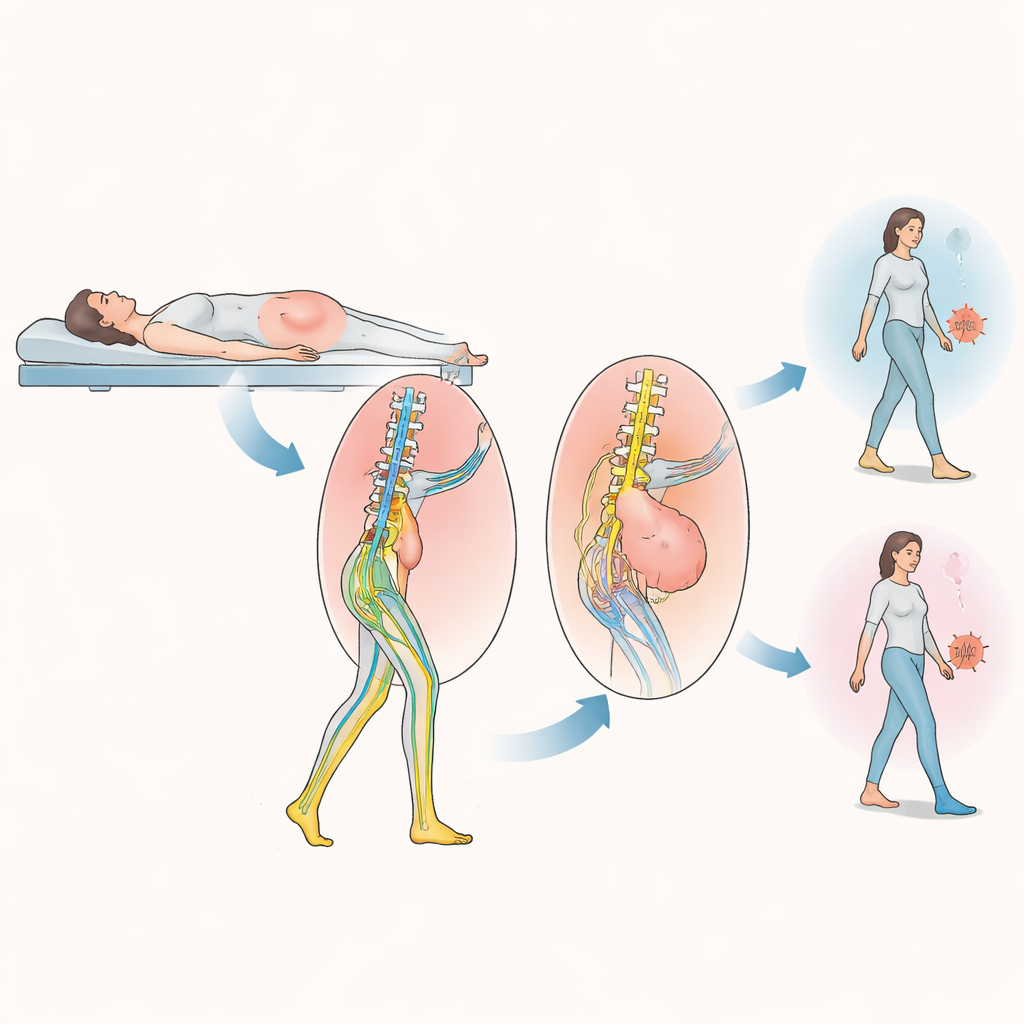
Two ways to quiet pain from the same spot
The research focuses on a pain control method called a quadratus lumborum block, in which an anesthetic drug is injected near a deep back muscle to numb the nerves that carry pain signals from the uterus and abdominal wall. There are several ways to place this injection. The study compares two of them in women having planned cesarean deliveries. One method, called the anterior approach (QLB3), places the drug between two muscles. The other, an intramuscular approach (QLB4), puts the drug directly into the muscle itself. Both are done after surgery, in addition to standard spinal anesthesia and a patient-controlled drip of the opioid painkiller butorphanol.
How the study was run
The trial enrolled 128 healthy women giving birth by cesarean section. All received the same spinal anesthetic for the operation and the same opioid-based pump afterward, which they could press whenever they needed extra pain relief. After surgery, each woman was randomly assigned to receive either QLB3 or QLB4 on both sides of the lower back under ultrasound guidance. Neither the mothers nor the staff checking outcomes knew which method had been used. The researchers then tracked how much opioid each woman used in the first two days, how many times she pressed the pump, how strong her pain was at rest and when moving, how long the numbing effect lasted, and whether she had side effects such as leg numbness, nausea, or dizziness.
Less drug, less pain, and fewer leg problems
Women who received the intramuscular block (QLB4) needed less opioid medication overall in the first 24 and 48 hours after surgery than those who received the anterior block. They also pressed the pain pump fewer times between 6 and 24 hours after the injection and reported lower pain scores both at rest and during movement at 6 and 12 hours. Tests of skin sensation showed that the numbing effect of QLB4 wore off more slowly: nearly all QLB4 patients still had good pain-blocking coverage at 12 hours, compared with about three-quarters of the QLB3 group. By 24 hours, the block had partly faded in both groups, and by 48 hours it had disappeared, which matched what would be expected for a single dose of the anesthetic drug used.
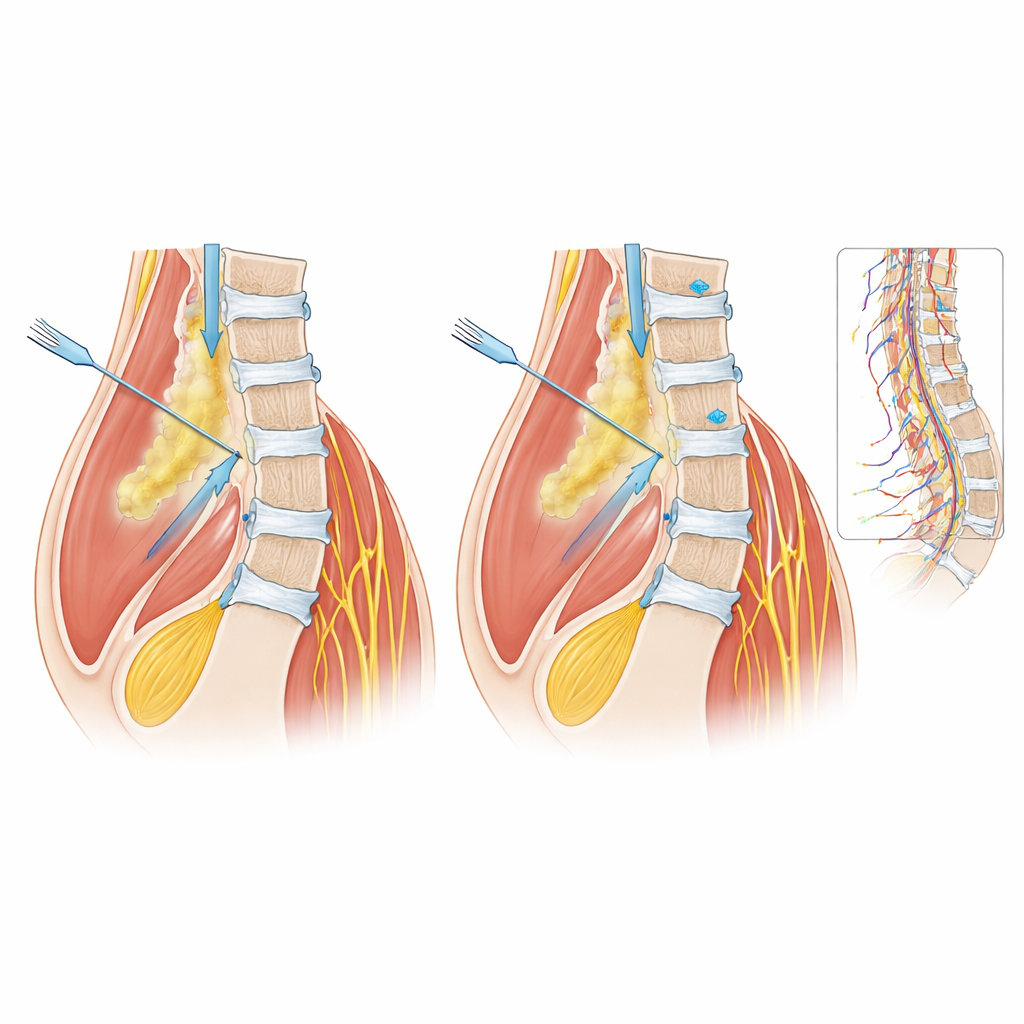
Safety, speed, and comfort for mothers
The clearest safety difference was in leg sensation. Almost half of the women who received the anterior block experienced temporary numbness in the legs, while none of those given the intramuscular block did. This matters because early walking after a cesarean is important to reduce risks like blood clots and to help mothers care for their babies. The intramuscular technique was also quicker to perform and could be done with the woman lying on her back, avoiding an uncomfortable position change after surgery. Despite using less opioid, women in the QLB4 group did not experience more nausea, vomiting, dizziness, or drowsiness. In fact, they reported slightly higher satisfaction with their pain control overall.
What this means for post-cesarean care
For women recovering from cesarean birth, the study suggests that placing the numbing medicine directly into the quadratus lumborum muscle offers a better balance of pain relief, safety, and practicality than placing it between muscles. The intramuscular approach provided stronger and longer-lasting pain control during the crucial first day, reduced the need for opioid drugs, avoided troublesome leg numbness, and was faster and easier to perform. While the authors note that larger and longer studies are still needed, their results support using the intramuscular quadratus lumborum block as a key part of modern pain management plans for cesarean delivery, helping new mothers recover more comfortably and move sooner after surgery.
Citation: Zhong, Y., Tang, Y., Zhang, J. et al. Effects of intramuscular quadratus lumborum block on post-cesarean pain: a randomized controlled trial. Sci Rep 16, 10734 (2026). https://doi.org/10.1038/s41598-026-46025-8
Keywords: cesarean pain, nerve block, postoperative analgesia, maternal recovery, regional anesthesia