Clear Sky Science · en
Development of a school program for vaping and smoking prevention and protocol for a cluster randomized controlled trial in fifth grade students
Why this matters for kids and families
Across Europe and around the world, more children are trying electronic cigarettes, often before they have ever smoked a traditional cigarette. This shift worries doctors and educators, because nicotine can affect the developing brain, and sweetly flavored, colorful devices can make vaping seem harmless and fun. The article describes how researchers in Berlin designed a short, practical school program to help children in disadvantaged neighborhoods stay free of vaping and smoking, and how they will rigorously test whether it works.
New habits, new risks
Regular smoking remains one of the leading causes of disease and early death, but the nicotine landscape for young people has changed. In Germany, more adolescents have tried e-cigarettes than regular cigarettes, and many users are children who might never have smoked otherwise. The liquids and vapors they inhale can damage lungs and blood vessels and quickly lead to dependence. The problem does not affect all families equally: children growing up with less money, more stress, or in deprived neighborhoods are more likely to see adults and peers using nicotine and to start themselves. Girls and boys may also have different reasons for trying nicotine, such as stress relief or wanting to look cool, which means prevention efforts must be sensitive to these differences.
Listening before teaching
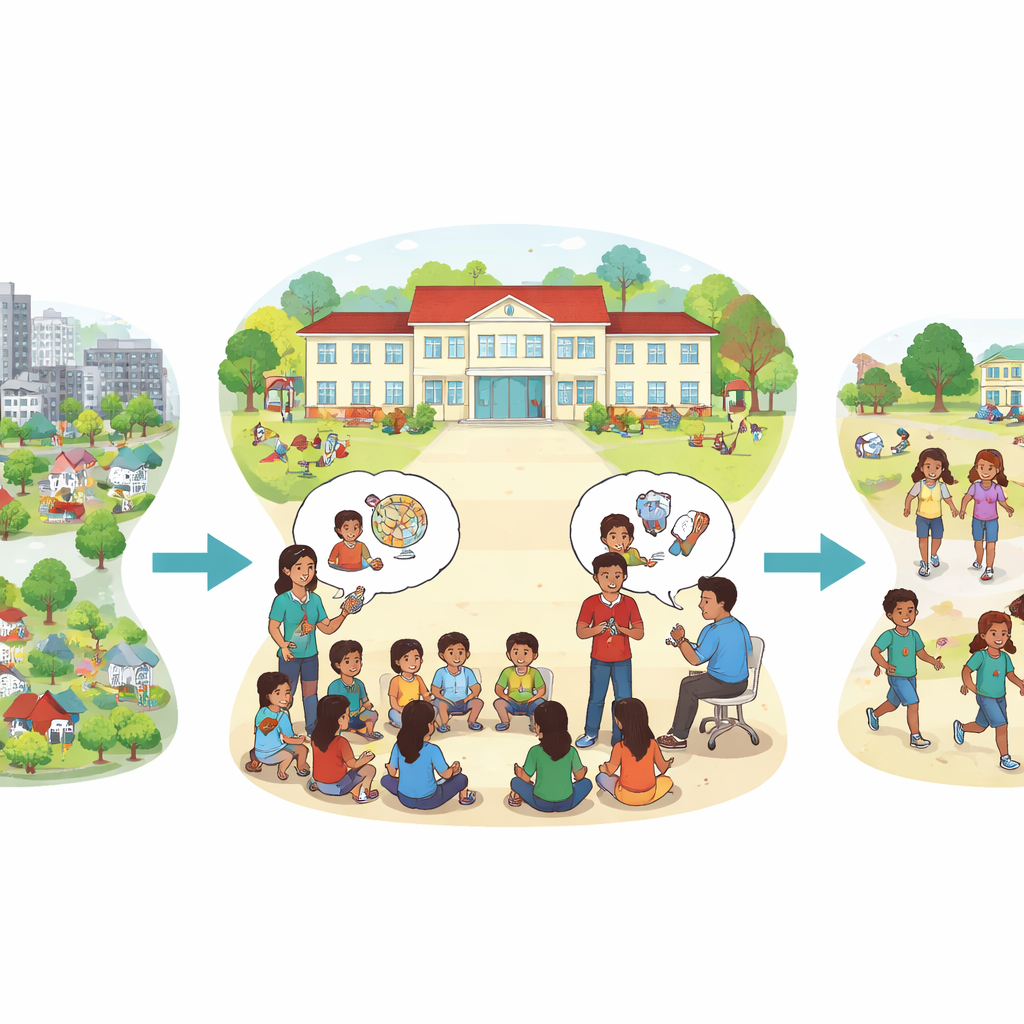
Instead of simply dropping a ready-made lesson plan into schools, the team used a participatory approach. They talked in depth with 62 sixth-grade students, their teachers, school social workers, prevention coordinators, and health experts. They visited classrooms and tested early workshop ideas, then asked for honest feedback. These conversations revealed that many children encounter vaping and smoking as early as grades five and six, often at home, near school grounds, or on social media. Disposable vapes stood out as especially tempting because of their bright colors, fruity smells, and low cost. At the same time, many students were unsure how harmful e-cigarettes really are. Teachers described crowded classrooms, staff shortages, and pressure to focus on core subjects, leaving little time or energy for long, complex health programs.
A short, hands-on school program
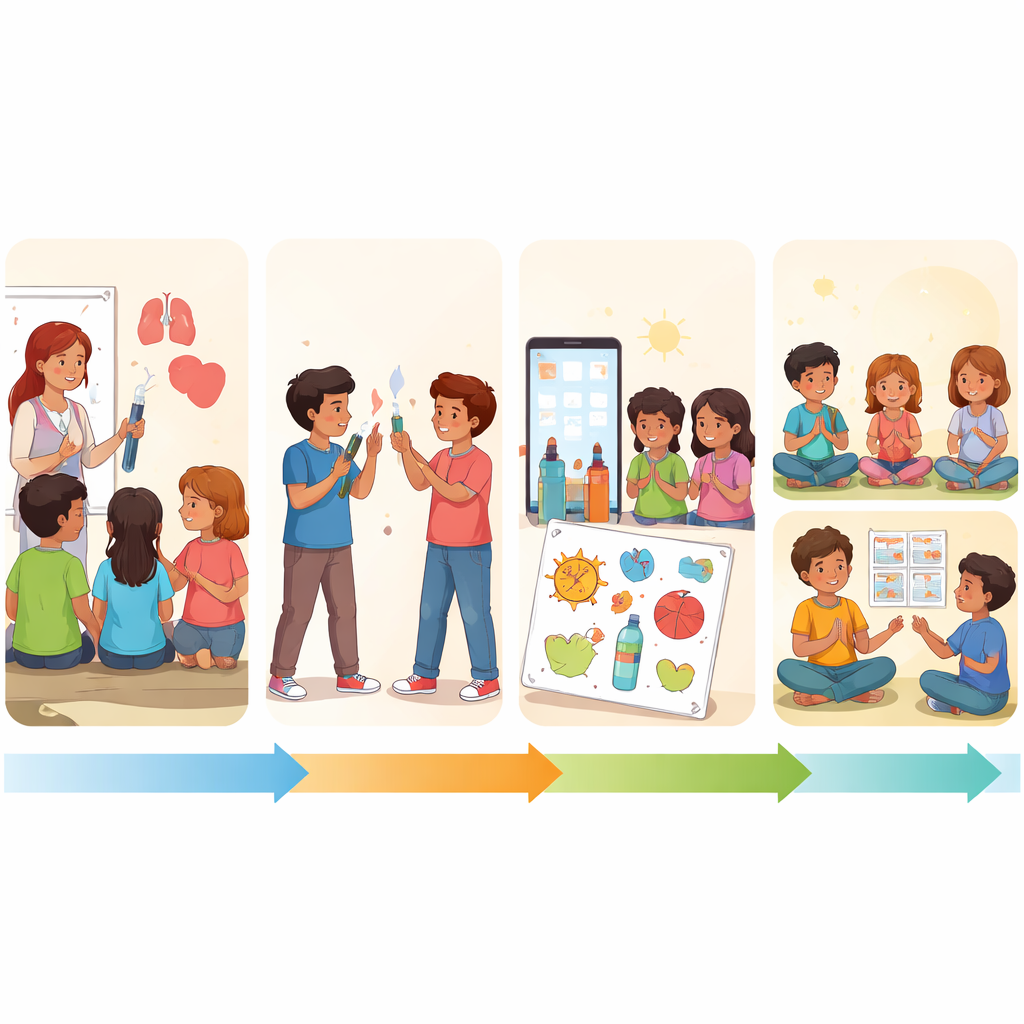
Using this input, the researchers built a three-part program called nachvorn ("ahead") tailored for fifth graders, roughly 10 to 11 years old. Trained facilitators with backgrounds in medicine and psychology visit schools in lower-income Berlin districts and lead interactive sessions during regular class time. The first, longer workshop explains what vaping and smoking do to the body and everyday life, using simple demonstrations, discussions, and an experiment that shows how sticky tar can collect in the lungs. Children practice saying no in realistic role-plays, explore how friends and influencers can pressure them, and discuss how marketing makes vaping look attractive. A mid-year booster has students, guided by their teachers and the visiting team, create posters and images that celebrate being vape- and smoke-free. A final life-skills session focuses on recognizing personal strengths, solving everyday problems, and handling stress and difficult feelings without turning to nicotine.
Reaching stressed schools and diverse students
The program was designed with struggling schools in mind. It is limited to three main sessions to avoid crowding the timetable, and the outside team delivers most of the content so that overworked teachers do not have to master a new curriculum on their own. Materials use simple language and diverse figures, and can be understood by students who speak many different home languages. In a trial run with 13 classes, both children and teachers rated the workshops as enjoyable and practical. The researchers also learned that nearly 12 percent of mostly 11- to 12-year-olds had already tried at least one nicotine product, and more than one third of never-users were open to trying vaping or smoking in the future, underlining the need to act early.
Putting the program to the test
The next step is a large, carefully planned study involving at least 1,500 fifth graders in 26 schools with high social and economic strain. Schools will be randomly assigned either to receive the new program or to continue with their usual lessons on addiction. Over one year, the team will track whether children in the program are more likely to intend to stay nicotine-free, less likely to start using nicotine products, and better able to resist peer pressure and manage stress. They will also examine how results differ by gender, family income, migration background, language, religion, and health status, to understand which children benefit most and why. In simple terms, the study aims to find out whether a brief, well-designed set of school workshops can help children in tough circumstances protect themselves from vaping and smoking—and how future programs can be tailored so that no group is left behind.
Citation: Hinssen, M., Kohn, J., Mohammad, J. et al. Development of a school program for vaping and smoking prevention and protocol for a cluster randomized controlled trial in fifth grade students. Sci Rep 16, 13263 (2026). https://doi.org/10.1038/s41598-026-45720-w
Keywords: youth vaping prevention, school health programs, nicotine and adolescents, socioeconomic disparities, Berlin school study