Clear Sky Science · en
Human-centric participation paradigm: exploring the enjoyment experience of cultural heritage virtual museum based on system usability and VR technology
Why virtual visits can feel so captivating
Imagine wandering through the Forbidden City without boarding a plane, walking past carved beams and painted halls while standing in your living room. Virtual museums promise exactly this kind of armchair travel. But why do some online tours feel flat, while others are so gripping that you lose track of time? This study looks inside that experience, asking what makes a virtual museum not just informative, but genuinely enjoyable.
From glass cases to active exploring
Traditional museums often place visitors in the role of quiet observers. Virtual museums, especially those using virtual reality (VR), flip that script. They invite people to move, look around, and choose their own path through digital galleries. The authors argue that this shift makes enjoyment just as important as information. Enjoyment here means more than a pleasant moment; it includes curiosity, emotional connection, and a sense of personal meaning. To understand these feelings, the team focuses on the Palace Museum’s VR project in China, which lets users explore a richly reconstructed Forbidden City on screens and VR headsets.
What makes a digital museum feel easy and inviting
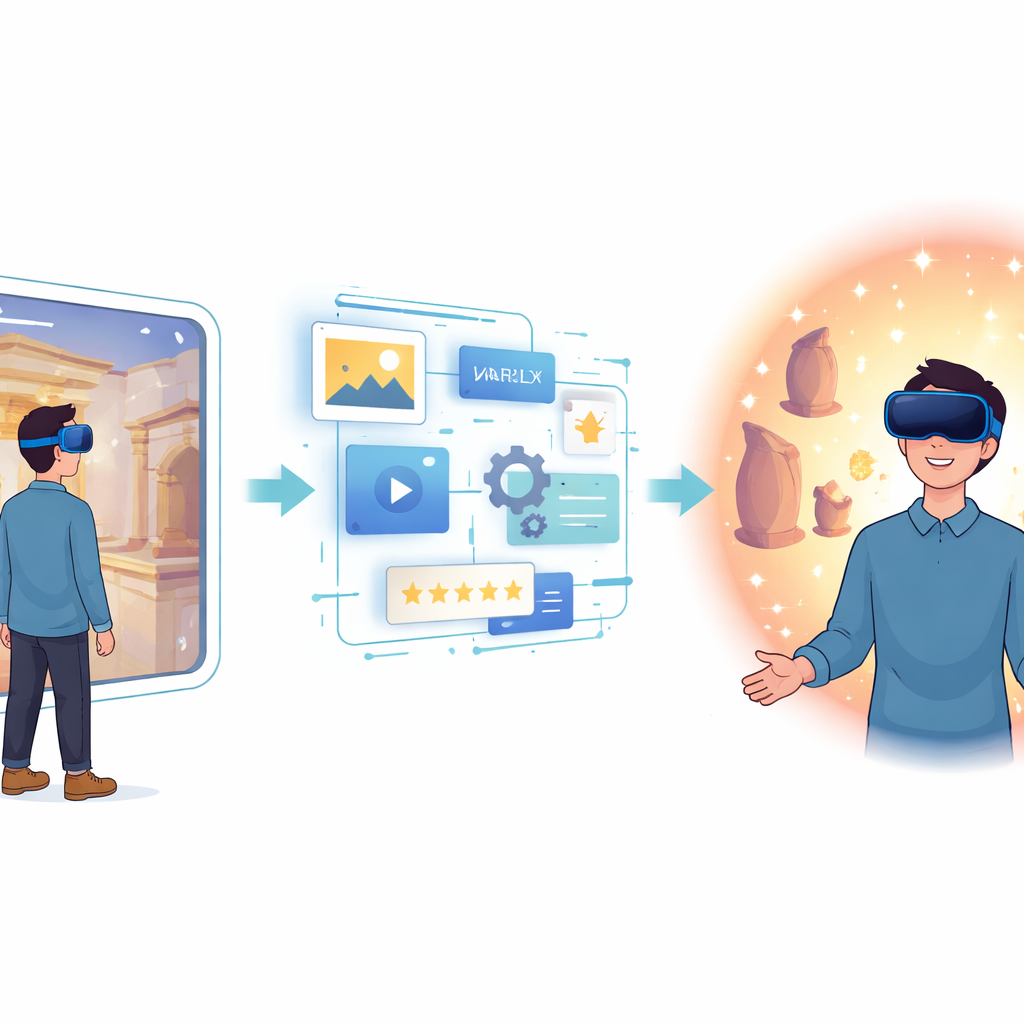
The researchers break “system usability” into four down-to-earth parts: the quality and clarity of the cultural content; how attractive and simple the interface looks; whether the technology runs smoothly; and how well the system supports interaction, such as moving around or zooming in. They surveyed 630 people who had actually completed a visit to the VR Palace Museum. Using a statistical approach that looks at how many factors work together, they asked how these design elements shape five inner reactions: finding the system useful, feeling curious, feeling joyful, feeling in control, and feeling immersed or “drawn in.”
How inner feelings build up to real enjoyment
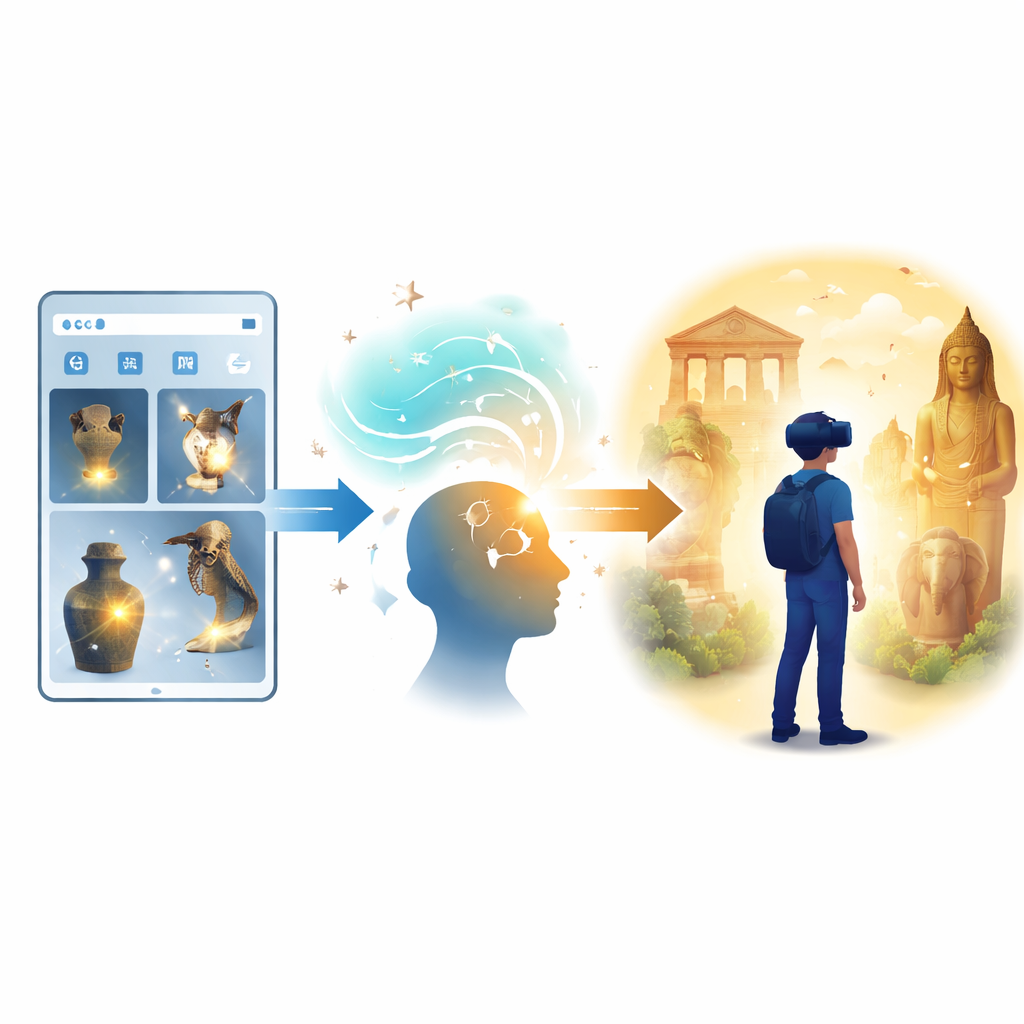
The results show that when the virtual museum is easy to navigate, visually appealing, technically stable, and interactive, people report stronger positive reactions on all five fronts. However, not all reactions matter equally for enjoyment. Immersion—the sense of being fully absorbed in the virtual environment—turns out to be the star player, with by far the strongest link to overall enjoyment. Curiosity and joy also make a difference, nudging people to explore more deeply and stay longer, while perceived usefulness adds a modest boost by making the experience feel worthwhile, not just entertaining. Surprisingly, feeling in control of the interface does not directly increase enjoyment. The authors suggest that in a story-rich setting like a virtual palace, people care more about being carried along by a compelling experience than about fine-tuning every button and setting.
Why basic human needs still matter
The study also tests three basic psychological needs known from motivation research: autonomy (feeling that you are choosing your own path), competence (feeling capable), and relatedness (feeling socially connected). Together, these needs slightly change how usefulness relates to enjoyment. When people feel that these needs are being met, they are more likely to translate a useful virtual museum into a satisfying one. For the other inner reactions—curiosity, joy, control, and immersion—the influence of these needs is less pronounced, perhaps because a vivid VR setting already delivers strong emotional impact on its own.
Design lessons for future virtual visits
For museum professionals and digital designers, the message is clear: smooth technology is only the starting point. The real key is crafting experiences that pull visitors into a believable cultural world. Rich yet clear content, inviting visuals, and responsive interaction all feed a powerful sense of immersion, which in turn drives enjoyment. Adding elements that support choice, achievement, and social connection can further help people feel that their time in a virtual museum is not only entertaining but personally meaningful.
Citation: Hao, X., Xu, J. & An, G. Human-centric participation paradigm: exploring the enjoyment experience of cultural heritage virtual museum based on system usability and VR technology. Sci Rep 16, 14527 (2026). https://doi.org/10.1038/s41598-026-45243-4
Keywords: virtual museum, virtual reality, user experience, cultural heritage, immersion