Clear Sky Science · en
COVID-19 pandemic and vaccine hesitancy in a Brazilian state capital
Why this topic matters to everyday life
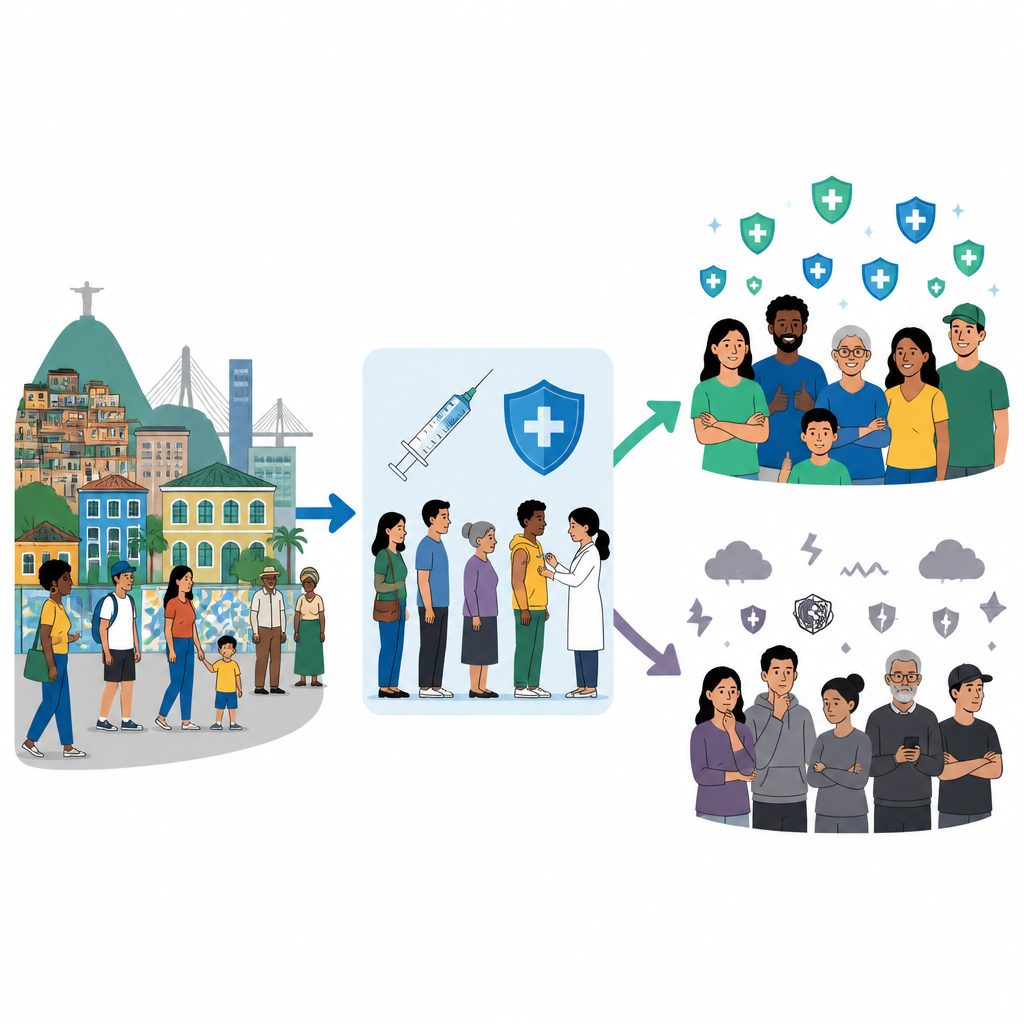
The COVID-19 pandemic not only filled hospitals and news feeds, it also changed how people feel about vaccines in general. This study looks at residents of Campo Grande, a Brazilian state capital, to see whether the crisis left people more doubtful or more trusting of vaccines. Understanding these shifts helps health services plan how to keep communities protected against old and new diseases.
Taking the pulse of one city
Researchers visited households across urban neighborhoods in Campo Grande between late 2022 and 2023. They interviewed more than 500 residents aged 12 and older, asking about age, schooling, income, living conditions, and health coverage. They also recorded how many doses of COVID-19 vaccine each person said they had received and whether they personally felt hesitant about that vaccine. To go beyond a simple yes or no, the team used a standard World Health Organization questionnaire that measures doubts and trust around vaccination in general, not just COVID-19. Importantly, they asked people to answer these questions twice: once thinking back to the period before the pandemic, and once for how they felt at the time of the interview.
Measuring trust and worry
The questionnaire contained ten statements about vaccines, such as whether they are important, whether new vaccines seem riskier, and whether information from health services is seen as trustworthy. People rated how strongly they agreed or disagreed on a simple scale. The researchers combined the answers into two main groups. One group of items reflected confidence in vaccines and the health system, while another captured how risky people felt vaccines were, especially newer ones or possible side effects. By comparing scores for the “before” and “after” periods, the team could track how attitudes shifted as a result of living through the pandemic.
What changed after the pandemic
Overall, people in Campo Grande still viewed vaccines positively. Most participants reported no hesitation about taking a COVID-19 shot, and nearly two thirds said they had received at least three doses. At the same time, subtle but clear changes emerged in the numbers. After the start of the pandemic, agreement fell for statements that vaccines are important, that those offered by the public health system are beneficial, and that information from official programs is reliable. Agreement rose for statements that new vaccines carry more risks and that serious side effects are a concern. When these answers were converted into scores, both the “lack of confidence” and “risk perception” measures increased, showing a rise in vaccine hesitancy over time.
Who was most hesitant
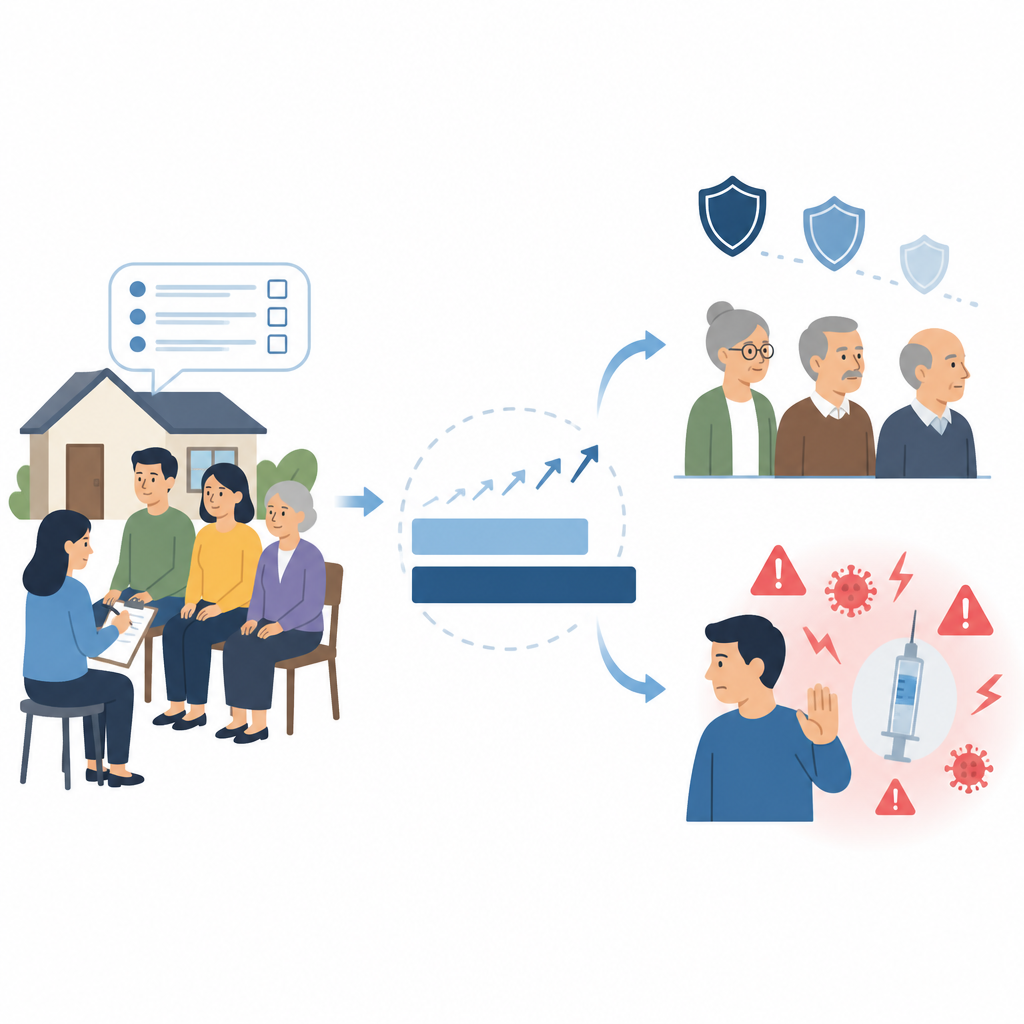
The researchers then looked at which groups showed the biggest shifts. Older participants tended to lose more confidence in vaccines than younger ones, even though older adults are more at risk from many infections. People who described themselves as hesitant about the COVID-19 vaccine scored higher on both lack of confidence and perceived risk than those who did not. In contrast, residents who had received three or more COVID-19 doses showed smaller increases in doubt, suggesting that actually going through the vaccination process may strengthen trust. The study also hints that crowded households and lack of private health coverage may shape how people weigh risks and benefits, although these patterns were less clear.
What this means going forward
For people outside the research world, the message is that living through COVID-19 left a mixed legacy in this Brazilian city. Most residents still value vaccines and follow health advice, but a noticeable minority has grown more uneasy, especially about the safety of newer shots and the reliability of official information. Older adults and those already wary of COVID-19 vaccines seem particularly affected. These findings suggest that future vaccination campaigns cannot rely only on past success. They need clear communication, attention to fears about side effects, and visible efforts to rebuild trust so that routine and new vaccines remain an accepted and expected part of community life.
Citation: do Nascimento, A.I., dos Santos Conrado, D., Mareto, L.K. et al. COVID-19 pandemic and vaccine hesitancy in a Brazilian state capital. Sci Rep 16, 14923 (2026). https://doi.org/10.1038/s41598-026-45085-0
Keywords: vaccine hesitancy, COVID-19, Brazil, public trust, risk perception