Clear Sky Science · en
Evidence for virus-associated recapping behaviour in honey bees (Apis mellifera) with differential detection sensitivity between varroa-resistant and non-resistant colonies
Why sick bees matter to us
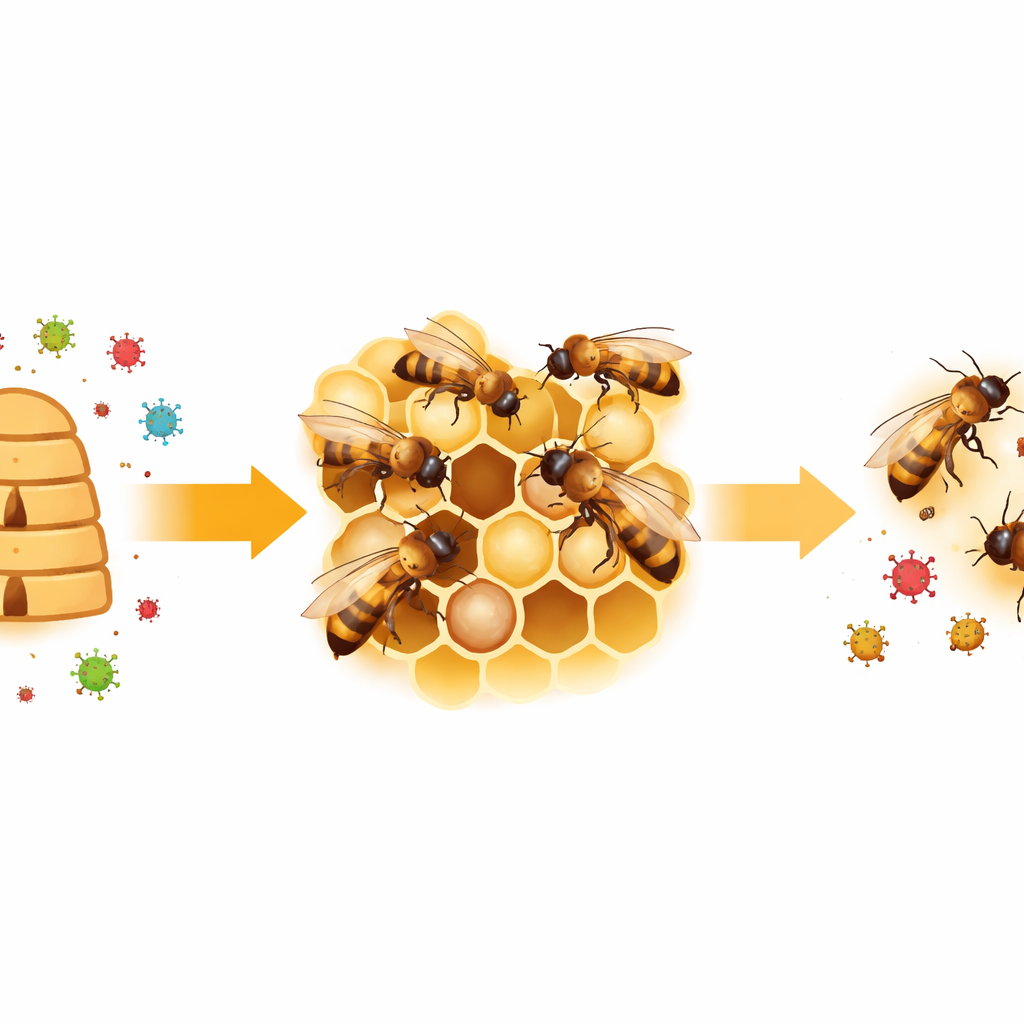
Honey bees do far more than make honey: they pollinate many of the fruits, vegetables, and wild plants we rely on. Around the world, however, honey bee colonies are under heavy attack from a tiny parasite called the Varroa mite and the viruses it spreads. This study explores a subtle defensive trick used by bees—briefly opening and then resealing wax caps over developing young, a behaviour called “recapping”—to see how it relates to viral infections and why some bee populations cope better with mites and viruses than others.
A tiny parasite with a big impact
Varroa mites latch onto bee larvae and pupae developing inside capped wax cells, feeding on their tissues and injecting a cocktail of viruses. Two of the most damaging are Deformed Wing Virus (DWV), which can leave bees with shrivelled wings, and Sacbrood Virus (SBV), which kills larvae before they become adults. Other viruses, such as Acute Bee Paralysis Virus, Black Queen Cell Virus, and Lake Sinai Virus, also circulate in colonies. Together, these infections weaken individual bees and can push entire colonies toward collapse, making any natural defence that reduces virus damage extremely valuable.
Bee housekeeping at the brood nest
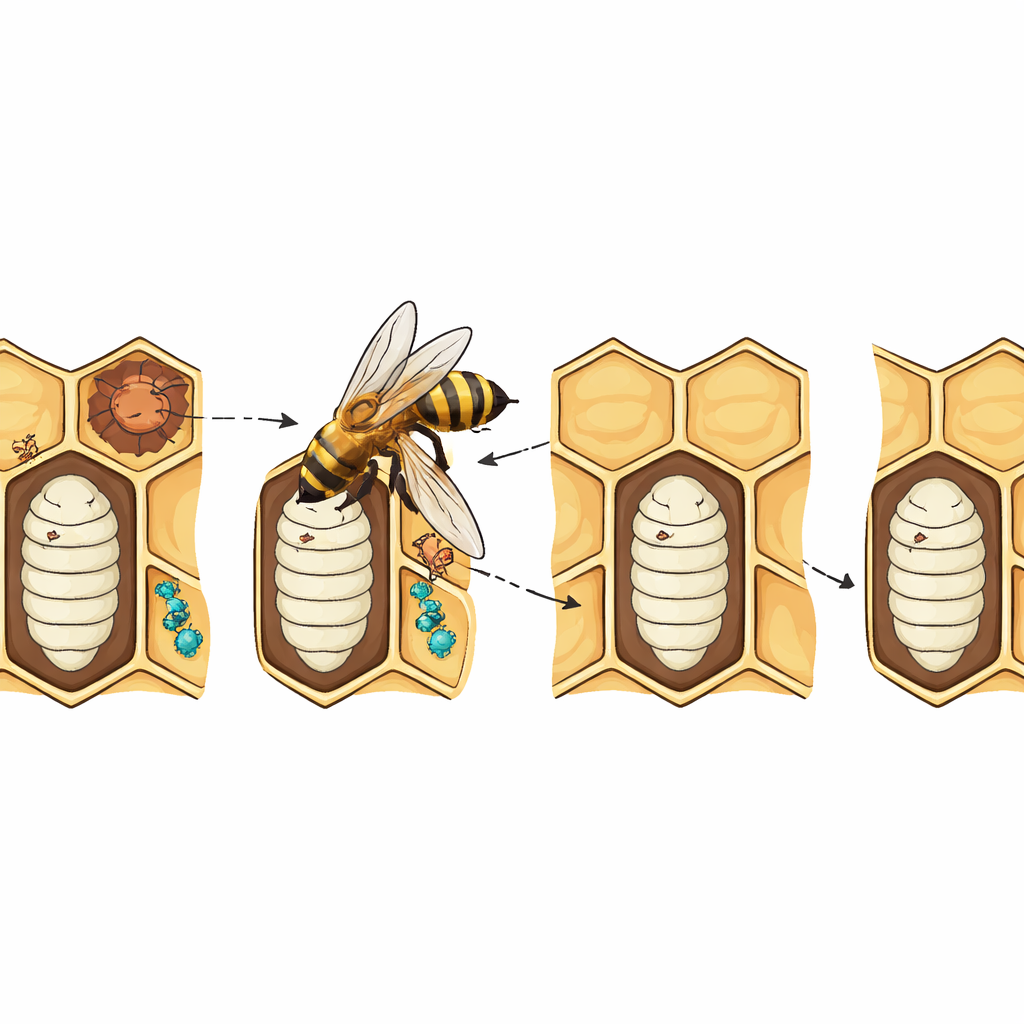
Honey bees practice “social immunity”: group-level behaviours that help keep the colony healthy. One well-known example is workers detecting and removing diseased or mite-infested brood. Recapping is a gentler variant. Workers briefly unseal a brood cell, inspect the developing pupa, and then reseal the cap without removing it. Previous work suggested that recapping can disrupt mite reproduction, giving colonies an edge against Varroa. The authors of this study wondered whether viruses inside the brood might also influence when and where workers choose to recap cells, and whether this link differs between colonies that naturally withstand Varroa and those that do not.
Setting up resistant and non-resistant colonies
The researchers worked with nearly virus-free colonies from a Varroa-free island and replaced some queens with queens from a Swedish population known to survive long-term without mite treatments. Colonies headed by these “Gotland” queens are considered Varroa-resistant, while those with original queens served as non-resistant controls. After allowing time for new workers to emerge, all colonies were deliberately exposed to mites. The team then opened over two thousand brood cells, recording whether each had been recapped and whether mites were present. From these, 275 pupae—recapped and untouched, from both resistant and control colonies—were frozen and later tested for five major viruses using sensitive molecular techniques.
What the viruses revealed
DWV turned out to be almost everywhere, infecting over 90 percent of pupae, with SBV the next most common. Resistant colonies had a noticeably lower overall share of DWV-infected pupae and, importantly, lower DWV amounts in those pupae than non-resistant colonies, hinting at better control of this infection. When the researchers compared recapped and untouched cells, patterns began to emerge. In both resistant and non-resistant colonies, SBV was more common in recapped cells than untouched ones, but this difference was especially strong and statistically clear in the resistant bees. For several other viruses, differences were weaker or rare, suggesting that simply having a virus, rather than its exact quantity, is more closely tied to whether workers decide to recap.
How bees may “smell” sickness
The findings fit with a growing picture of bees using chemical cues—tiny airborne signals given off by brood—to judge health. Earlier studies have shown that varroa-infested or virus-infected pupae release different blends of smells, which can trigger hygienic behaviours. The authors propose that workers in resistant colonies may be especially sensitive to virus-induced changes, particularly from SBV and perhaps DWV. After opening a cell, workers may assess whether the pupa is lightly or heavily affected. Instead of automatically sacrificing any sick brood, they may remove the worst cases but recap those with moderate infections that still have a good chance of becoming useful adults, balancing disease control against the cost of losing too many young bees.
What this means for protecting bees
To a layperson, the key message is that honey bee colonies do not passively endure disease: they actively screen and manage infections within the brood nest. This study suggests that certain viruses, especially Sacbrood Virus, are linked to when workers choose to open and reseal brood cells, and that colonies naturally resistant to Varroa may be better at detecting subtle signs of infection. Understanding these fine-tuned behaviours could help breeders select for bees that are not only tolerant of mites but also adept at managing viruses on their own, reducing the need for chemical treatments and supporting more sustainable beekeeping.
Citation: Noël, A., Boer, C.G.A., Kotrschal, S.D. et al. Evidence for virus-associated recapping behaviour in honey bees (Apis mellifera) with differential detection sensitivity between varroa-resistant and non-resistant colonies. Sci Rep 16, 10499 (2026). https://doi.org/10.1038/s41598-026-44836-3
Keywords: honey bee health, Varroa mites, bee viruses, social immunity, hygienic behaviour