Clear Sky Science · en
Knowledge, attitudes and practices of occupational safety among healthcare professionals at Dr. Sumait hospital, Mogadishu, Somalia
Why Protecting Hospital Staff Protects Everyone
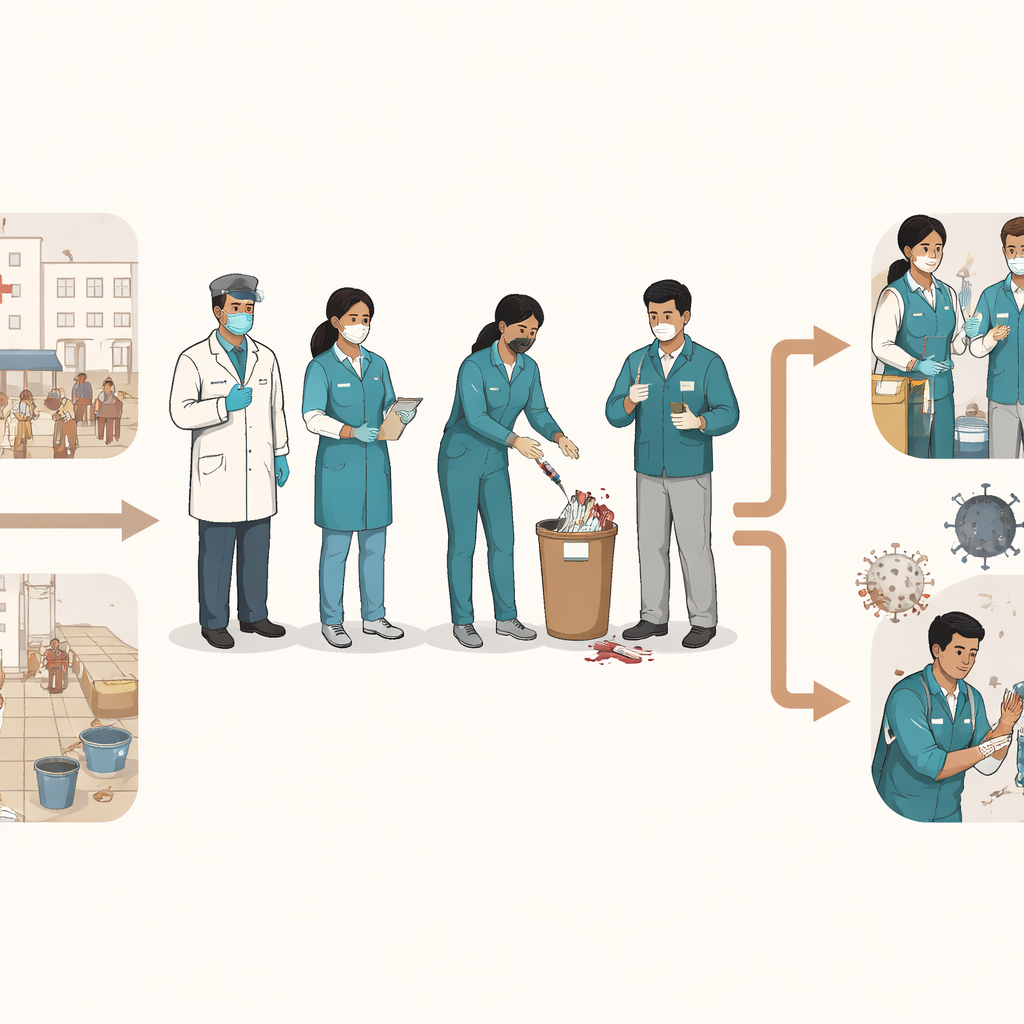
Every day, doctors and nurses put themselves in harm’s way to care for patients. In busy hospitals, especially in countries with limited resources, they face risks from blood, sharp needles, and infectious germs. This study from Dr. Sumait Hospital in Mogadishu, Somalia, takes a close look at how well healthcare workers understand and follow basic safety steps. By examining what staff know, how they feel, and what they actually do, the researchers reveal where the system is working—and where dangerous gaps remain that matter for both workers and patients.
Taking the Pulse of Safety in a Somali Hospital
The research team surveyed all 87 healthcare professionals working at Dr. Sumait Hospital, a teaching hospital with multiple departments, including surgery, intensive care, and maternity. Using an online questionnaire in Somali, they asked about staff training, vaccination, and everyday habits such as handwashing, use of gloves, and handling of medical waste. Most participants were young adults, many were nurses or doctors, and nearly seven in ten had previously attended training on assessing workplace risks. The goal was not to test them like students, but to build a detailed snapshot of how safety plays out in real hospital life.
What Workers Know and Believe About Safety
The results showed encouraging levels of knowledge. Nearly all staff said they knew how to use protective gear and understood how infections can spread. Most were aware of risks in their workplace and reported knowing how to handle used needles and other sharp instruments. Many also recognized that wearing gloves, masks, and other equipment lowers the chance of infection. However, their understanding was weaker in more specialized areas, such as how to separate different types of medical waste or exactly when to start medicines that can protect against HIV after a risky exposure. Attitudes were also largely positive: staff valued safety training, supported routine risk checks, and strongly favored vaccination of healthcare workers.
Good Habits—and One Especially Risky One
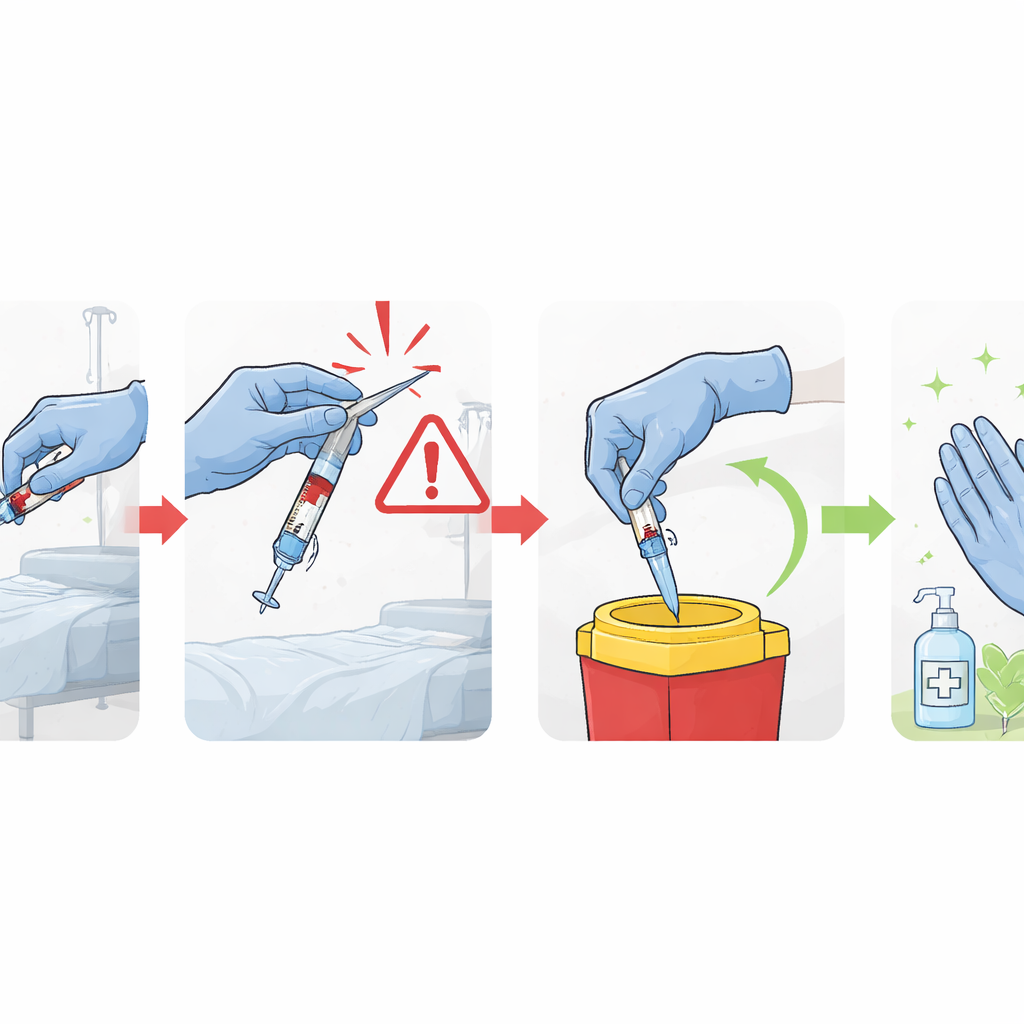
When it came to reported behavior, many workers said they followed key safety steps. Almost all described washing their hands after patient contact, wearing gloves during risky procedures, using protective gear during routine care, and cleaning their work areas. Most said they separated medical waste, monitored how it was handled, and used safety manuals when available. Yet beneath this positive picture, the study uncovered several red flags. Nearly one in three workers had suffered a needlestick or similar injury within the past year, but only a small fraction of those received preventive HIV treatment afterward. Even more striking, about three-quarters admitted they routinely put the cap back on used needles—a practice known to sharply increase the risk of accidental injury.
Why Unsafe Needle Use Still Happens
The tension between high knowledge and unsafe practice suggests that the problem is not just ignorance. Many workers knew the basics of infection prevention and said they believed in safety, yet habits like recapping needles persisted. The study points to several likely reasons: safety guidelines were not available in all departments, reporting systems for injuries may be weak or discouraging, and regular supervision may be lacking. In a setting where staff are stretched thin and supplies are limited, shortcuts can more easily become routine, even when people understand the risks.
Building a Safer Hospital for Staff and Patients
Overall, the study paints a mixed picture. On paper, staff at Dr. Sumait Hospital are well informed and generally supportive of protective measures. In practice, however, dangerous behaviors such as needle recapping, underreporting of injuries, and low use of preventive HIV treatment after accidents keep both workers and patients at risk. The authors argue that solving this requires more than one-off training sessions. Hospitals need to ensure that clear safety rules are visible and easy to follow in every department, that protective gear is consistently available, and that there are supportive systems for reporting and responding to accidents. By closing these gaps, hospitals in Somalia and similar settings can better shield their workforce from harm—and in doing so, strengthen patient care and the health system as a whole.
Citation: Elmi, A.H., Ahmed, M.M., Hassan, M.M. et al. Knowledge, attitudes and practices of occupational safety among healthcare professionals at Dr. Sumait hospital, Mogadishu, Somalia. Sci Rep 16, 14088 (2026). https://doi.org/10.1038/s41598-026-44762-4
Keywords: occupational safety, healthcare workers, infection control, needlestick injuries, Somalia hospitals