Clear Sky Science · en
Development, validation and psychometric evaluation of the Plagiarism and Research Ethics Questionnaire (PRE-Q) among pharmacy students in Karachi, Pakistan
Why this topic matters to students and teachers
Copying text from the internet or a friend may seem harmless, but it can quietly erode trust in education and research. This study from Karachi, Pakistan, looks closely at how pharmacy students understand plagiarism and research ethics, and introduces a new survey tool designed to measure their knowledge, attitudes, and everyday behavior. Its findings shed light on why students plagiarize and how universities can respond in practical ways.
Building a simple tool to ask hard questions
To explore these issues, the researchers developed the Plagiarism and Research Ethics Questionnaire, or PRE-Q. This 34-item survey asks pharmacy students what they know about ethical research, how they feel about copying text or data, and what they actually do when writing assignments or research reports. It also collects basic background information, such as gender, type of university, and research experience. The team tested the questionnaire with final-year pharmacy students from eight universities in Karachi to see whether the tool was clear, reliable, and able to pick up meaningful patterns in student behavior.

Who took part and what they said
Out of 905 students invited, 653 completed the online questionnaire, a response rate of just over 72 percent. Most were women in their early twenties, and slightly more than half were enrolled in private universities. Many students believed they knew what plagiarism was, yet only about one quarter reached the score set for "good" knowledge on the survey, and only a small fraction showed a clearly negative view of plagiarism. In contrast, two thirds were rated as having good day-to-day practice, meaning they reported avoiding the most obvious forms of copying, such as pasting text without citation or reusing their own work without permission. Still, some admitted to these behaviors, and very few had ever taken a course or workshop devoted to research ethics.
Pressures, excuses, and blind spots
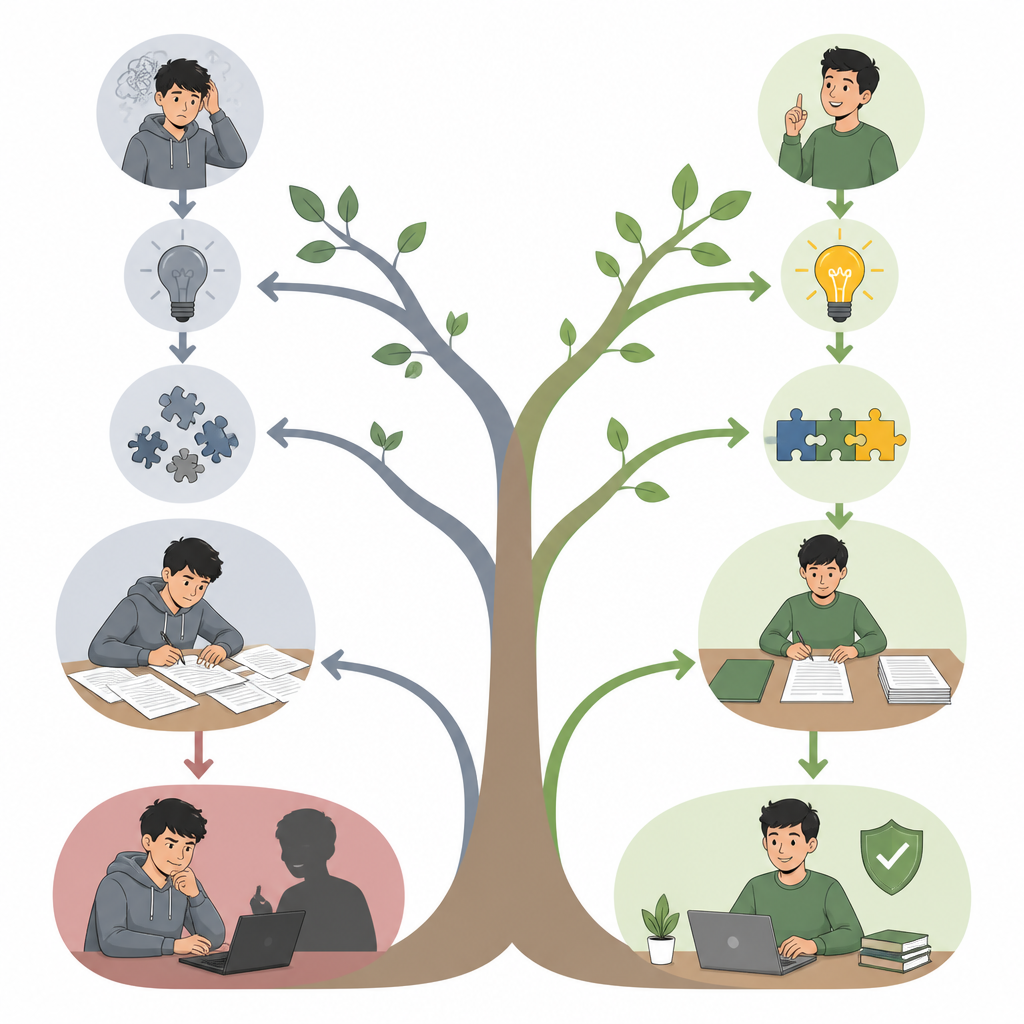
Students pointed to academic pressure, lack of time, and lack of knowledge as the main reasons they plagiarize. Many felt that tight deadlines, language barriers, or a friend’s permission could make copying more acceptable. Some believed that self-plagiarism should not be punished, and others thought that copying could be overlooked if a paper seemed scientifically valuable. These responses suggest that students often confuse effort, good intentions, or stress with ethical behavior. The findings also show wide gaps in awareness of common research terms, such as research ethics guidelines and oversight boards, which are supposed to protect study participants and ensure honest reporting.
What the numbers reveal about behavior
To move beyond simple counts of answers, the researchers used statistical models and decision trees to see which factors best predicted good or poor practice. Students with better knowledge scores were more likely to report ethical behavior, but attitudes were especially important. Those who tended to justify plagiarism, even mildly, were more likely to report risky practices. Gender also played a role, while the type of university did not. Importantly, the new PRE-Q tool itself performed well: its items were consistent with each other, and different groups of questions clustered into clear themes, which means the survey can be trusted to measure what it was designed to measure.
What this means for classrooms and research labs
The study concludes that the PRE-Q is a valid and reliable way to assess how students think and act regarding plagiarism and research ethics. More importantly, the results show that many future pharmacists work under intense pressure, have patchy knowledge of ethical rules, and sometimes see copying as a minor issue. The authors suggest that universities respond with targeted steps: clear guidance on paraphrasing, regular use of plagiarism-detection tools, and structured courses and workshops on research ethics. Helping students understand not only the rules but also the reasons behind them may support more honest work in the classroom today and safer, more trustworthy health care research tomorrow.
Citation: Shakeel, S., Ishaq, H., Maqbool, T. et al. Development, validation and psychometric evaluation of the Plagiarism and Research Ethics Questionnaire (PRE-Q) among pharmacy students in Karachi, Pakistan. Sci Rep 16, 15787 (2026). https://doi.org/10.1038/s41598-026-44299-6
Keywords: plagiarism, research ethics, pharmacy students, academic integrity, Pakistan