Clear Sky Science · en
The 2024 Mpox surveillance in Senegal uncovers a large circulation of Chickenpox
Why confusing rashes matter for everyone
Across the world, health authorities are on high alert for mpox, a smallpox-like disease that can cause serious illness and death. In 2024, Senegal set up a nationwide system to catch possible mpox cases quickly. But when doctors sent in samples from people with suspicious rashes, laboratory tests revealed a surprising story: many of these patients did not have mpox at all, but common, often overlooked infections such as chickenpox. Understanding this mix-up matters, because it affects how patients are treated, how scarce resources are used, and how we track truly dangerous outbreaks.
Setting up a watch for a feared virus
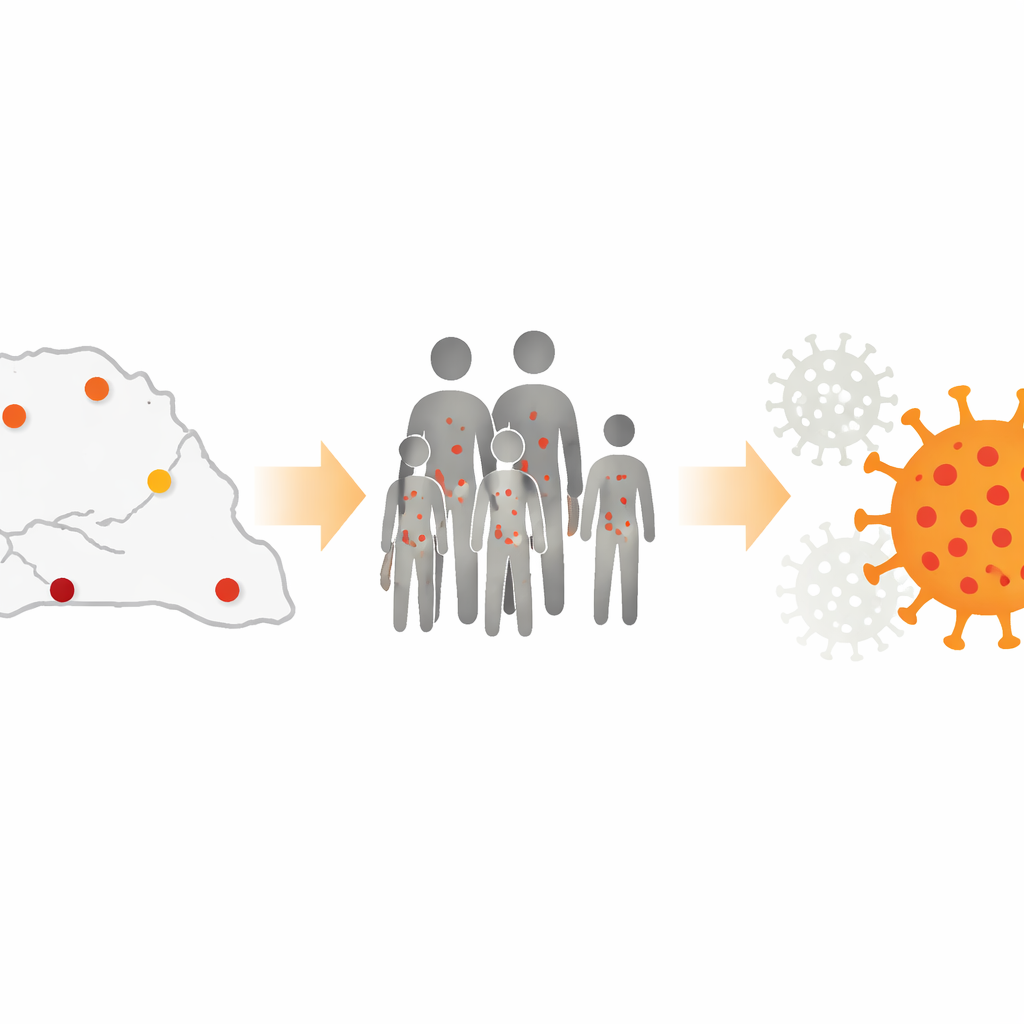
When the World Health Organization declared the 2024 mpox outbreak a global public health emergency, Senegal—where mpox is not normally found—launched a national surveillance program. Doctors across all 14 administrative regions were asked to report patients with recent onset of unexplained rash, fever, and other flu-like symptoms, especially if they had traveled or had contact with possible cases. From August to December 2024, 103 such patients were enrolled. Nurses and clinicians collected swabs from their skin lesions, nose and throat, plus blood samples, and sent them to the Institut Pasteur de Dakar for testing. The goal was simple: find out how much mpox was circulating, and which other germs might be masquerading as it.
Chickenpox steps into the spotlight
Laboratory testing used a sensitive genetic method (qPCR) that can detect traces of viral DNA. Surprisingly, not a single one of the 103 patients had mpox. Instead, nearly one in three tested positive for herpesviruses, a family of viruses that includes the culprit behind chickenpox, varicella-zoster virus (VZV). Among the 31 herpesvirus-positive patients, 21—about two thirds—had VZV. Most of these patients were children under 15, and overall, boys and men were more often affected than girls and women. The most common symptoms were skin rash and fever, which look almost identical to early mpox. This overlap makes it easy, especially during an emergency, to mistake chickenpox and related infections for mpox based on appearance alone.
Where the cases appeared and what else was hiding
The team mapped the origins of the samples and found herpesvirus infections in 9 of Senegal’s 14 regions. The highest numbers came from the crowded capital region of Dakar and the city of Touba, a major religious center that attracts millions of visitors. Such dense, mobile populations are ideal settings for viruses that spread through close contact. Beyond chickenpox, tests also picked up other herpesviruses such as Epstein–Barr virus and herpes simplex, and rare viral and bacterial infections that can also cause skin lesions. In several patients who had tested negative on the first round of quick screening, more detailed “metagenomic” sequencing later uncovered chickenpox virus or bacteria like Staphylococcus and Brucella that can produce rash and ulcers similar to mpox. This showed that a single skin eruption can have many different causes.
Clues from the virus family tree
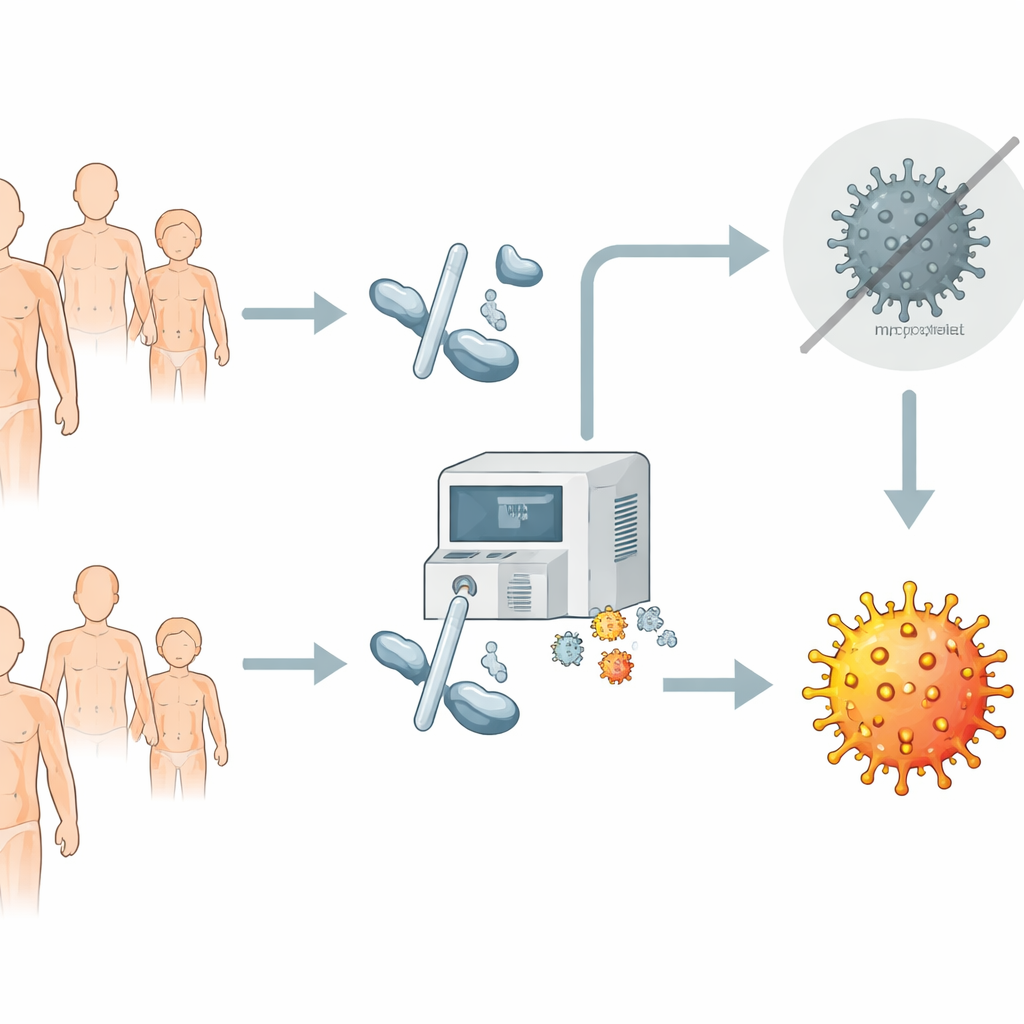
For a closer look, researchers reconstructed 14 genomes of the chickenpox virus from patient samples. When they compared these genomes to others stored in international databases, most of the Senegal strains clustered with viruses previously found in neighboring Guinea-Bissau during a large chickenpox outbreak. All belonged to the same genetic branch, known as clade 5, suggesting that this variety of the virus may be quietly spreading across national borders in West Africa. These are the first full chickenpox genomes reported from Senegal, offering a new reference for tracking how the virus evolves, moves between countries, and potentially responds to future vaccines or treatments.
What this means for patients and public health
The study’s main message is straightforward for non-specialists: during an intense search for a feared disease, many patients in Senegal turned out to have different, more familiar infections—especially chickenpox. Because these illnesses can look almost the same on the skin, relying on appearance alone risks misdiagnosis, unnecessary alarm, and missed opportunities to treat the real cause. The authors argue that outbreak responses must routinely include broad laboratory testing that checks for multiple pathogens at once, along with improved training so clinicians can recognize the subtle differences between look-alike diseases. By investing in accurate, wide-ranging diagnosis and cross-border surveillance, health systems can better protect patients, avoid confusion, and respond more precisely when the next genuine mpox surge—or another emerging threat—appears.
Citation: Top, F.K., Gaye, A., Boussiengui, G.L. et al. The 2024 Mpox surveillance in Senegal uncovers a large circulation of Chickenpox. Sci Rep 16, 13079 (2026). https://doi.org/10.1038/s41598-026-44066-7
Keywords: mpox, chickenpox, Senegal, disease surveillance, varicella-zoster virus