Clear Sky Science · en
Effects of ultrasound-guided posterior quadratus lumborum block on atelectasis in pediatric patients undergoing inguinal hernia repair and orchiopexy surgeries: A randomized controlled study
Helping Small Patients Breathe Easier
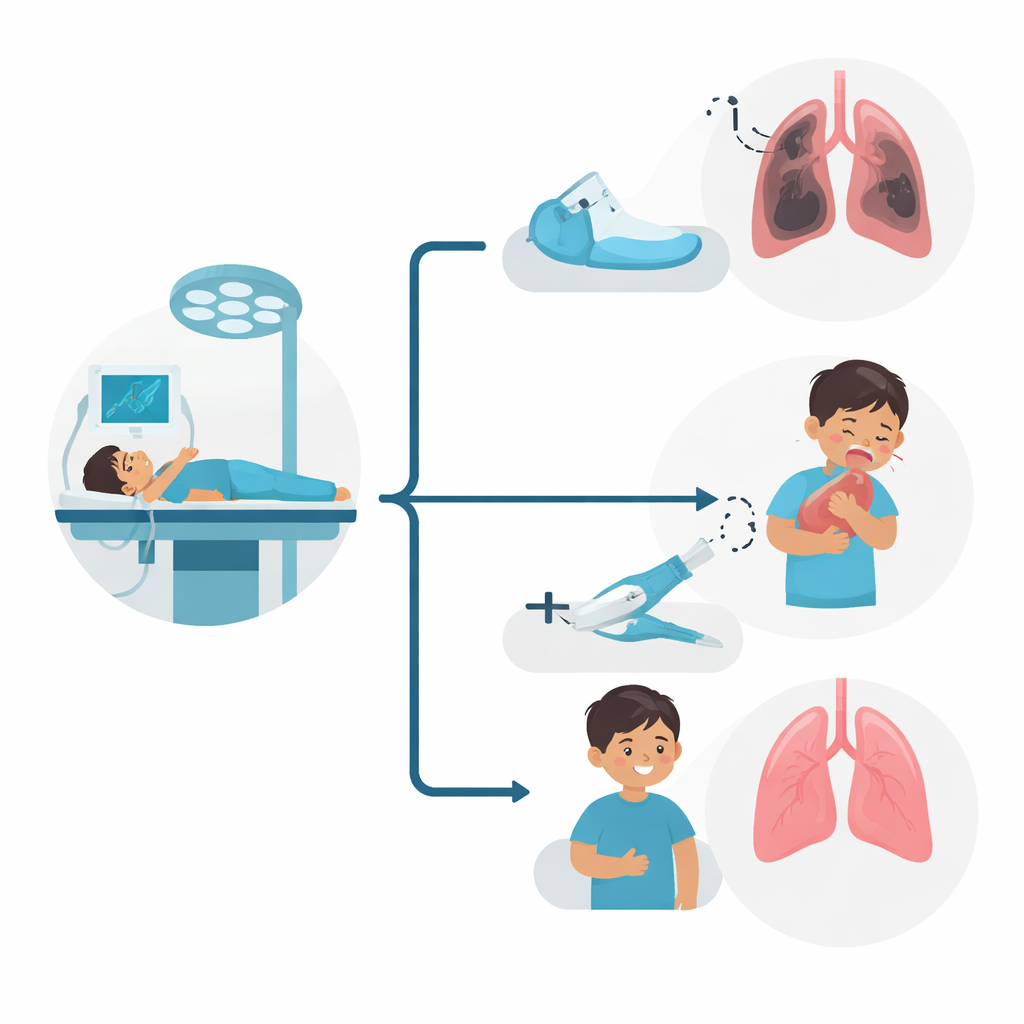
When babies and toddlers need surgery in the groin area, such as fixing a hernia or bringing down a testicle that has not descended, they usually recover quickly—but their lungs can quietly run into trouble. Under anesthesia and with pain after surgery, parts of the lungs can collapse, a problem called atelectasis, which makes breathing less efficient and may lead to complications. This study asks a practical question for parents and doctors alike: can a modern targeted numbing technique, placed in the lower back, keep young children more comfortable and their lungs more open after surgery?
Why Lung Collapse Matters After Surgery
Even in healthy children, general anesthesia can cause small air sacs in the lungs to close. Young children are especially vulnerable because their lungs are still developing and their chest walls are more flexible. When pain is not well controlled, they tend to take shallow breaths and avoid coughing, which encourages more lung collapse. On top of that, strong pain medicines such as opioids can slow breathing and weaken cough even further. These combined effects mean that a simple day-surgery can temporarily reduce how well a child’s lungs work, even if parents and staff see no obvious breathing problems.
A Targeted Nerve Block as a New Tool
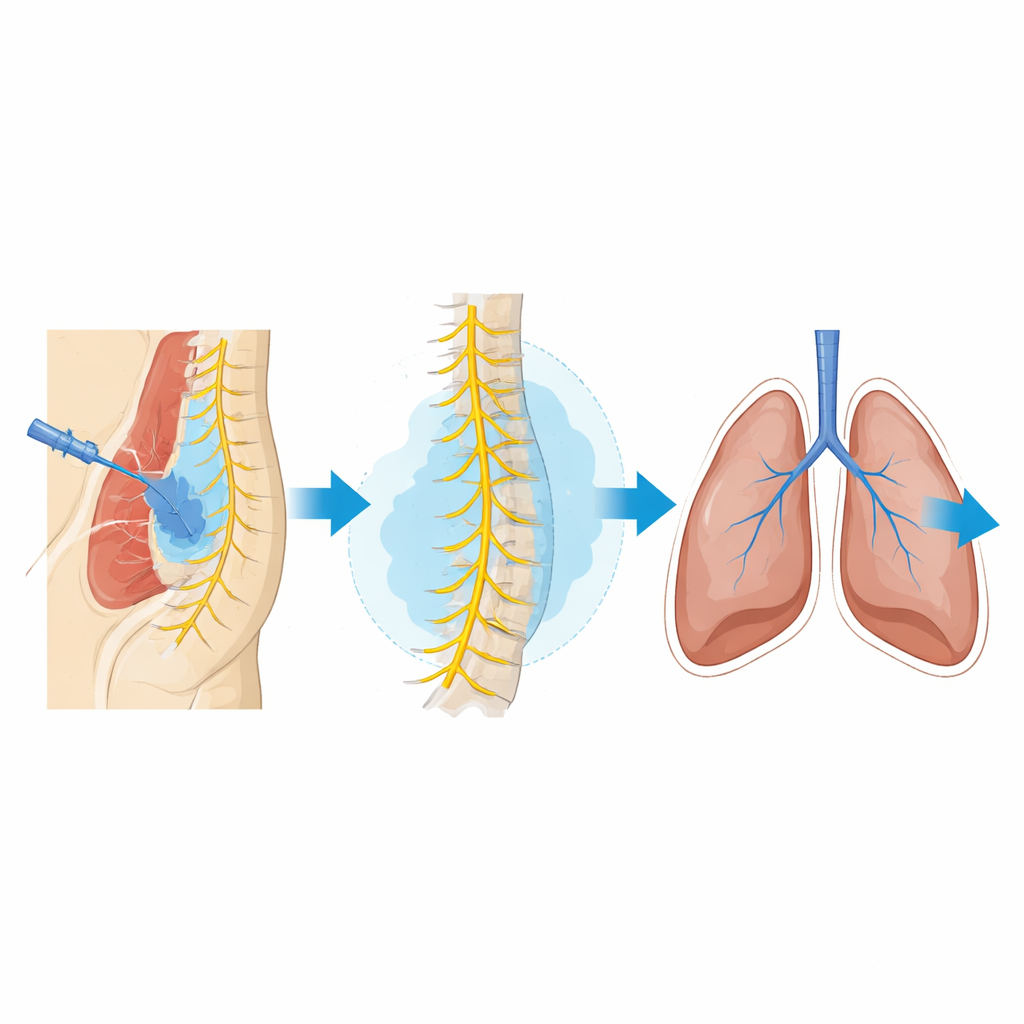
The researchers focused on a technique called a posterior quadratus lumborum block, in which an anesthesiologist uses ultrasound to guide a needle next to a muscle in the lower back and injects a local anesthetic. This numbs nerves that carry pain signals from the lower abdomen while avoiding the wide effects of strong systemic drugs. In this trial, 60 children between 2 months and 2 years old were randomly assigned to receive either standard general anesthesia alone or the same anesthesia plus this nerve block. All children had similar types of operations and were treated in a blinded fashion so that ward staff did not know who received the block.
Measuring Lung Health and Pain
To see how well the lungs were doing, a single experienced examiner used bedside ultrasound to scan 12 regions of each child’s chest before anesthesia, at the end of surgery, and one hour after the breathing device was removed. Each region was scored according to how much lung collapse was visible, and the scores were added up. The team also noted whether any region showed a level of change considered “significant” collapse. Pain was tracked at several times during recovery using the FLACC scale, which interprets facial expression, leg movement, activity, crying, and how easily a child can be comforted—useful in very young children who cannot describe their pain. Nurses recorded all extra pain medicines given in the recovery room and on the ward.
Clear Benefits for Comfort and Lungs
The group that received the nerve block had noticeably healthier-looking lungs on ultrasound at the end of surgery and one hour into recovery. Only about one in six of these children showed significant collapse at those times, compared with roughly three out of four in the standard-care group. Their total lung scores were lower as well, indicating less widespread trouble. At the same time, children with the block were more comfortable: their FLACC pain scores were lower right after surgery and at 2 and 6 hours later. Because they hurt less, they needed fewer doses of rescue pain medicine, particularly the opioid fentanyl, which itself can promote lung problems by slowing and weakening breathing. No block-related complications were seen, and none of the children in either group developed obvious breathing symptoms, despite the silent lung changes on ultrasound.
What This Means for Families and Clinicians
For families bringing a young child in for a brief abdominal operation, this study suggests that adding an ultrasound-guided nerve block in the lower back can do more than just ease pain—it can help keep the lungs more open during and shortly after surgery, while also reducing the need for stronger, whole-body pain drugs. Although the results apply specifically to very young children in a single hospital and only cover the first hours after surgery, they support the idea that smarter, targeted pain control can quietly protect vital organs. As these techniques become more common, they may make routine surgeries even safer and more comfortable for the smallest patients.
Citation: Baytar, Ç., Uçarcı, D.T., Baytar, M.S. et al. Effects of ultrasound-guided posterior quadratus lumborum block on atelectasis in pediatric patients undergoing inguinal hernia repair and orchiopexy surgeries: A randomized controlled study. Sci Rep 16, 12929 (2026). https://doi.org/10.1038/s41598-026-43998-4
Keywords: pediatric anesthesia, nerve blocks, postoperative pain, lung collapse, hernia surgery