Clear Sky Science · en
Nutritional composition and yield of forage grasses treated with vermicompost and urea
Better Grass, Better Milk
For millions of farming families in Ethiopia, healthy animals mean food on the table and money in hand. Yet many cows, sheep, and goats still go hungry because there is not enough good-quality grass to feed them. This study asks a simple, practical question: can a mix of natural compost made with earthworms and a common chemical fertilizer help farmers grow more nutritious grasses, at a price they can afford—and in a way that is kinder to the environment?
Why Animal Feed Is Falling Short
Ethiopia has the largest livestock population in Africa, but much of the feed for these animals comes from crop leftovers and overgrazed natural pasture. These feeds are often low in protein and energy, which keeps milk and meat production below their potential. Improved grass varieties—such as Napier, Desho, and Guinea grasses—can produce far more fodder per hectare. However, they need fertile soil, and farmers struggle with nutrient-poor fields. Chemical fertilizers like urea can boost yields but are expensive, sometimes scarce, and can damage soils or the wider environment when overused. This has led researchers and farmers to look again at organic options like vermicompost, made by earthworms from animal manure and plant wastes.
Earthworms Meet Urea in the Field
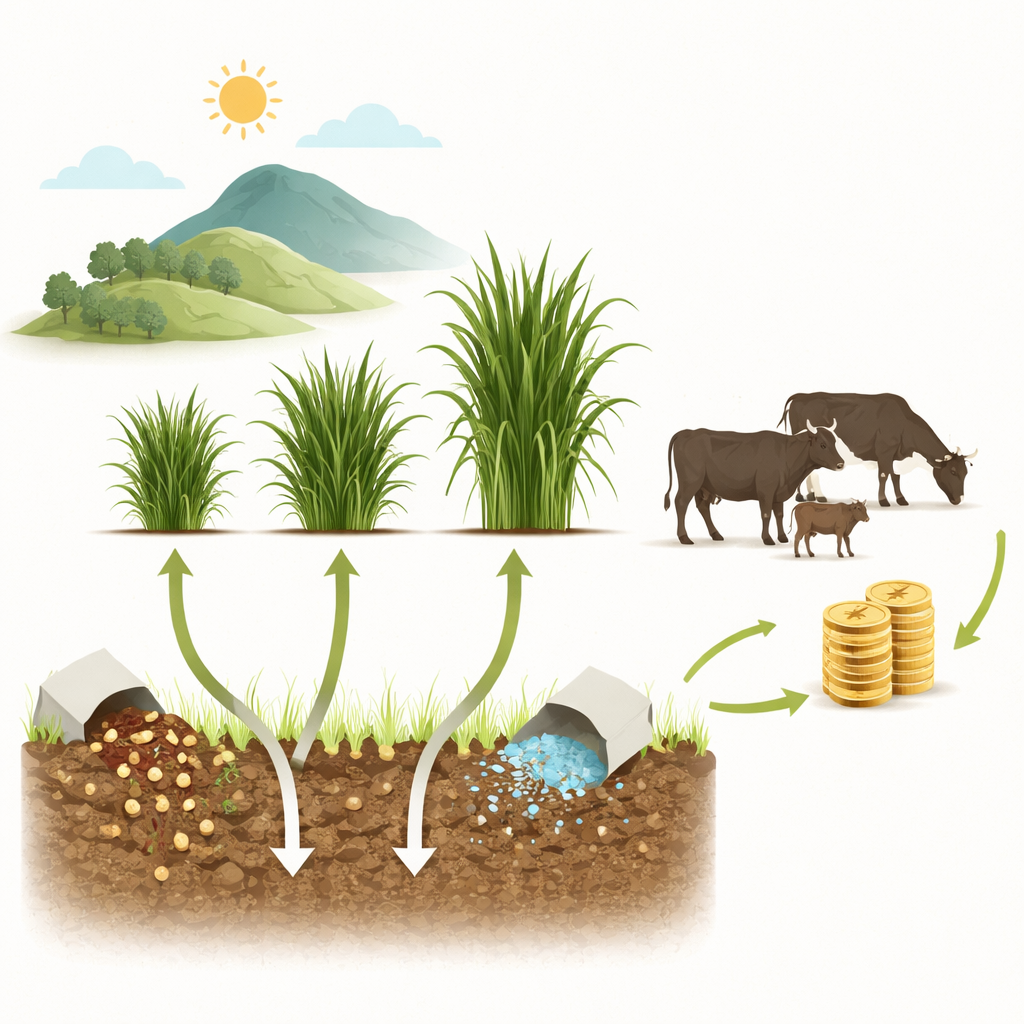
The researchers tested three grass species—Napier, Desho, and Guinea—on experimental plots in two districts of northwest Ethiopia, one at mid-altitude and one at higher altitude. Each plot received one of five fertilizer treatments: no fertilizer, only vermicompost, only urea, or one of two mixes combining both in different proportions. Vermicompost was made from cattle manure and crop residues using composting boxes with earthworms, while urea was bought from local markets. The team carefully measured how much dry grass was produced, how much protein it contained, and how much money each treatment would earn after subtracting fertilizer costs.
More Protein and More Grass from Smart Mixing
Adding fertilizer of any kind improved the grasses, but the strongest gains came when vermicompost and urea were combined. These mixed treatments produced the highest dry matter yield and the most crude protein per hectare, meaning not just more grass but more nourishing grass. Napier grass stood out as the top performer, yielding more biomass and protein than Desho or Guinea, particularly at mid-altitude sites where temperatures and rainfall were more favorable. The mixed fertilizers also tended to reduce the tough, fibrous parts of the plants, leading to leafier growth that animals can eat and digest more easily.
Balancing Profit and Sustainability
The study also looked at the farmer’s pocket. When total income from grass sales was compared with the cost of fertilizers, a clear picture emerged. The combination with mostly vermicompost and some urea delivered the highest net income because it produced very high yields without excessive input costs. Surprisingly, using only vermicompost gave the best benefit–cost ratio: each unit of money spent brought back more in return than any other treatment, including pure urea. Pure urea raised yields but was costly, so profits were lower and sometimes only slightly better than using no fertilizer at all. Overall, mid-altitude sites and Napier grass gave the strongest financial results.
What This Means for Farmers and Consumers
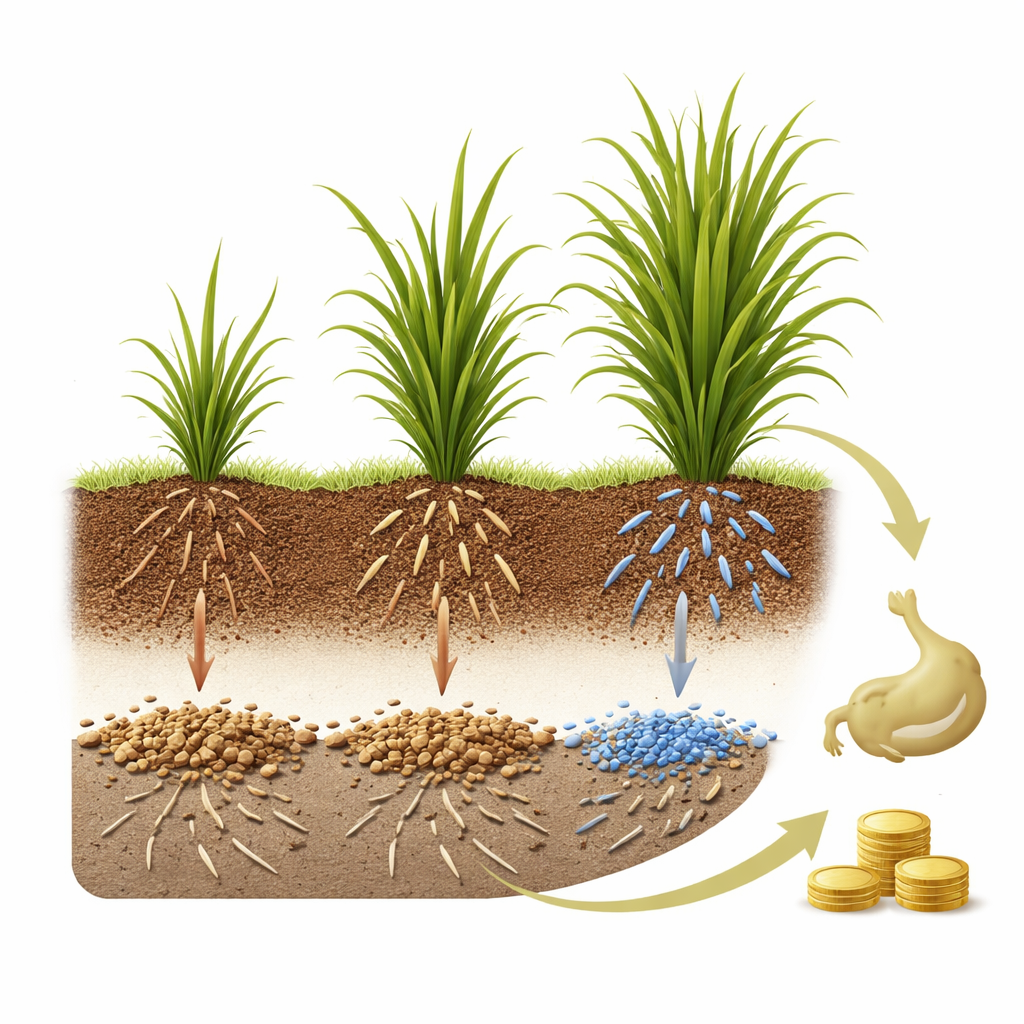
The authors conclude that mixing vermicompost with urea is an effective way to boost both the quantity and quality of forage grasses, especially Napier, in Ethiopia’s smallholder systems. For farmers focused on maximum production, this integrated approach offers more protein-rich feed and better profits. For those with very limited cash or wanting to rely less on synthetic chemicals, using only vermicompost is still a strong, economical option. Because vermicompost is made from local wastes and can cut greenhouse gas emissions linked to fertilizer use, it also supports cleaner milk and meat value chains and healthier soils. With wider training and on-farm composting, these practices could help close the feed gap, support rural incomes, and make livestock production more sustainable over the long term.
Citation: Mekcha, E., Asmare, B., Beyero, N. et al. Nutritional composition and yield of forage grasses treated with vermicompost and urea. Sci Rep 16, 13566 (2026). https://doi.org/10.1038/s41598-026-43372-4
Keywords: forage grasses, vermicompost, urea fertilizer, livestock feed, Ethiopia agriculture