Clear Sky Science · en
Physicochemical characterization of a recently developed resin-based calcium silicate cement compared to established pulp capping materials
Why This Tooth Cement Matters
When a cavity or accident gets close to the nerve inside a tooth, dentists try to save that living tissue instead of pulling the tooth or doing a root canal. They do this by placing a thin protective layer, called a pulp capping material, over the exposed or nearly exposed nerve. This study takes a close look at a new protective cement called TheraBase and compares it with three established options to see how strong, stable, and biologically helpful it might be inside the mouth.
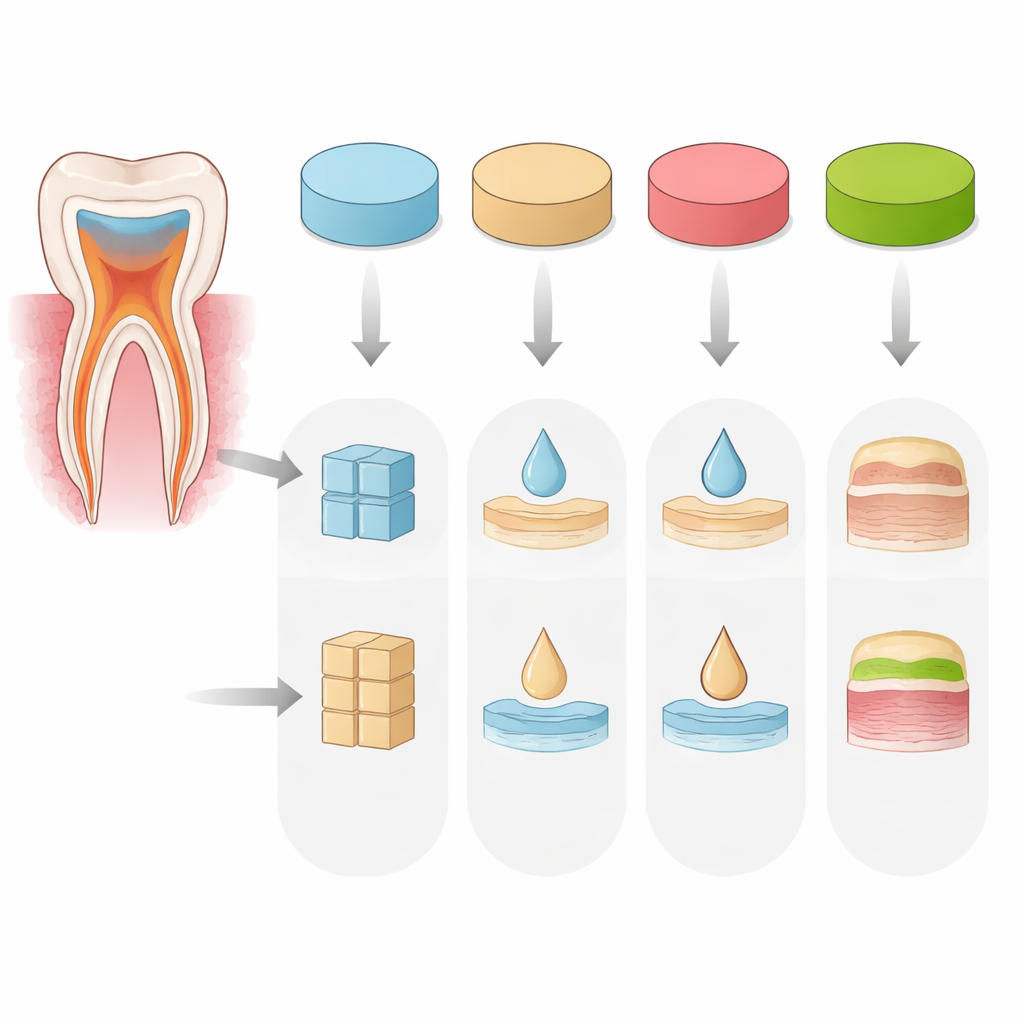
Keeping the Tooth Nerve Alive
The soft core of a tooth, the pulp, contains nerves and blood vessels that keep the tooth alive and sensitive. When deep decay or trauma reaches this area, dentists can sometimes avoid more invasive treatment by sealing the pulp with a special material that both protects it from bacteria and encourages it to heal. Classic materials such as calcium hydroxide have been used for decades but can dissolve over time or leave gaps. More modern calcium silicate cements, including Biodentine, Bio MTA+, and TheraCal LC, were designed to last longer and support natural repair of dentin, the hard tissue around the pulp.
A New Type of Protective Layer
TheraBase is a newer member of this family. Unlike older cements that are mostly mineral powder and water, TheraBase also contains resin components similar to those in white filling materials. This resin allows it to harden quickly with light, adhere to the tooth, and potentially resist breakdown in the moist environment of the mouth. The authors set out to compare TheraBase with TheraCal LC, Biodentine, and Bio MTA+ by measuring several practical features in the lab: how much pressure they can withstand before cracking (compressive strength), how clearly they show up on X‑rays (radiopacity), how much water they absorb and how much they dissolve, how alkaline they become (pH), and how many calcium ions they release, which can help trigger healing.
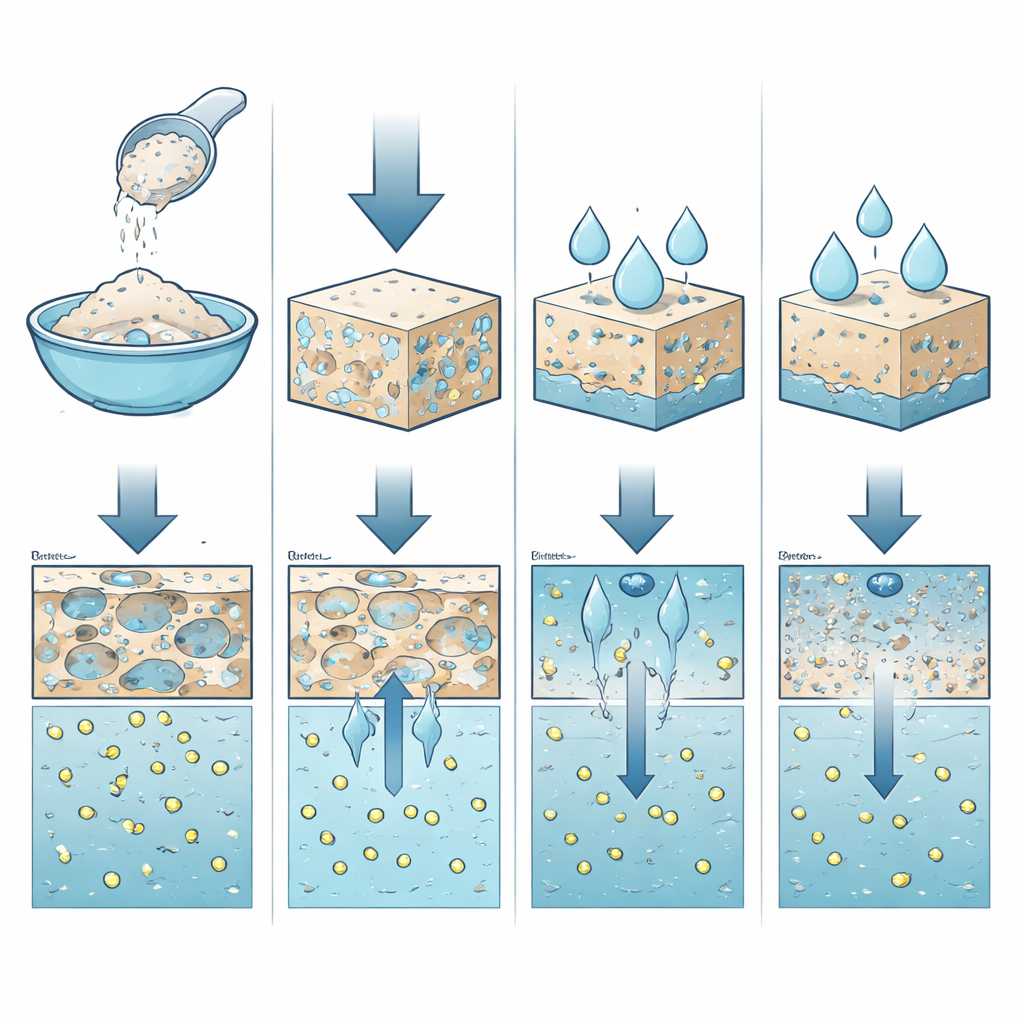
Strength, Stability, and X‑Ray Visibility
Disc-shaped samples of each material were prepared and tested under controlled conditions. TheraBase came out on top for compressive strength, clearly surpassing the minimum value recommended for dental cements and outperforming the other three materials. This is likely due to its dense resin matrix and plentiful glass fillers, which make it more resistant to chewing forces. All four materials were visible on X‑rays and met international standards, but Bio MTA+ was the most opaque, helped by heavy metal oxides in its formula. TheraBase and Biodentine showed radiopacity similar to tooth enamel, while TheraCal LC was slightly less opaque but still easier to see than natural dentin.
How They Behave in Water and Over Time
Inside the mouth, a pulp capping material is constantly bathed in fluid, so the way it interacts with water is crucial. Over a 28‑day period, all of the cements absorbed more water, but TheraBase consistently took up the least, while TheraCal LC absorbed the most. Biodentine dissolved the most, meaning it lost more mass in water, although this was still within acceptable limits; TheraBase, TheraCal LC, and Bio MTA+ showed lower and similar levels of dissolution. All four materials created an alkaline environment, which can help fight bacteria and support healing. However, Biodentine and Bio MTA+ became more strongly alkaline over time, while TheraBase and TheraCal LC showed more modest and somewhat declining pH values after an early rise.
Healing Signals from Calcium Release
One of the hallmarks of modern bioactive dental materials is their ability to release calcium ions into the surrounding fluid, which can stimulate cells in the pulp to form new dentin. In this study, Biodentine released by far the most calcium, followed by Bio MTA+. TheraCal LC and especially TheraBase released much less. The authors link this difference to the higher proportion of reactive calcium silicate in Biodentine and Bio MTA+, and to the way resin in TheraBase and TheraCal LC blocks water from penetrating deeply into the material, limiting how much calcium can escape.
What It Means for Patients and Dentists
Overall, TheraBase appears promising as a durable protective layer over the tooth nerve. It is strong under pressure, takes up little water, does not dissolve much, and shows up clearly on X‑rays, all of which are important for long‑lasting restorations that dentists can monitor. At the same time, its relatively low calcium release suggests that it may be less powerful than Biodentine or Bio MTA+ at actively stimulating the tooth to rebuild hard tissue. For patients, this means TheraBase may offer a sturdy, well‑sealed barrier, but dentists may still choose more strongly bioactive materials when maximum regenerative potential is the priority, pending further clinical studies.
Citation: Güdül, K.F., Tonga, G. & Hatirli, H. Physicochemical characterization of a recently developed resin-based calcium silicate cement compared to established pulp capping materials. Sci Rep 16, 12388 (2026). https://doi.org/10.1038/s41598-026-43369-z
Keywords: pulp capping materials, calcium silicate cement, TheraBase, dental pulp therapy, bioactive dental materials