Clear Sky Science · en
Assessing farmers’ knowledge, attitudes, health risk perceptions, and practices toward pesticide use in Morocco
Why This Matters to Everyday Life
Pesticides help keep food on our tables, but they can quietly harm the people who grow that food. This study looks at farmers in Morocco who work face-to-face with these chemicals and asks a simple question with big implications: what do they actually know and believe about pesticide dangers, and how does that shape the way they protect themselves, their families, and their customers?
Farms Under Pressure
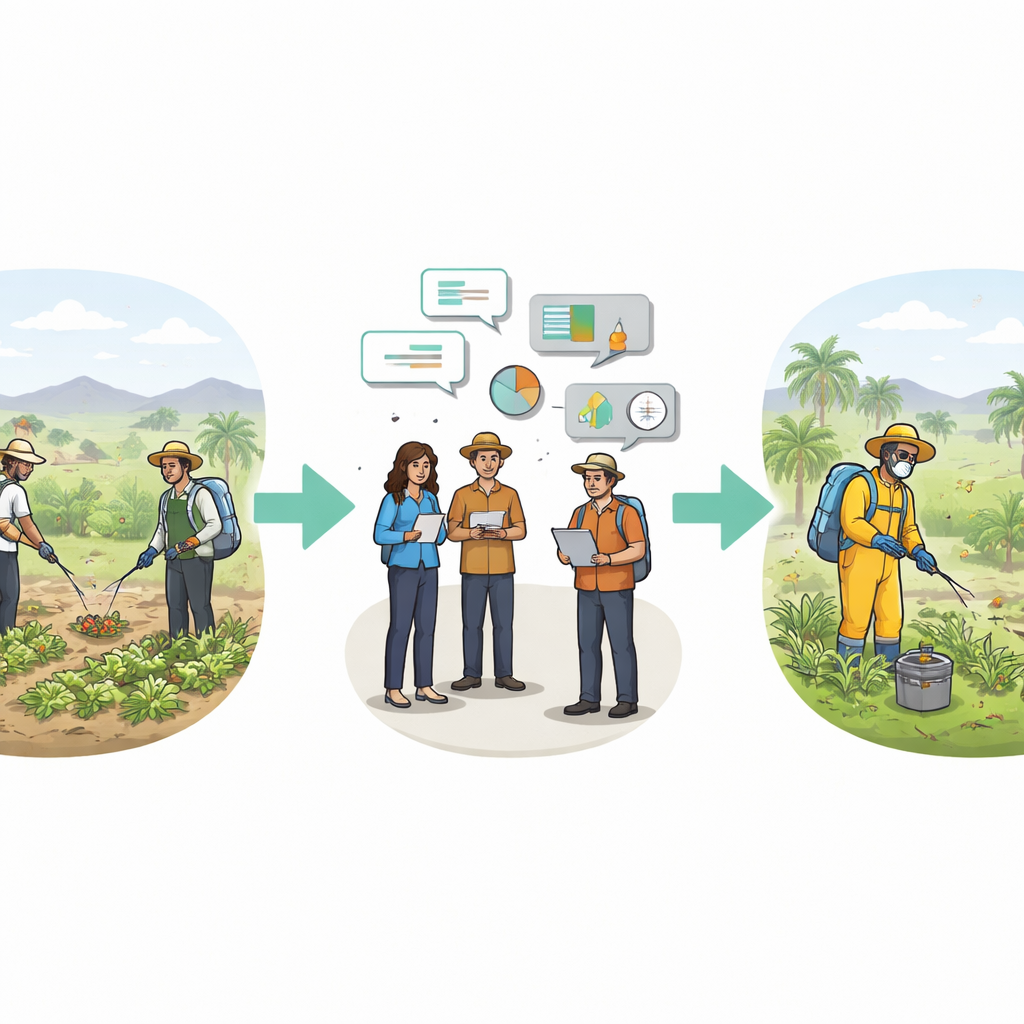
Agriculture is a cornerstone of Morocco’s economy, employing about two in five workers. As farms intensify production to meet growing demand, pesticide use has risen sharply, mirroring global trends. Many of the products used are highly hazardous; some are banned or restricted in Europe yet still present in Moroccan fields. Most farm work is done by hand or with basic equipment, often without proper protective gear and with limited access to safety training. In this setting, farmers and their families carry much of the hidden health risk of our modern food system.
Listening to Farmers in the Fields
To understand what drives safer or riskier behavior, researchers interviewed 314 farmworkers across seven intensive farming zones around the Meknes region in Morocco. The farmers were mostly middle-aged, predominantly men, and three-quarters had no schooling or only primary education. Using a detailed, face-to-face questionnaire, the team explored four aspects: what farmers know about pesticides, how they feel about using them, how risky they think pesticides are for health, and what safety steps they actually take in their daily work. The questions were carefully checked and probed so that responses reflected real understanding and practice, not just polite answers.
Gaps Between Knowledge, Beliefs, and Daily Habits
The results revealed striking gaps. More than eight in ten farmers could not name the pesticides they used, and only about one-third showed good knowledge of safe handling and rules. Many recognized in general that pesticides can harm health and the environment, yet had a hazier grasp of specific dangers, such as which products are banned or how to read labels correctly. Attitudes were mixed: farmers depended strongly on pesticides to secure crop yields and income but also expressed a clear willingness to try safer methods if they were effective and affordable. Actual behavior landed in the middle ground. On paper, many reported moderate use of protective equipment and some care with storage, hygiene, and container disposal. However, field observations showed that practices were often looser than reported, with empty containers kept close to homes and protective gear used inconsistently.
What Really Drives Safer Behavior
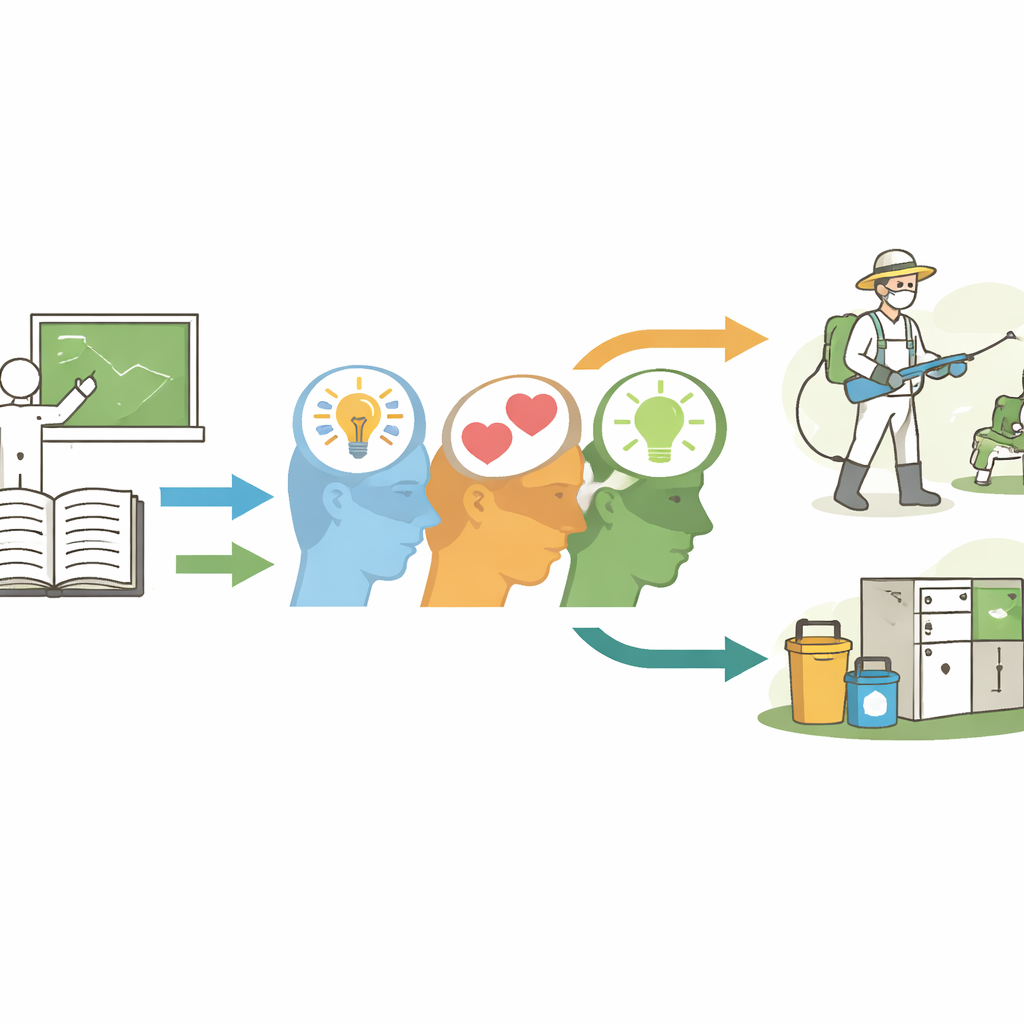
Using a behavioral model commonly applied in health research, the team examined which factors best predicted safer pesticide practices. Education stood out as a powerful background influence: more schooling and prior training were linked to better knowledge, more cautious views, and somewhat safer habits. Yet the deepest insight was that knowledge alone barely changed behavior. The strongest predictor of safer practices was attitude: farmers who personally valued safety and believed careful handling mattered were far more likely to wear protection, follow recommended doses, and store and dispose of products more safely. Seeing pesticides as dangerous also helped, but to a lesser extent. Older farmers tended to have poorer practices despite long experience, suggesting that familiarity can dull a sense of risk. At the same time, an overwhelming majority (about 93%) said they would join health monitoring programs to check pesticide exposure, showing high openness to engagement and change.
Turning Insight into Action
For non-specialists, the key message is that protecting farmers from pesticide harm is not just a matter of handing out leaflets or listing dangers. This Moroccan study shows that how farmers feel about safety, and the pressures they face to secure their harvests, matter more than raw information. Policies and programs that simply transfer facts will fall short unless they also work to shift attitudes, build trust in safer alternatives, and fit local economic realities. By mapping the beliefs and experiences behind everyday decisions in the field, this research offers a roadmap for smarter training, better regulations, and practical health monitoring that can reduce harm not only for Moroccan farmworkers, but for farming communities across Africa and other low-resource settings.
Citation: Menouni, A., Berni, I., Chetouani, H. et al. Assessing farmers’ knowledge, attitudes, health risk perceptions, and practices toward pesticide use in Morocco. Sci Rep 16, 12553 (2026). https://doi.org/10.1038/s41598-026-42448-5
Keywords: pesticide safety, farmworker health, Morocco agriculture, risk perception, occupational exposure