Clear Sky Science · en
Optimization of mechanical properties and microstructure characterization of resistance spot welded martensitic stainless steel: in-situ tempering and TLBO approach
Why stronger welds matter for everyday safety
Modern cars rely on thousands of tiny welds to hold their steel skeletons together. These pin-sized joints may be invisible, but they play a huge role in how well a vehicle protects its passengers during a crash. This study looks at a particular type of strong but brittle stainless steel used in car bodies and asks a simple, practical question: can we adjust the welding process so these hidden connections survive more punishment before they crack?
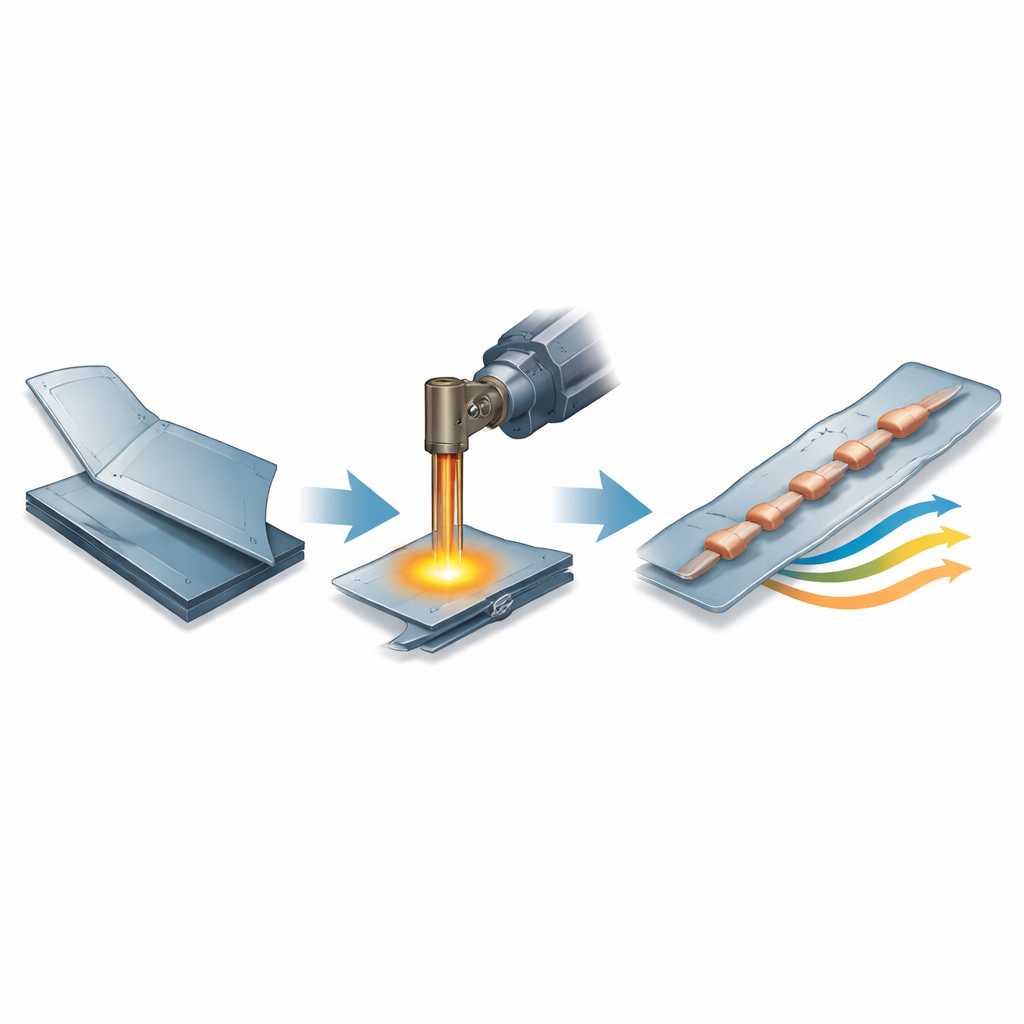
How cars are stitched together with electricity
Automakers often use resistance spot welding, a quick process where two copper electrodes clamp overlapping steel sheets and pass an electric current through them. The metal between the sheets briefly melts and solidifies into a small “nugget” that fuses them together. For a common high-strength grade called AISI 420 martensitic stainless steel, this rapid heating and cooling tends to create an extremely hard, glass-like structure in the center of the weld. That hardness is good for static strength but bad for toughness: under impact or repeated loading, cracks can form and spread more easily, limiting how much energy the joint can absorb in a collision.
A new twist: tempering the weld as it is made
The researchers compared two welding recipes. In the first, a single burst of current creates the weld nugget in the usual way. In the second, they add a carefully timed, lower-intensity second pulse of current after the main weld. This extra step acts like a tiny built-in heat treatment, gently reheating the already solidified nugget to soften the most brittle regions without melting them again. Using a structured test plan, they varied weld current, weld time, and electrode force, then measured nugget size, maximum load before failure, and how much energy each joint could absorb during pulling tests.
Looking inside the metal, from grains to cracks
To understand what these different weld schedules actually did inside the steel, the team polished and etched cross-sections and examined them under optical and electron microscopes. They also used advanced tools that can identify crystal types and orientations. In the standard single-pulse welds, the fusion zone in the middle of the joint was dominated by very hard martensite, with hardness around four times that of the surrounding base metal. Fracture surfaces from failed samples showed sharp, flat features typical of brittle breaking. When the second, tempering pulse was applied, the overall nugget size stayed almost the same, but the internal pattern changed: the martensite became partially tempered and slightly softer, reducing the sharp hardness jump between the weld center and nearby regions.
Finding the sweet spot for long-lasting joints
Because real car bodies experience millions of small load cycles, the team focused on fatigue life—how many repeated pulls a weld can take before cracks appear. They used a fixed primary weld setting and then changed only the length of the in-situ tempering pulse. Short tempering gave modest gains, but an intermediate duration nearly doubled the number of load cycles the welds survived. When the tempering was pushed further, performance dropped again. In other words, there was a clear “just right” window: too little extra heat leaves the weld too brittle, while too much over-softens the metal and encourages early damage. To guide engineers toward good settings without endless trial and error, the authors also used a classroom-inspired optimization algorithm that mimics how students learn. Fed with experimental data, it searched the space of currents, times, and forces and identified combinations that simultaneously maximize nugget size, peak load, and absorbed energy.
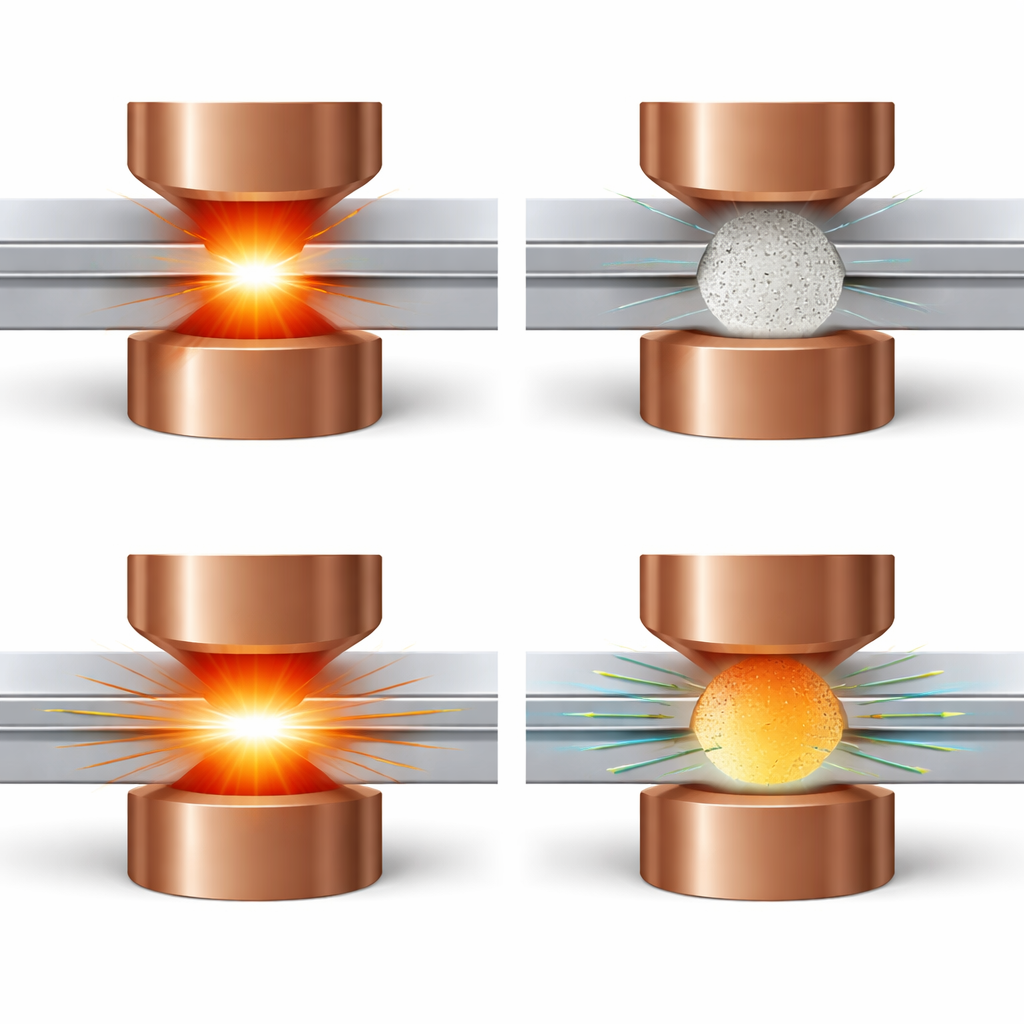
What this means for safer, lighter vehicles
For non-specialists, the takeaway is straightforward: by adding a brief, carefully tuned second heat pulse during spot welding, it is possible to make small steel joints that are not only strong but also more forgiving under real-world use. The welds absorb more energy before cracking and last longer under repeated loading, all without changing the base material or the visible design of the car. Coupling this tempering step with data-driven optimization tools gives manufacturers a practical roadmap to design welding schedules that improve crash performance and fatigue life while still supporting lightweight, fuel-efficient vehicle structures.
Citation: Gurav, V., Shrivastava, D. Optimization of mechanical properties and microstructure characterization of resistance spot welded martensitic stainless steel: in-situ tempering and TLBO approach. Sci Rep 16, 12989 (2026). https://doi.org/10.1038/s41598-026-41869-6
Keywords: resistance spot welding, martensitic stainless steel, in-situ tempering, fatigue life, weld optimization