Clear Sky Science · en
Multimorbidity trajectories and their sex-specific impacts on risk of mortality and re-hospitalisation
Why juggling many illnesses matters
As people live longer, more of us are coping with more than one long-term illness at the same time, a situation doctors call "multimorbidity." This tangle of conditions makes treatment decisions harder and increases the chances of ending up back in hospital or dying sooner. The study summarized here uses the vast UK Biobank, a research resource tracking the health of over half a million people, to ask which combinations of illnesses are especially dangerous, how these patterns differ for women and men, and where the health system might best focus efforts to prevent avoidable harm.
Following patients over years
The researchers examined hospital records coded using the international ICD10 system for more than 500,000 UK Biobank participants, following them for around a decade. Rather than looking at diseases one by one, they treated each person’s record as a timeline: which diagnosis came first, which came next, and how quickly new conditions accumulated. They grouped related diagnoses into broader blocks, then used clustering methods to identify common patterns of multimorbidity such as primarily heart-and-metabolism problems, digestive issues, musculoskeletal disorders, and a particularly severe “complex, high morbidity” cluster involving many systems at once. Women tended to accumulate diagnoses more slowly than men and were more often in lower-morbidity clusters at first hospital presentation, while men more frequently arrived with advanced cardiometabolic illness.
How extra conditions change risk
To understand what these patterns mean for patients, the team modelled how each additional prior diagnosis affected the risk of dying or being re-admitted to hospital within a year of a new hospital diagnosis. They adjusted for age and analysed women and men separately. On average, every extra diagnosis increased 1-year mortality by about 25–30 percent and re-hospitalisation by about 14 percent, but this effect varied widely depending on the “presenting” condition that brought the person to hospital. For example, people hospitalized with certain heart rhythm or heart muscle problems saw particularly large jumps in death risk with each added condition, while those with some advanced cancers were already so sick that extra diagnoses made relatively little difference. Skin and digestive problems were especially sensitive to multimorbidity when it came to future hospital use. 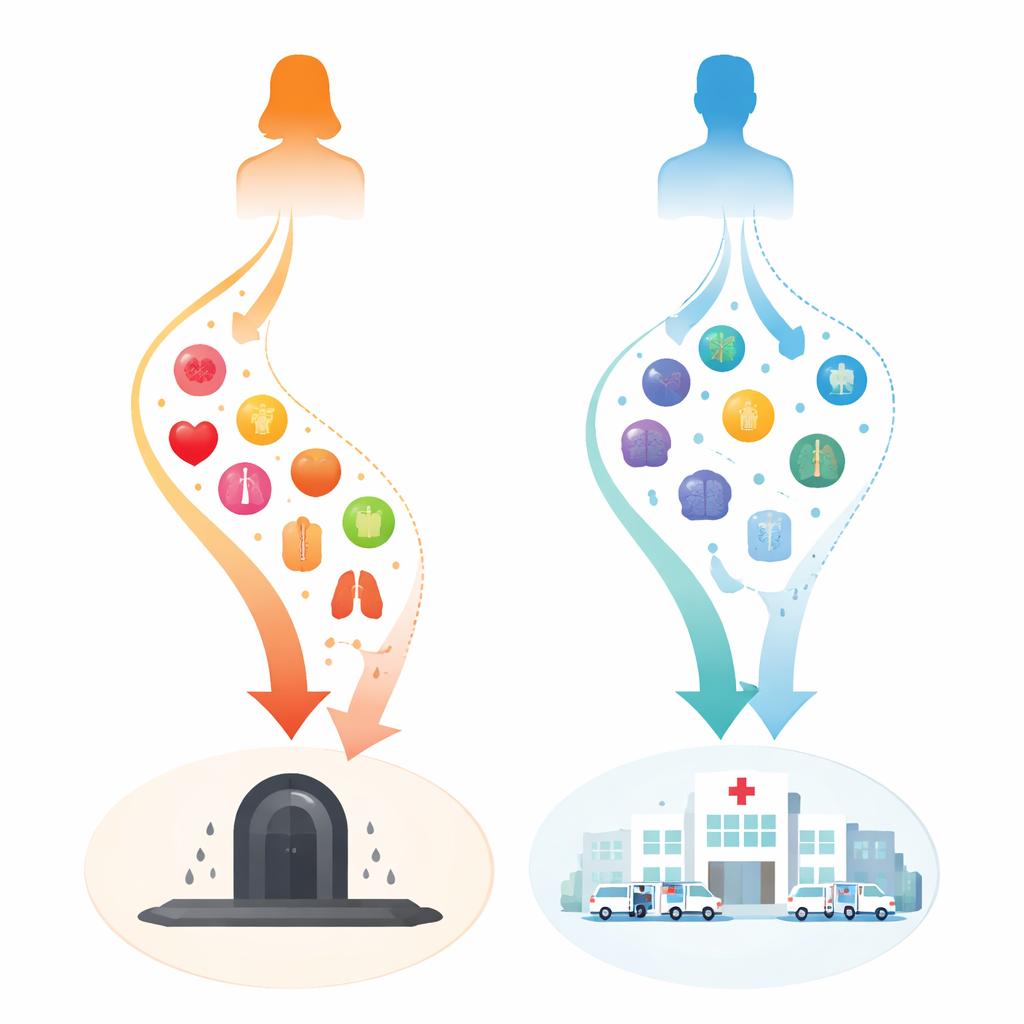
Hidden high-risk paths through illness
Beyond the simple count of diagnoses, the authors searched for specific sequences of illnesses that tended to occur in a predictable order and carried especially high danger. They called these “diagnosis trajectories” and focused on pairs and longer chains that frequently appeared together. Many of the highest-risk histories involved prior cancer, which sharply increased chances of dying or returning to hospital after a wide variety of later problems such as lung infections or kidney failure. The team also identified non-cancer trajectories with striking risks. For women, a history of serious liver disease before later circulatory problems, or metabolic or heart problems preceding kidney failure or intestinal infections, was associated with many-fold higher 1-year mortality and hospitalisation. 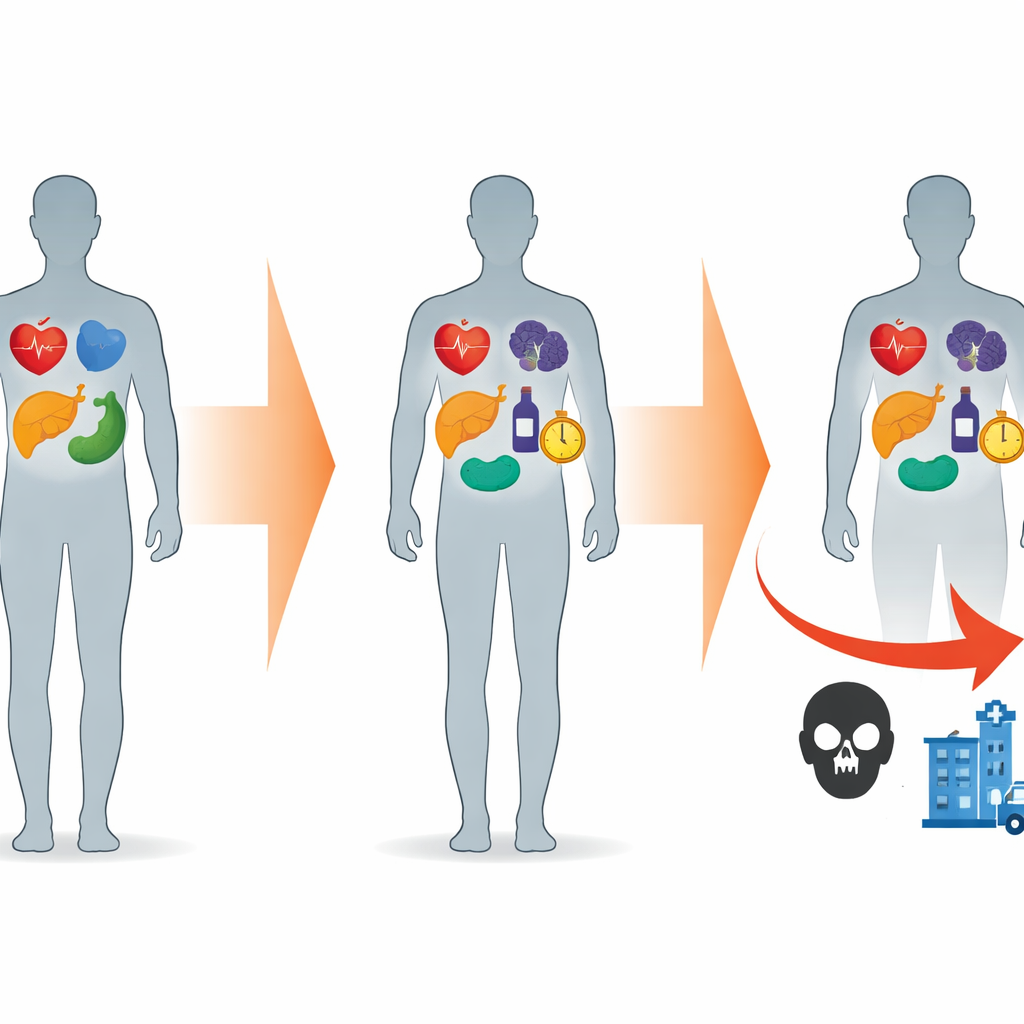
Different dangers for women and men
When the researchers compared women and men, differences emerged both in how multimorbidity accumulated and in how it translated into risk. Men were more likely to start secondary care already burdened with cardiometabolic disease, and in several conditions, each added diagnosis increased their chance of death more than it did for women—for example, in stroke-like cerebrovascular diseases. The clearest sex gap appeared in re-hospitalisation: for many presenting diagnoses, additional illnesses drove men and women back to hospital at different rates. One especially concerning pattern in men was a prior history of substance use–related mental and behavioural disorders. When combined with anaemias, infections, or certain digestive problems, this history greatly amplified both mortality and repeat hospitalisation, pointing to a vulnerable group needing focused support.
What this means for care
The study shows that not all multimorbidity is equal. Simply counting a patient’s diagnoses already gives useful information about short-term risk, but knowing which illnesses came first, and in what combinations, reveals clusters of patients at particularly high danger. Because these trajectories unfold in predictable ways, they may offer windows for earlier intervention—for instance, closer follow-up for men with substance use disorders who develop anaemia or infections, or for people with liver disease who later present with circulatory or abdominal conditions. The authors argue that hospital triage tools and electronic health record systems could be upgraded to incorporate these diagnosis histories, helping clinicians identify complex patients who need more intensive monitoring and tailored care, and ultimately reducing avoidable deaths and repeat hospital stays.
Citation: Ennis, M., McClean, P.L., Shukla, P. et al. Multimorbidity trajectories and their sex-specific impacts on risk of mortality and re-hospitalisation. Sci Rep 16, 12490 (2026). https://doi.org/10.1038/s41598-026-41806-7
Keywords: multimorbidity, hospital readmission, sex differences, disease trajectories, UK Biobank