Clear Sky Science · en
Challenges in establishing ambulatory surgery in a Moroccan general surgery department
Why same‑day surgery matters
For many people, surgery still means days in a hospital bed. Yet around the world, a growing share of operations now happen as day cases: patients arrive in the morning and sleep in their own beds at night. This approach can be safer, cheaper, and far more convenient. The article explores how one major hospital in Morocco tried to expand this kind of same‑day digestive surgery, what worked, and what kept many patients from going home as planned.
A new way of organizing hospital care
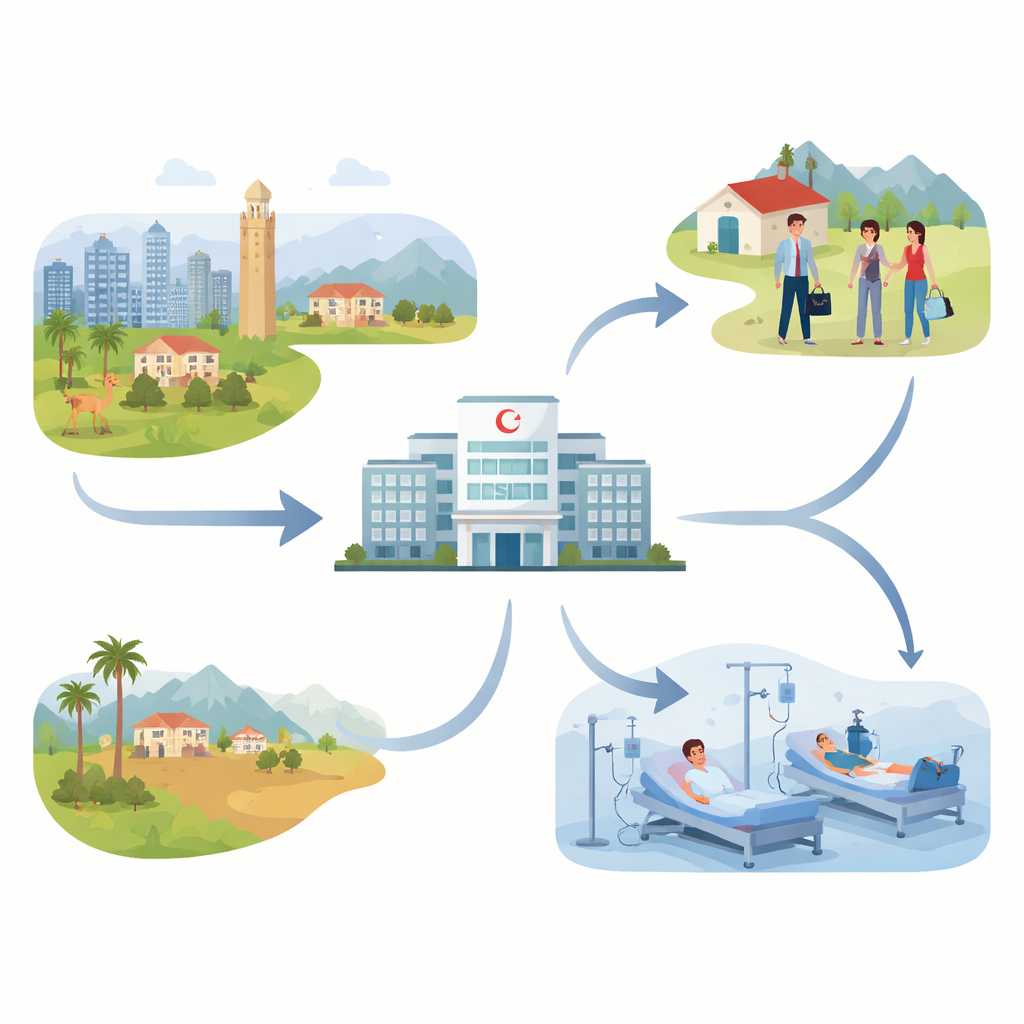
Ambulatory, or same‑day, surgery is designed around a simple idea: if patients can safely recover at home, they should not occupy a hospital bed. In high‑income countries, this model now covers a large share of operations and helps reduce infections, blood clots, and costs while freeing staff and beds for the sickest patients. In Morocco and many other lower‑income settings, however, this way of working is still in its early stages. The digestive surgery team at a busy university hospital in Rabat wanted to see whether same‑day surgery could be done safely in their real‑world conditions, without special units or extra resources.
Taking a close look at real patients
Over one year, the team tracked every adult scheduled for same‑day digestive surgery. Out of 595 operations, 266 were planned as ambulatory cases, typically short procedures such as hernia repair, gallbladder removal, or treatment of anal conditions. All patients were followed for three months after surgery. The researchers recorded who they were, what illnesses they had, how the operations went, and whether they actually left the hospital the same day or ended up spending the night.
Safe surgery, but many cannot go home
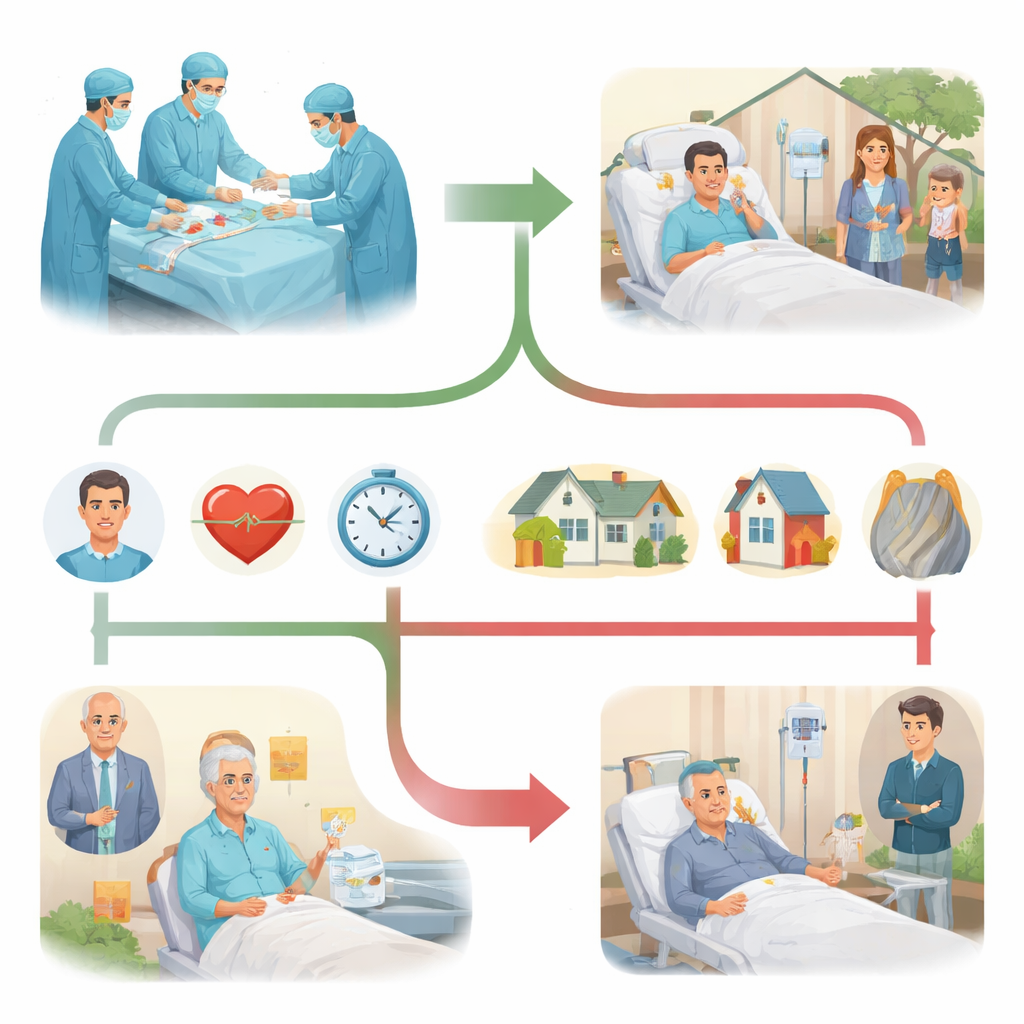
From a medical standpoint, the experiment was reassuring. Complications were rare, affecting fewer than 2% of patients, and serious problems were exceptional. Only three people needed to come back to the hospital within 90 days, and there were no deaths. Despite this, almost one in four patients who were meant to go home on the day of surgery stayed overnight instead. The most common reasons had little to do with the operation itself: many lived far from the hospital, could not read or write well enough to follow written instructions, or lacked a reliable person at home to help them after anesthesia. Older age, chronic illnesses such as heart disease or diabetes, and a history of previous abdominal surgery also made same‑day discharge less likely.
When life outside the hospital shapes care
The findings highlight how strongly everyday life conditions influence modern surgical care. In wealthier countries, failure of same‑day surgery is often tied to pain, nausea, or unexpected medical problems. In this Moroccan hospital, by contrast, social and practical issues dominated. Patients coming from remote rural areas were reluctant to travel home the same day; some had no easy transport or feared returning to hospital quickly if a problem arose. People with limited schooling found it harder to understand complex instructions about pain control, wound care, or blood‑thinning drugs. Without a family member or friend to watch over them at home, both patients and doctors preferred the security of an overnight stay.
Building support around the patient
The authors conclude that same‑day digestive surgery can be both feasible and safe in Morocco, even without dedicated day‑surgery units. What holds it back are not mainly medical dangers but gaps in support systems: weak patient education, limited family help, long distances, and a health system not yet fully organized around outpatient care. They argue that investing in clearer explanations before surgery, involving relatives more actively, improving transport and follow‑up, and creating spaces and teams focused on ambulatory care could allow many more people to benefit from going home the same day—saving resources for the health system while making surgery less disruptive to patients’ lives.
Citation: Elouali, K., Sekkat, H., Bahij, M. et al. Challenges in establishing ambulatory surgery in a Moroccan general surgery department. Sci Rep 16, 11797 (2026). https://doi.org/10.1038/s41598-026-41608-x
Keywords: ambulatory surgery, day surgery, Morocco healthcare, surgical access, social determinants of health