Clear Sky Science · en
Surface integrity and kerf quality improvement in laser beam machining of Nimonic C-263 by hybrid TOPSIS–grasshopper optimization approach
Cutting Tough Metals for Extreme Machines
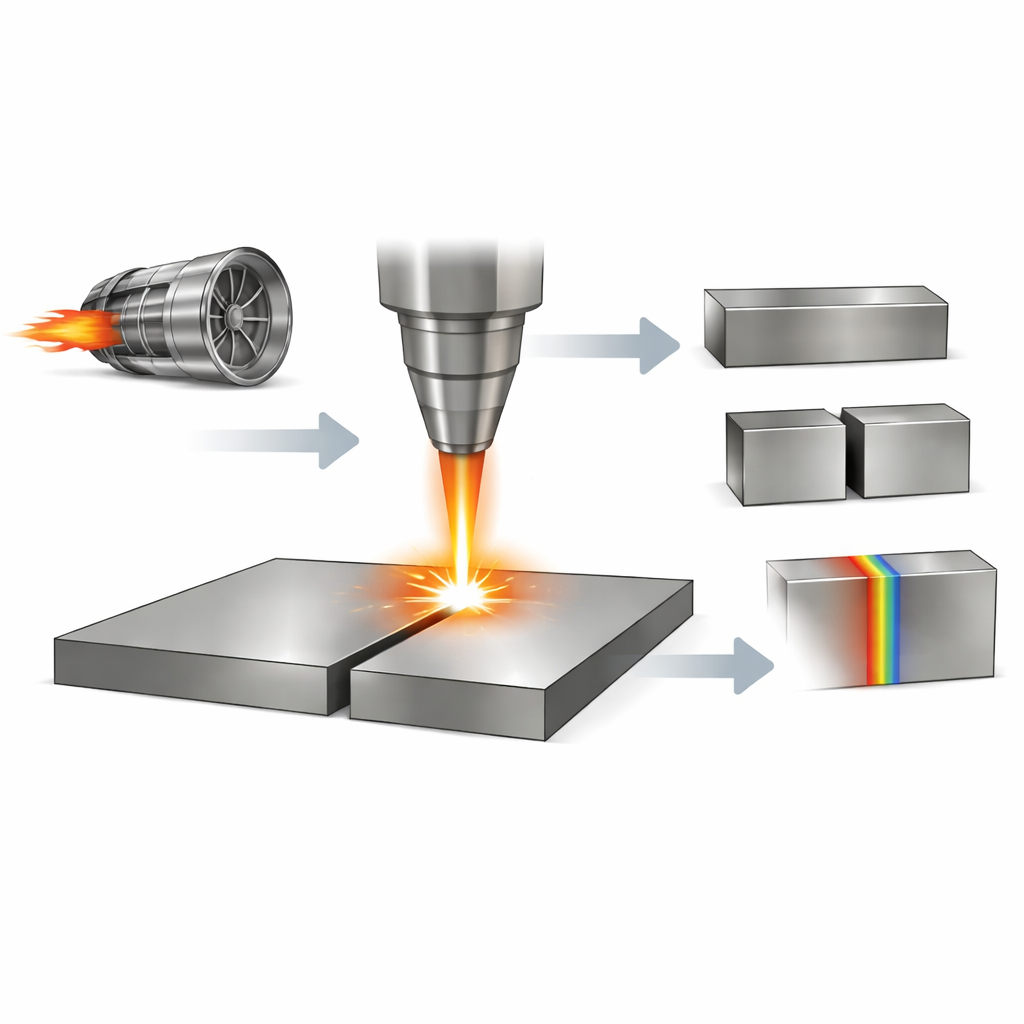
Nimonic C263 is a metal workhorse hidden inside jet engines, gas turbines, and even nuclear systems. It keeps its strength at scorching temperatures, but that same toughness makes it very hard to cut and shape. This study explores how to use laser cutting more intelligently so manufacturers can shape this demanding alloy with smooth edges, narrow cuts, and minimal heat damage—crucial for the safety and efficiency of high‑performance machines.
Why This Alloy Matters
Nimonic C263 is a nickel‑based superalloy designed to survive intense heat, pressure, and corrosive gases. It is used in exhaust sections and casings of aerospace and power‑generation equipment, where any crack or flaw can have serious consequences. Traditional cutting tools struggle with this alloy: they wear out quickly, generate poor surface finishes, and sometimes distort the part. Laser beam machining offers an attractive alternative, because a focused light beam can melt and vaporize the metal without touching it, making very precise cuts. The catch is that if the laser settings are not tuned properly, the cut can still end up rough, wide, or surrounded by a large heat‑damaged layer.
How the Laser Experiments Were Run
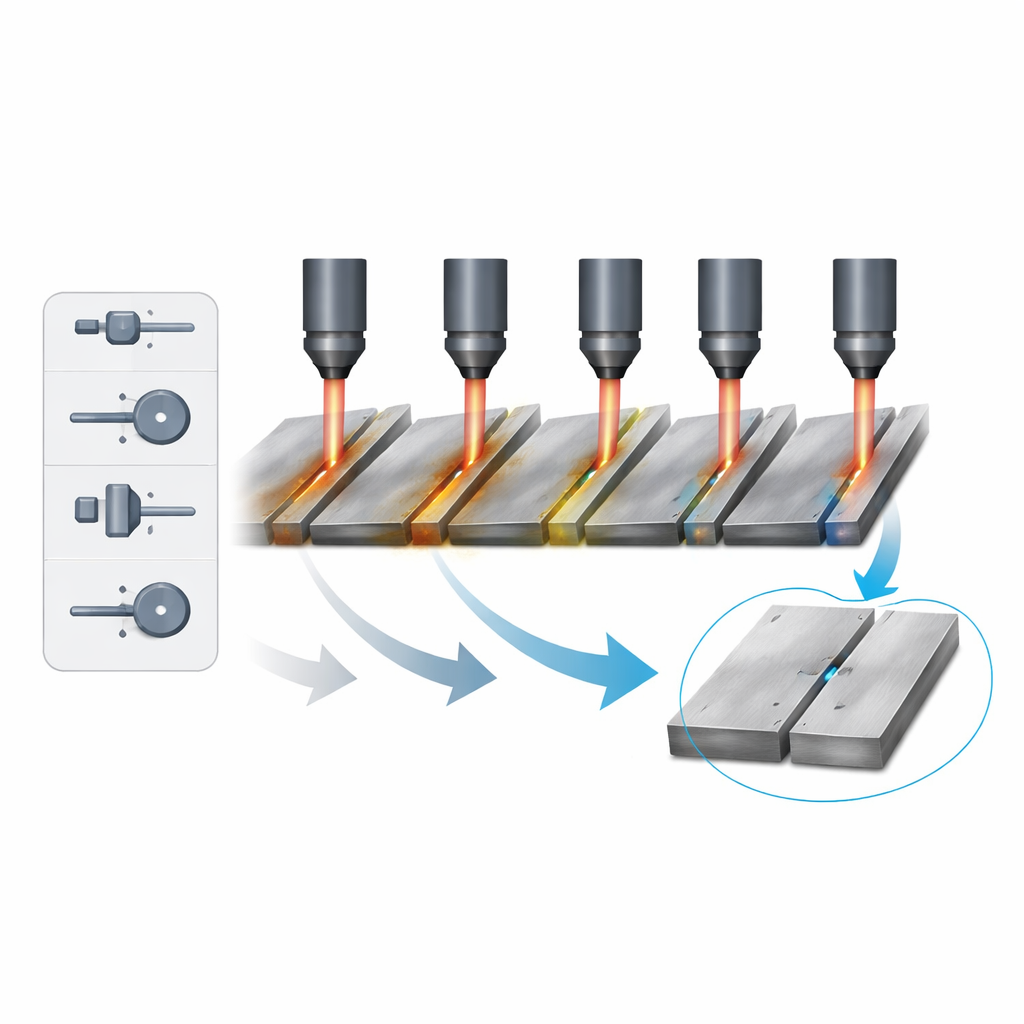
The researchers worked with flat sheets of Nimonic C263 and cut them using an industrial gas laser system assisted by nitrogen, which helps clear molten metal and limits oxidation. They systematically varied four key settings: laser power, cutting speed, gas pressure, and focal position (how deep the beam is focused relative to the surface). For each combination, they measured four quality indicators: surface roughness (how smooth the cut face is), kerf width (how wide the cut is), kerf taper (how much the cut narrows from top to bottom), and the heat‑affected zone, or HAZ (the thin region where the metal’s microstructure is altered by heat). Microscopes, surface testers, and image‑analysis software were used to quantify these effects with high precision.
What Controls Cut Quality
By applying statistical analysis, the team teased out which settings mattered most. Laser power and cutting speed turned out to be the dominant levers. Higher laser power increased the amount of heat entering the material, which tended to enlarge the heat‑affected zone and make the surface slightly rougher, even though it ensured full cutting. Cutting speed strongly influenced the width of the cut: faster travel of the beam reduced the energy delivered per unit length, leading to narrower kerfs and less thermal damage. Gas pressure and focal position had more subtle but still important roles, affecting how molten metal is blown out of the groove and how concentrated the beam is inside the plate. Together, these factors determine whether the cut edges are crisp and parallel or uneven and overheated.
Letting Algorithms Search for the Sweet Spot
Because the best settings for one feature (for example, a very narrow cut) may worsen another (such as heat damage), the authors used a decision‑making method called TOPSIS to blend all four quality measures into a single score. This score reflects how close a given setting is to an "ideal" cut that is smooth, narrow, straight, and minimally heated. They then fed this score into a bio‑inspired search routine modeled on the swarming behavior of grasshoppers. This algorithm systematically roams through possible combinations of power, speed, gas pressure, and focus, steering toward those that raise the overall quality score while avoiding poor regions of the parameter space.
The Best Recipe for Cutting This Superalloy
The hybrid TOPSIS–grasshopper approach pinpointed a setting with relatively low laser power, low cutting speed, moderate gas pressure, and a specific focal depth as the optimum compromise. When the team ran confirmation experiments at this combination, the overall quality metric improved by about 5% compared with using TOPSIS alone, with notable reductions in cut width, surface roughness, and heat‑affected zone. For industries that rely on Nimonic C263, the study offers more than just a set of numbers: it demonstrates a structured way to tune laser cutting so parts can be produced with better surfaces, tighter dimensions, and less hidden thermal damage—ultimately improving performance and reliability in demanding environments.
Citation: Shastri, R.K., Mohanty, C.P., Pati, P.R. et al. Surface integrity and kerf quality improvement in laser beam machining of Nimonic C-263 by hybrid TOPSIS–grasshopper optimization approach. Sci Rep 16, 12947 (2026). https://doi.org/10.1038/s41598-026-41580-6
Keywords: laser cutting, nickel superalloy, manufacturing quality, heat affected zone, multi-objective optimization