Clear Sky Science · en
Magnetic molecularly imprinted polymer coated with chitosan shell for enhanced controlled drug release
Why this matters for future cancer treatments
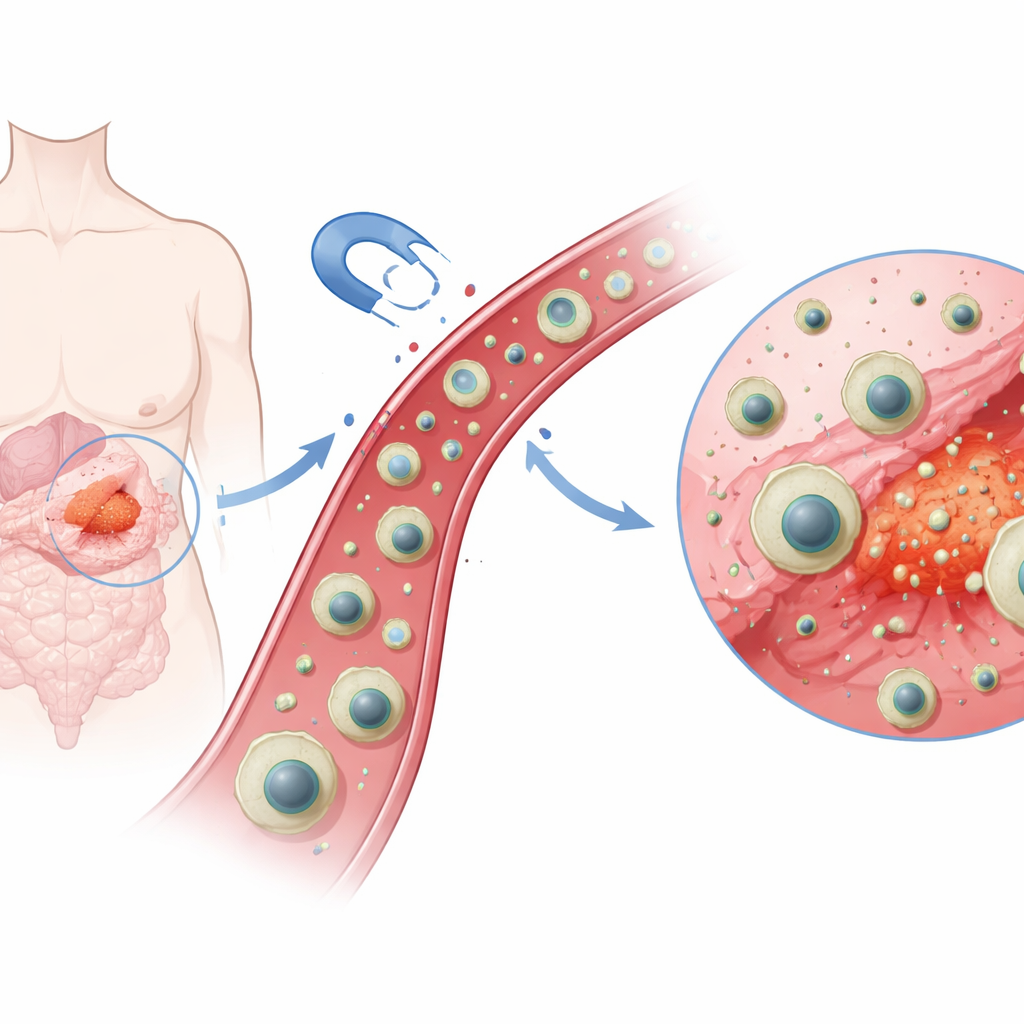
Cancer drugs can be lifesaving, but they often harm healthy cells along the way, causing serious side effects and limiting how much medicine patients can safely receive. This study explores a tiny, smart carrier for the leukemia drug imatinib that can be steered by magnets and only opens fully in acidic, tumor-like environments. The goal is simple but powerful: send more drug precisely where it is needed, release it slowly over days, and spare the rest of the body as much as possible.
Building a tiny guided medicine capsule
The researchers designed a multilayered nano-sized capsule—hundreds of times smaller than a red blood cell—with a magnetic core at its center. Around this core they added a thin silica shell for stability, then a special polymer layer molded around imatinib molecules like a custom keyhole around a key. This “molecular imprinting” step leaves behind microscopic cavities that strongly and selectively trap imatinib. Finally, after loading the drug, they wrapped the whole structure in a soft outer coat made from chitosan, a biopolymer related to natural materials found in shellfish. The result is a magnetic, drug-filled particle that can be pulled by an external magnet and that has built-in preference for one specific medicine.
Smart response to the body’s chemistry
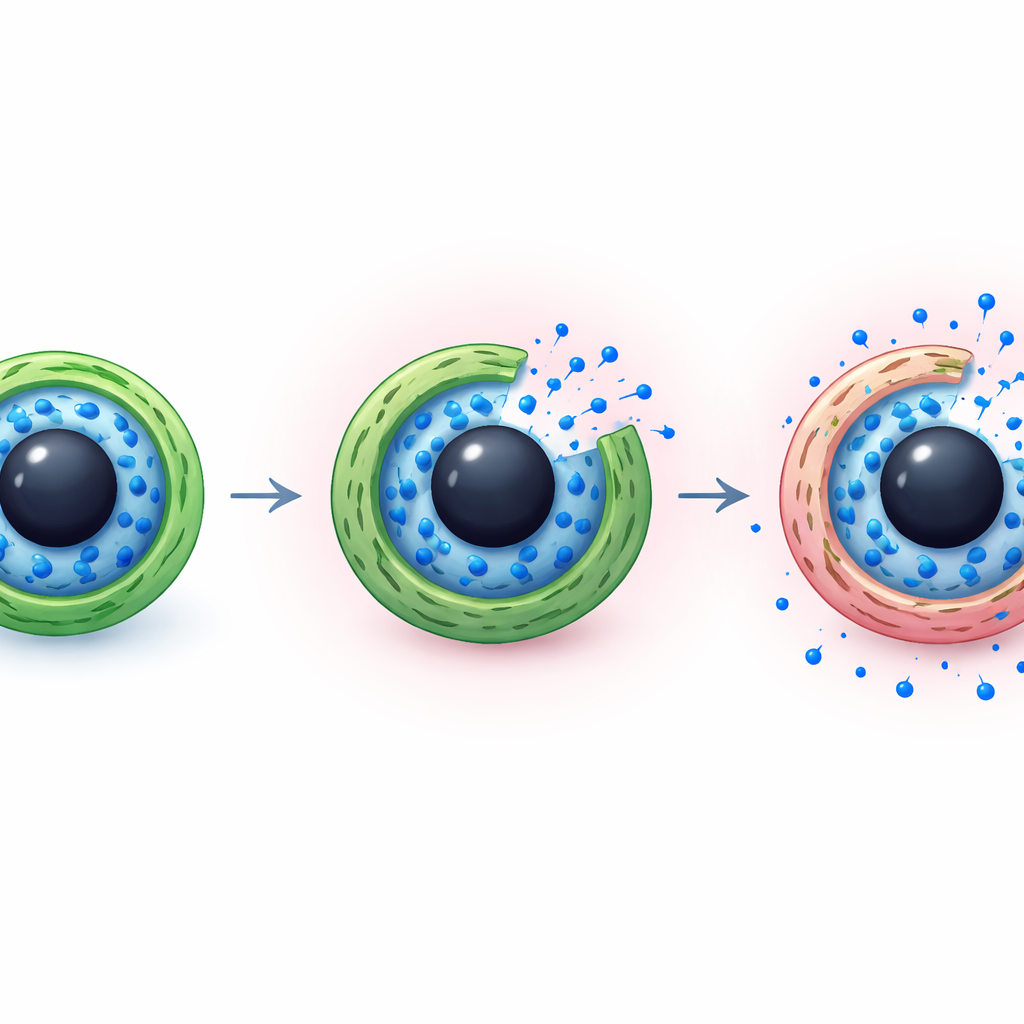
One of the most striking features of tumors is that their surroundings tend to be more acidic than normal tissues. The team exploited this difference by choosing chitosan as the outer shell, because its chemical groups change charge depending on pH. At the near-neutral conditions of healthy tissues (around pH 7.4), the chitosan shell stays relatively compact and less permeable, keeping most of the drug locked inside. In a more acidic environment (around pH 5.5, similar to tumor compartments and cell recycling centers), the shell’s amino groups pick up protons, become positively charged, and repel one another. This causes the shell to swell and loosen, opening pathways for drug molecules to escape.
Putting the carrier to the test
To see how well their design worked, the scientists carefully measured how much imatinib the particles could hold and how quickly it leaked out under different conditions. Thanks to the imprinted inner layer, the capsules showed a high loading capacity: roughly two-thirds of their mass could be drug, and they bound imatinib far more strongly than two similar cancer medicines with related structures. When placed in fluids mimicking the body, the uncoated particles released their cargo relatively quickly, especially in acidic solutions. Adding the chitosan shell slowed everything down and made the release strongly pH dependent. Over four days, only about a quarter of the drug escaped at neutral pH, while roughly three-quarters were released under acidic conditions, indicating that the particles remain mostly closed in normal tissues but open much more in tumor-like environments.
How the drug seeps out over time
The team also analyzed how, in physical terms, the drug leaves the capsules. By comparing the measured release curves to standard mathematical models used in pharmaceutical science, they found that the data match best with a picture where both simple diffusion and slow relaxation of the polymer layers work together. In neutral conditions the tight chitosan coating adds resistance, so imatinib molecules drift out slowly. In acidic conditions the swollen shell and weakened bonding inside the imprinted layer make it easier for water to enter and for the drug to move, speeding up release without turning it into an uncontrolled burst. This combination offers a balance between holding the medicine securely during circulation and allowing it to escape once it has reached its target.
Safer attack on cancer cells
Laboratory tests on human leukemia cells and normal blood immune cells showed why such fine-tuned control matters. Free imatinib was quickly toxic to both cancerous and healthy cells. In contrast, the drug-loaded particles were far gentler on normal cells, even at higher doses and longer exposure times, yet they still killed leukemia cells efficiently as the drug was gradually released. The chitosan-coated version in particular showed stronger time-dependent effects on cancer cells while leaving most normal cells alive, suggesting a better separation between benefit and side effects than the free drug.
What this could mean for patients
Altogether, the work presents a proof of concept for a tiny, magnetically steerable capsule that recognizes a specific cancer drug, carries a large amount of it, and releases it more in tumors than in healthy tissues. While these experiments were done in test tubes and cell cultures rather than in patients, they point toward future treatments where doctors might guide such particles toward a tumor with magnets, rely on the tumor’s own acidic chemistry to trigger release, and reduce the collateral damage that so often accompanies chemotherapy.
Citation: Sadri, N., Mazloum-Ardakani, M., Joseph, Y. et al. Magnetic molecularly imprinted polymer coated with chitosan shell for enhanced controlled drug release. Sci Rep 16, 11015 (2026). https://doi.org/10.1038/s41598-026-41273-0
Keywords: targeted drug delivery, nanoparticles, pH-responsive carriers, imatinib, magnetic polymers