Clear Sky Science · en
A prospective randomized trial comparing the effects of anti-reflux versus standard ureteral stents on male sexual function
Why this study matters for everyday health
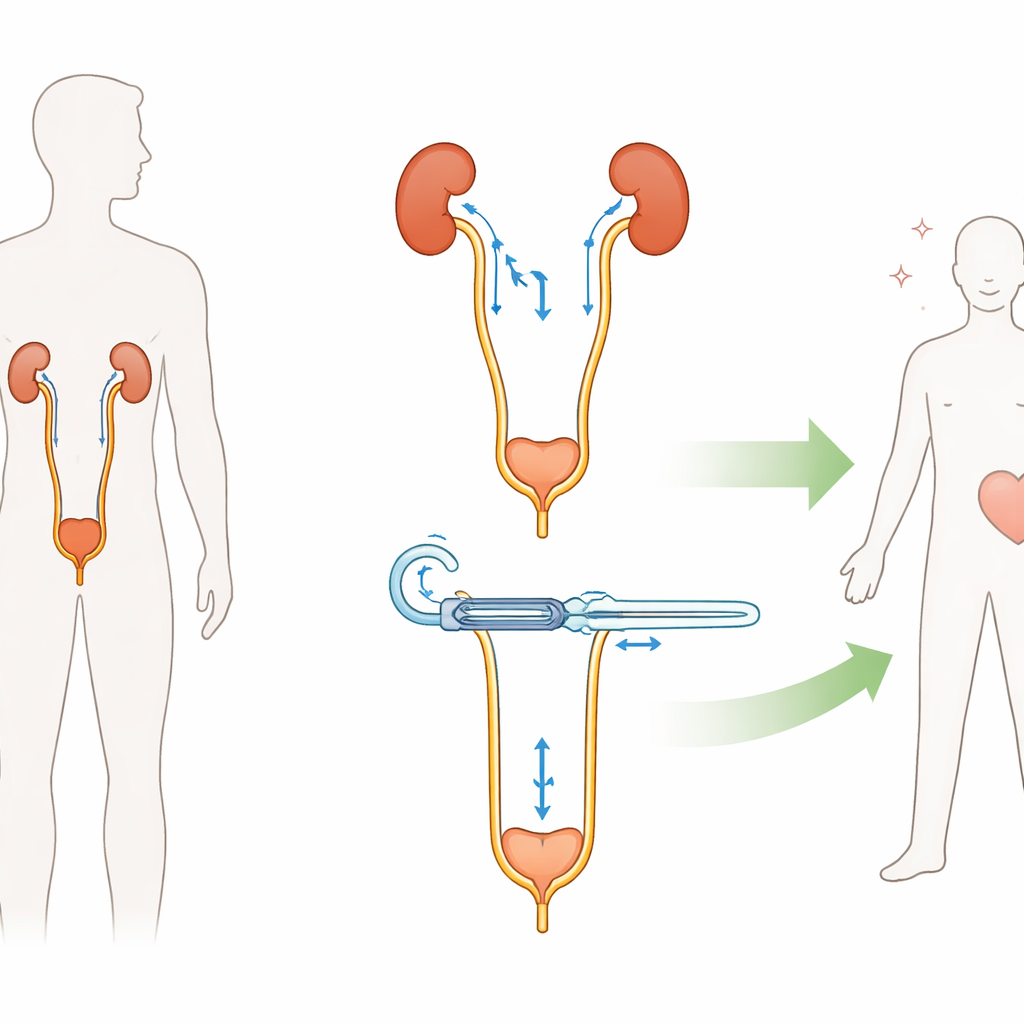
Kidney stones and the tubes used to drain urine after they are treated are common but rarely discussed in terms of how they affect a man’s intimate life. Many men who receive a ureteral stent—a soft plastic tube placed between the kidney and bladder—complain of pain, constant urges to urinate, and even problems with erections. This study asked a simple but important question: can a redesigned stent that prevents urine from flowing backward into the kidney make men feel better overall and protect their sexual function during recovery?
A common fix with hidden downsides
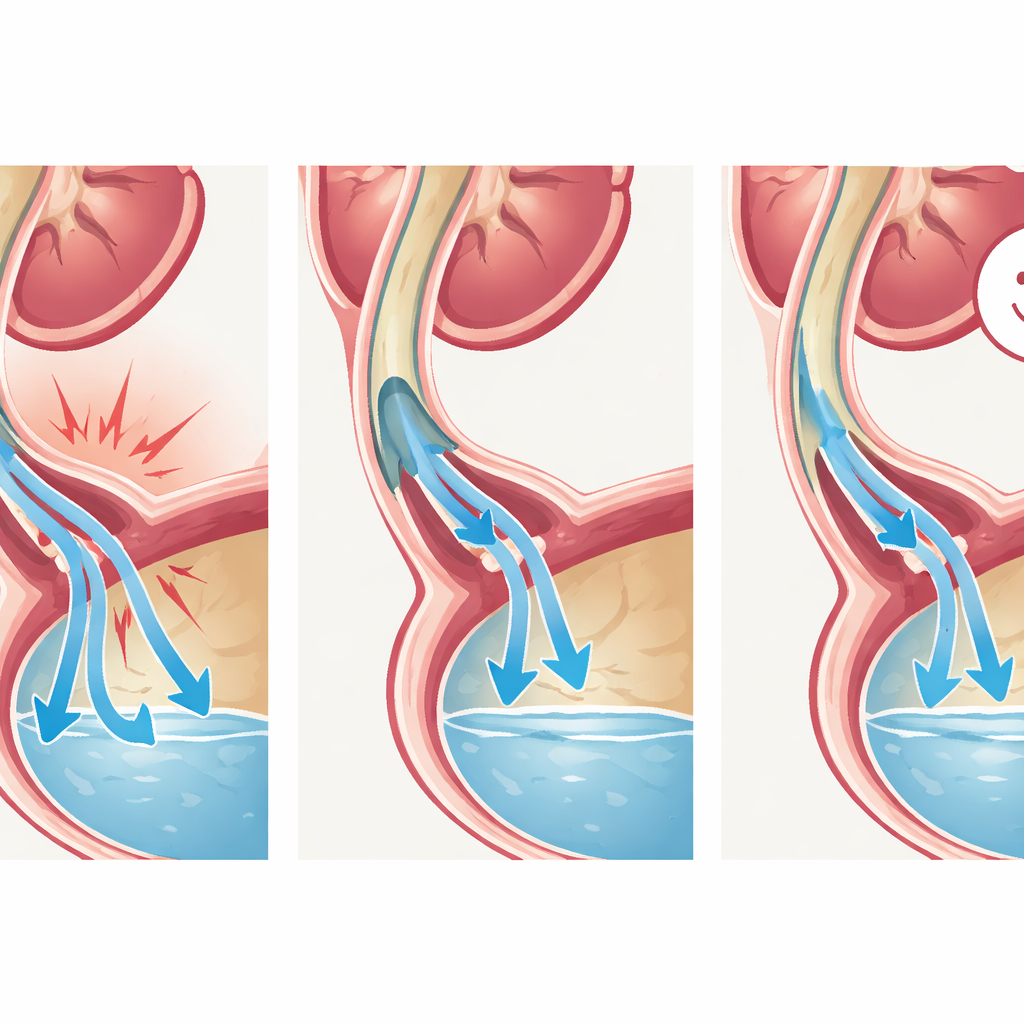
Ureteral stents are standard tools in urology. After doctors break up a kidney or ureter stone with a tiny scope and laser, they usually leave a stent in place for several weeks to keep urine flowing and allow the ureter to heal. Traditional “double-J” stents do this job well, but they can also let urine splash backward from the bladder toward the kidney every time a man urinates. This backflow can trigger flank pain, bladder irritation, and infections. Earlier work suggested that these symptoms can temporarily disrupt sexual function, but no one had clearly tested whether changing the stent design could ease these problems.
A new one-way design put to the test
The researchers studied 100 sexually active men aged 18 to 50 who needed a stent after laser treatment for a single ureter stone. By random chance, half received a standard stent and half received a new “anti-reflux” stent that contains a small one-way valve near the bladder end. This valve is meant to stay open when urine flows normally from kidney to bladder, but close when bladder pressure rises, blocking backward flow. Neither the patients nor the people scoring the questionnaires knew which device each man had. Over eight weeks, the team measured blood markers of inflammation, mood using a standard depression scale, and sexual function using a brief erectile-function questionnaire, while also tracking pain, blood in the urine, and lower urinary tract symptoms such as urgency and frequent urination.
Less pain, calmer bladders, and steadier mood
Both types of stents were safe, with no serious complications and similar surgery times. However, clear differences emerged during recovery. Men with the anti-reflux stent reported much less low back pain and fewer bothersome urinary symptoms at two and four weeks compared with those with standard stents. Blood tests showed that common inflammation markers, including C-reactive protein and white blood cell counts, rose in both groups after surgery but were significantly lower in the anti-reflux group. Interestingly, levels of key sex hormones, such as testosterone and estradiol, did not change meaningfully in either group, suggesting that the observed sexual effects were not driven by hormone shifts. Men with standard stents also showed a stronger temporary rise in depression scores, while mood remained more stable in those with anti-reflux stents.
Protecting sexual function during recovery
When the team focused on sexual health, they found that erectile function scores dipped in both groups shortly after surgery, which is not surprising given pain and stress. But the decline was smaller and recovery faster among men with the anti-reflux stent: at two, four, and six weeks after surgery, their scores were significantly higher than those of men with standard stents. By eight weeks, after the stents had been removed, erectile function had largely returned to pre-surgery levels in both groups. The authors propose that less urine backflow means fewer painful episodes, lower inflammation, less anxiety, and therefore less disruption of the delicate nerve and blood vessel signals that drive erection—though they emphasize that these biological pathways remain hypotheses rather than proven mechanisms.
What this means moving forward
This trial suggests that a relatively small engineering change—a built-in one-way valve in a ureteral stent—can make a noticeable difference in how men feel while recovering from stone surgery, including their comfort, mood, and sexual function. Because the study involved a modest number of patients at a single hospital and did not include detailed imaging of urine flow, the results will need confirmation in larger, multi-center trials. Still, the findings point toward a future in which devices used for routine procedures are designed not only to solve the immediate medical problem but also to better protect quality of life in areas that matter deeply to patients, including sexual health.
Citation: Xu, l., Gao, Z., Wang, R. et al. A prospective randomized trial comparing the effects of anti-reflux versus standard ureteral stents on male sexual function. Sci Rep 16, 10148 (2026). https://doi.org/10.1038/s41598-026-41187-x
Keywords: ureteral stent, kidney stones, erectile function, urinary reflux, male sexual health