Clear Sky Science · en
High intensity functional training versus traditional resistance training effects on inflammatory, metabolic, and physical outcomes in overweight men a randomized controlled trial
Why this workout study matters for everyday health
Millions of people struggle with extra weight and the health problems that tend to come with it, from high blood sugar to poor fitness. Yet most of us also feel short on time and unsure which kind of workout gives the best "health return" for the effort. This study looked at two popular options—high-intensity functional training, which resembles fast-paced circuit classes, and more traditional weight training—to see how each affects blood fats and sugars, body fat, strength, and fitness in overweight men.
Two different ways to move more
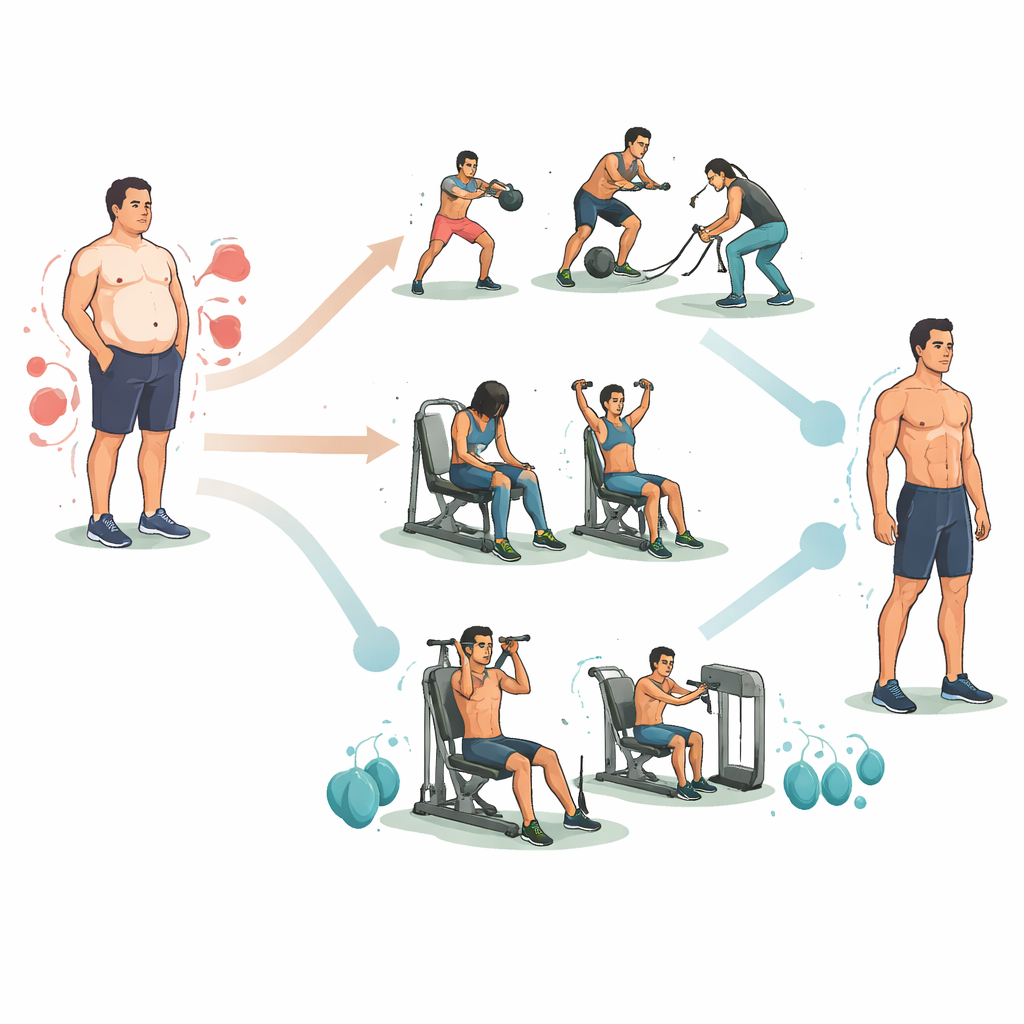
The researchers recruited 34 men in their early thirties who were overweight but otherwise healthy and not doing regular strength training. The men were randomly assigned to one of three groups: high-intensity functional training (HIFT), traditional resistance training (TRT), or a non-exercising control group. Both exercise programs lasted eight weeks with three supervised sessions per week. HIFT sessions used multi-joint barbell movements such as squats, deadlifts, rows, and presses, done in 30-second bursts at a relatively light weight with 30 seconds of rest, cycling through the moves as many times as possible. The traditional program used many of the same muscles but in a slower, more familiar format—three sets of 12 repetitions at a heavier weight, with longer rests between sets.
What the researchers measured in the body
Before and after the eight-week period, the team drew blood and assessed body composition and performance. They checked blood sugar, cholesterol, and triglycerides, which are key markers of metabolic health. They also measured several molecules linked to low-grade inflammation—such as certain immune proteins and receptors—that are often elevated in obesity and may contribute to heart disease and diabetes. Body fat percentage, muscle mass, and waist-to-hip ratio were examined with a body composition analyzer and tape measurements. Finally, the men were tested for maximum strength in the bench press and for aerobic fitness using a treadmill test that estimates maximum oxygen uptake, or VO2max, a standard measure of cardiovascular capacity.
How the two programs changed health markers
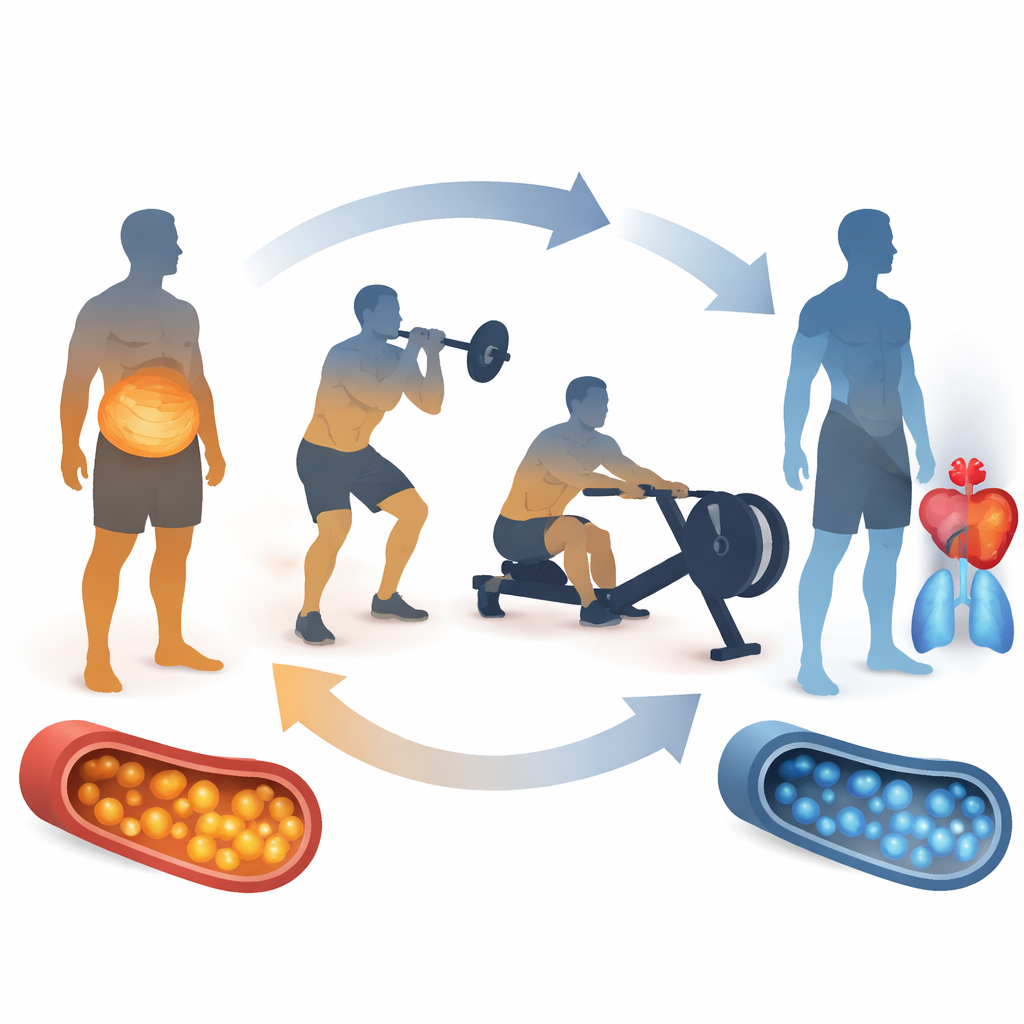
Over eight weeks, neither exercise program produced dramatic shifts in the inflammatory molecules measured in the bloodstream. However, both kinds of training clearly improved metabolic health. Fasting blood sugar dropped in the training groups, and triglycerides—a type of blood fat linked to heart risk—fell by roughly one-fifth in both HIFT and TRT while rising slightly in the control group. Traditional resistance training was especially effective at lowering total cholesterol and was associated with higher levels of the "good" blood fat carrier HDL compared with the non-exercisers. Importantly, muscle mass increased across the exercising men, and both programs produced similar gains in bench-press strength.
Body shape and fitness changes you can feel
Where the two workouts diverged was in body fat and cardiovascular fitness. High-intensity functional training led to a clear drop in body fat percentage and a small but meaningful reduction in waist-to-hip ratio, pointing to less fat around the middle—an area closely tied to disease risk. Traditional weight training did not change body fat much over the same time span. For aerobic fitness, HIFT again stood out: participants in this group improved their estimated VO2max, while those doing traditional weight training roughly maintained their fitness and the control group slipped backward. In other words, the functional, fast-paced circuits acted more like a combined strength-and-cardio program than weights alone.
What this means for people trying to get healthier
For overweight men similar to those in the study, both high-intensity functional training and traditional weight training appear to be safe, time-efficient ways to improve blood sugar, blood fats, muscle mass, and strength in just two months. The high-intensity functional approach offers an extra edge for trimming body fat and boosting heart and lung fitness, making it especially attractive for those seeking broad health gains in limited time. At the same time, the lack of big changes in inflammatory blood markers suggests that deeper shifts in the body’s immune chemistry may require longer training periods, larger weight loss, or additional lifestyle changes. Together, the results support the idea that regularly challenging your muscles—whether through fast-paced circuits or classic sets and reps—is a powerful tool for managing weight and protecting long-term health.
Citation: Hosseini Moshkenani, F., Abedi, S., Shabkhiz, F. et al. High intensity functional training versus traditional resistance training effects on inflammatory, metabolic, and physical outcomes in overweight men a randomized controlled trial. Sci Rep 16, 10137 (2026). https://doi.org/10.1038/s41598-026-40482-x
Keywords: high-intensity functional training, resistance training, overweight men, metabolic health, cardiorespiratory fitness