Clear Sky Science · en
Exploring the association between hedonic hunger and obesogenic eating behaviors in females with overweight/obesity using machine learning methods
Why Treats Still Tempt Us When We Are Full
Many people recognize the experience of wanting dessert even after a big meal. This pull toward tasty food, driven more by pleasure than by true hunger, is common—but for women living with overweight or obesity, it may be especially important. This study explores how that pleasure-driven urge to eat, known as hedonic hunger, is linked to everyday eating habits that can promote weight gain.
A Closer Look at Pleasure-Driven Appetite
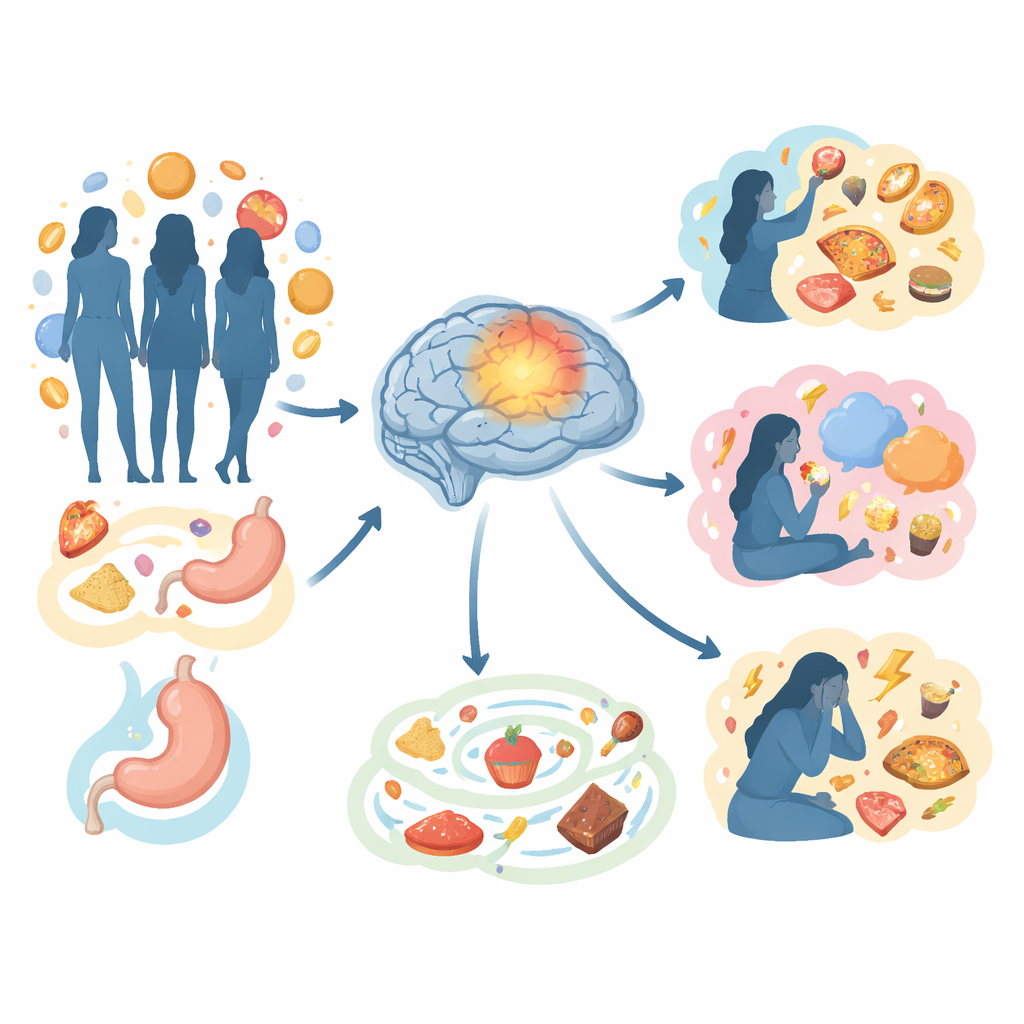
Our bodies normally balance eating through signals of need, such as an empty stomach or low energy stores. Hedonic hunger, however, is different: it is the desire to eat simply because food looks or smells appealing, or because we expect it to feel good. In today’s world, with constant access to calorie-dense snacks and meals, this pleasure-based drive can push people to eat well beyond what their bodies require. Earlier research suggested that hedonic hunger is often higher in people with obesity and in women, but its ties to specific eating habits had not been fully mapped out.
How the Study Was Carried Out
The researchers recruited 405 adult women in Iran, all with overweight or obesity but otherwise apparently healthy. In face-to-face sessions, they measured height, weight, and physical activity, and asked participants to complete several detailed questionnaires. One set of questions captured hedonic hunger—how strongly people react to the presence, sight, or taste of palatable foods. Other tools asked about four eating patterns that can encourage weight gain: eating in response to food cues like sight and smell (external eating), eating in response to emotions (emotional eating), eating more when stressed (stress eating), and having intense urges for certain foods (food craving).
Using Numbers and Algorithms to Find Patterns
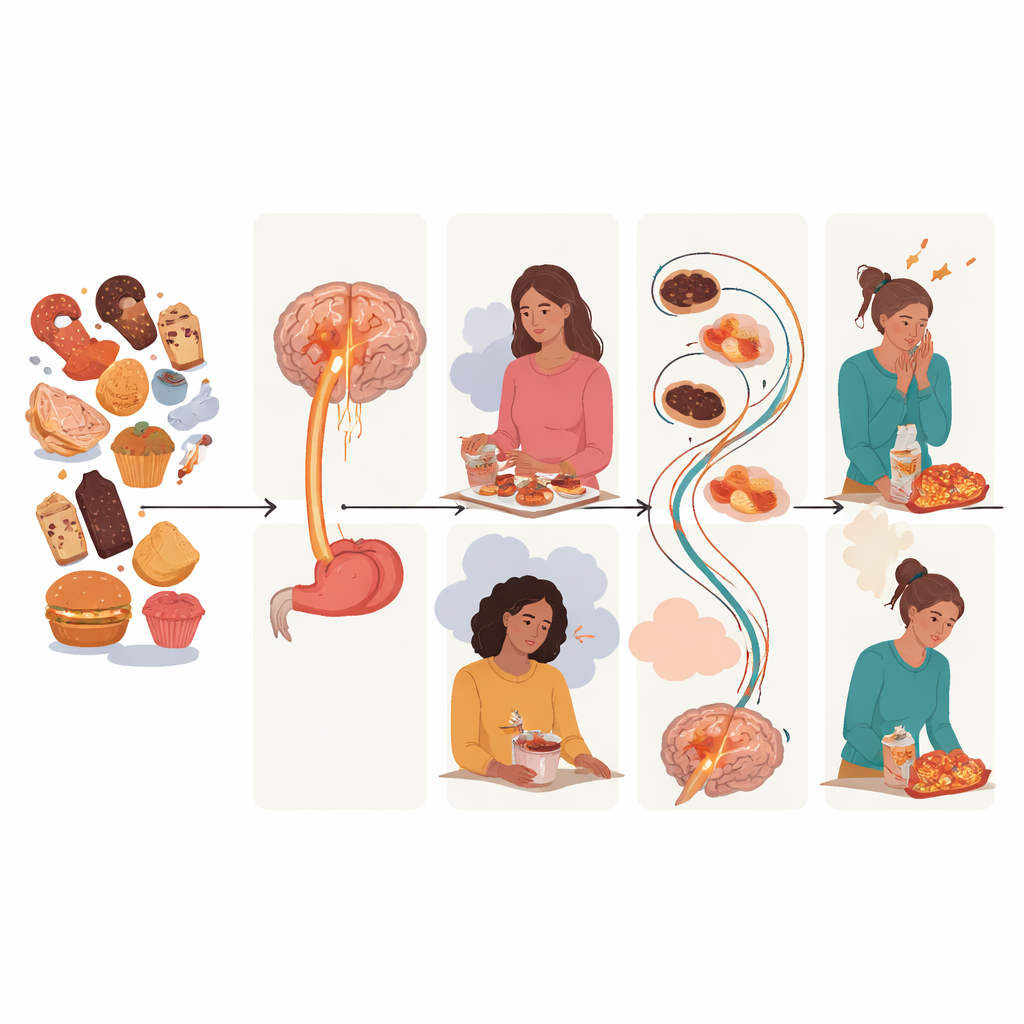
To understand how these traits were related, the team first used standard statistical methods, adjusting for age, body mass index, and physical activity. They then added two modern machine learning approaches—decision trees and random forests—to see which factors best predicted each type of eating behavior. In all of these analyses, one pattern stood out clearly: higher hedonic hunger scores went hand in hand with higher scores for every obesogenic eating behavior measured. Women who were more driven by the pleasure of food were more likely to eat in response to cues, emotions, stress, and cravings.
What the Results Reveal About Daily Eating Habits
The decision tree models consistently placed hedonic hunger at the top of the branching structure, meaning it was the single most important factor for sorting women into groups with lower or higher levels of external eating, emotional eating, food craving, and stress eating. The random forest models, which aggregate many trees, reinforced this message: hedonic hunger overwhelmingly outweighed age, body mass index, and physical activity in predicting these eating patterns. Put simply, women who reported stronger attraction to food for its pleasure value were also those who tended to snack in response to sights and smells, eat more when feeling sad or happy, turn to food under stress, and experience stronger pull toward rich, highly palatable options.
Why This Matters for Health and Daily Life
For a general reader, the key message is that overeating is not only about willpower or physical hunger. This study suggests that a strong pleasure-based drive to eat may be at the heart of several common habits that make weight management difficult. While the research cannot prove cause and effect, it highlights hedonic hunger as a central thread connecting emotional, stress-related, cue-driven eating and cravings in women with overweight or obesity. Future work may explore how changing the food environment, managing stress and emotions, or directly targeting pleasure-driven appetite could help people align their eating more closely with their body’s true needs.
Citation: Karamizadeh, M., Sadeghi, E., Khalilitehrani, A. et al. Exploring the association between hedonic hunger and obesogenic eating behaviors in females with overweight/obesity using machine learning methods. Sci Rep 16, 9850 (2026). https://doi.org/10.1038/s41598-026-40347-3
Keywords: hedonic hunger, emotional eating, food cravings, stress eating, obesity in women