Clear Sky Science · en
Efficacy of a comprehensive multimodal analgesia protocol for postoperative pain management following foot and ankle surgery: a prospective randomized controlled trial
Why easing post-surgery pain matters
Foot and ankle operations are common, from bunion correction to ankle ligament repair. Yet many patients recall the days after surgery as the hardest part, largely because of pain. Traditionally, doctors have leaned heavily on strong painkillers, including opioids, to get patients through this period, which can bring side effects and the risk of dependence. This study explores a different strategy: combining several gentler methods of pain control in a carefully timed plan to keep patients more comfortable and less reliant on rescue medication.
A new game plan for pain relief
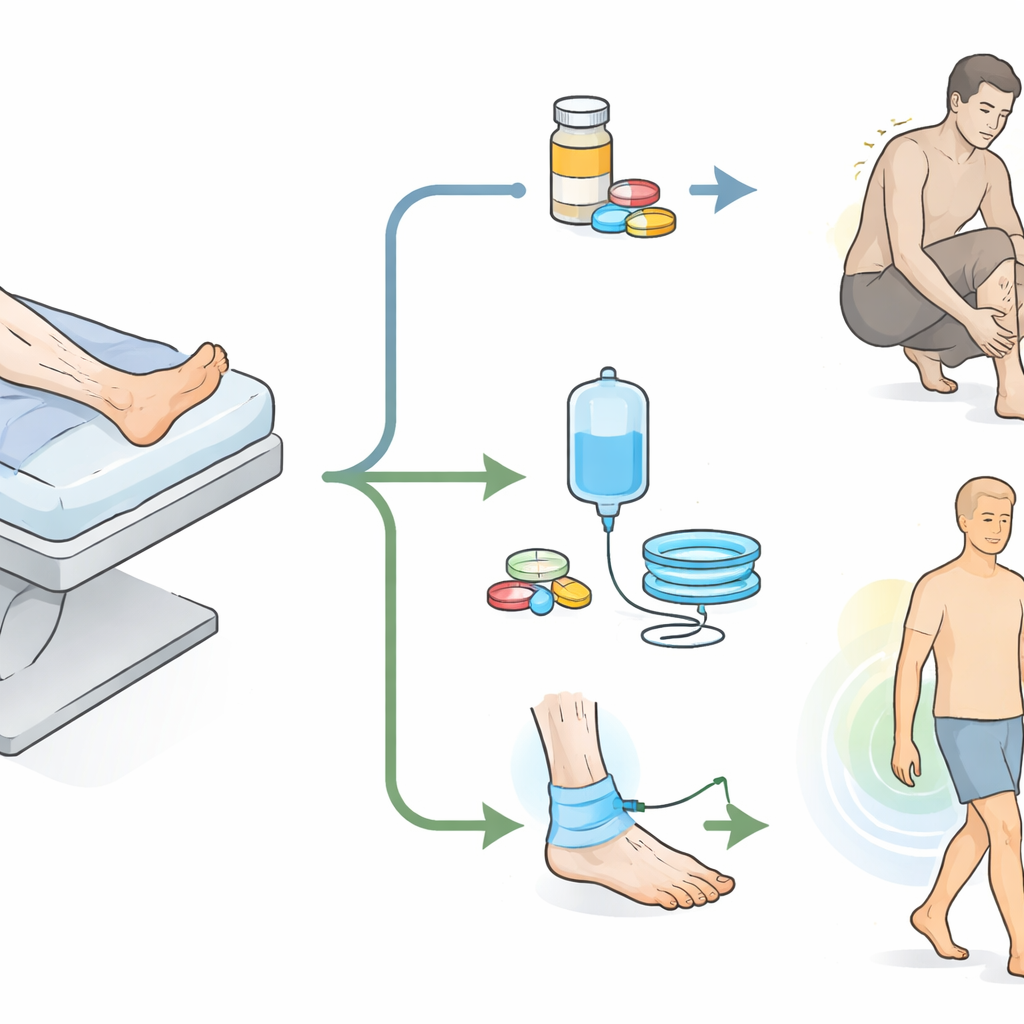
The researchers followed 82 adults having a variety of foot and ankle surgeries, from bone fusions to tendon repairs. Everyone received a commonly used technique called a continuous sciatic nerve block, in which numbing medicine is delivered near the main nerve to the lower leg through a small catheter for about two days after surgery. Patients were randomly assigned to either a usual-care group, which depended on the nerve block plus pain medicines only when pain flared, or to a multimodal group that followed a structured schedule of different pain‑relief methods before, during, and after surgery.
Layering pain control step by step
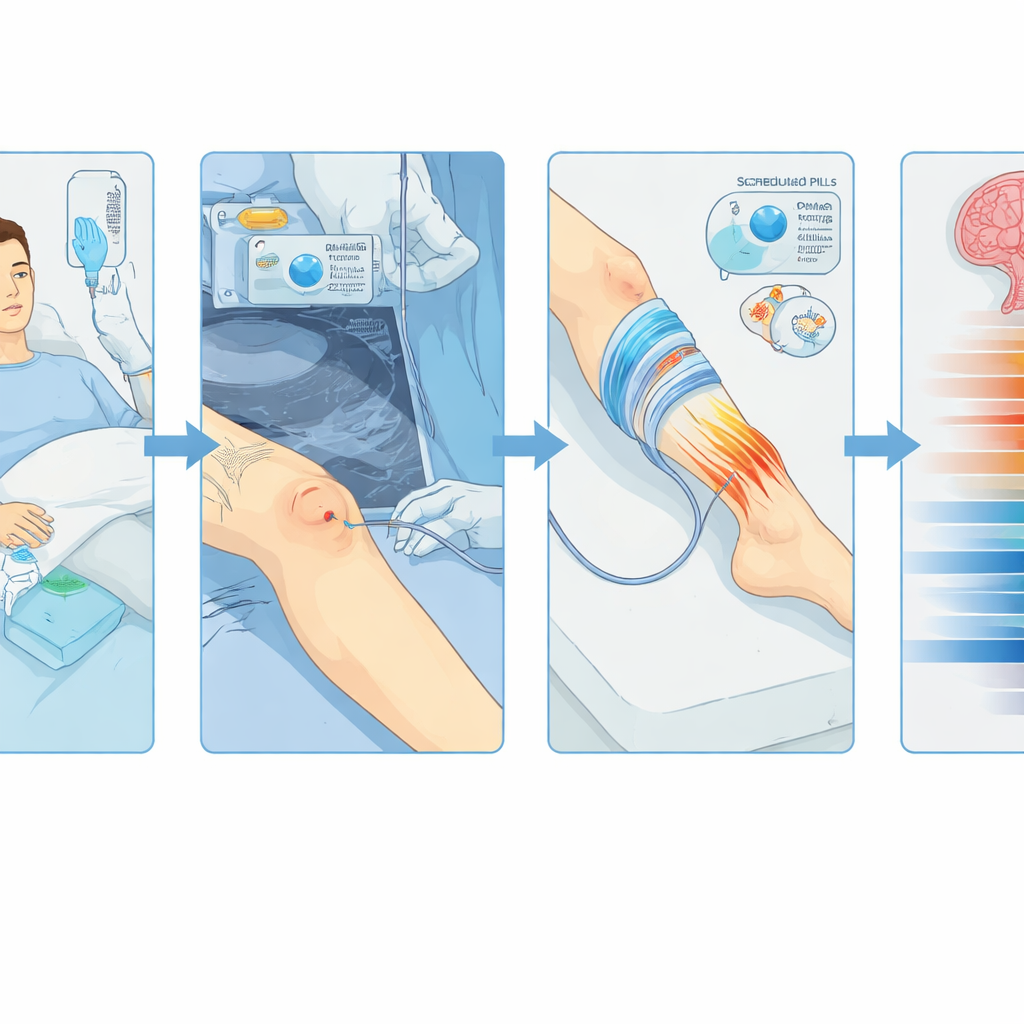
In the multimodal plan, patients began taking an anti-nerve pain pill and received intravenous acetaminophen and ibuprofen before surgery even started. During the operation, they were given a dose of an anti-inflammatory steroid. After surgery, they continued to receive regular doses of acetaminophen, ibuprofen, and gabapentin on a fixed schedule, along with frequent icing of the operated foot or ankle. In contrast, the usual-care group relied mainly on the nerve block, and extra pain medicine was only added if patients reported that their pain had risen above a preset level. This difference meant that one approach tried to prevent pain from building, while the other waited to react to it.
Less pain and fewer backup drugs
Pain levels were measured with a simple line scale repeatedly during the first two days after surgery and at later visits. During the crucial first 48 hours, when pain is usually at its worst, patients in the multimodal group consistently reported lower pain scores at several key time points, especially around 10 to 24 hours after surgery when the initial numbing effect from the nerve block can fade. They also needed fewer doses of their first rescue medicine, a combination pill containing tramadol and acetaminophen, and far fewer needed a second, stronger backup drug given through a vein.
Smoother recovery without extra risks
The benefits of the multimodal plan were seen across many kinds of procedures, whether the surgery focused on soft tissues like tendons or on bones and joints. Importantly, there were no meaningful differences in side effects between the two groups. No serious problems related to the nerve catheter or the added medicines were reported, and all patients completed the follow-up. When asked to rate their overall satisfaction with pain control, those in the multimodal group gave higher scores, suggesting that the experience of recovery felt easier and more manageable.
What this means for patients
For someone facing foot or ankle surgery, these findings suggest that a thoughtful, layered approach to pain relief can make the early days after the operation less difficult. By combining several well-known treatments—regular non-opioid pills, nerve blocks, icing, and a timing strategy that starts before pain peaks—doctors can reduce the need for stronger rescue drugs while keeping patients more comfortable. Although the study was done at a single hospital and with a modest number of people, it supports the idea that planning ahead with multiple tools, rather than relying on one main drug and reacting later, may offer a safer and more satisfying way to navigate postoperative pain.
Citation: Park, Y., Sakong, S., Han, D. et al. Efficacy of a comprehensive multimodal analgesia protocol for postoperative pain management following foot and ankle surgery: a prospective randomized controlled trial. Sci Rep 16, 9941 (2026). https://doi.org/10.1038/s41598-026-39199-8
Keywords: foot and ankle surgery, postoperative pain, multimodal analgesia, nerve block, opioid-sparing