Clear Sky Science · en
Carcinogenic and non-carcinogenic risk assessment of elemental impurities and bioactive compounds in six wild mushrooms using Monte Carlo simulation
Why Wild Mushrooms Are Both Friends and Foes
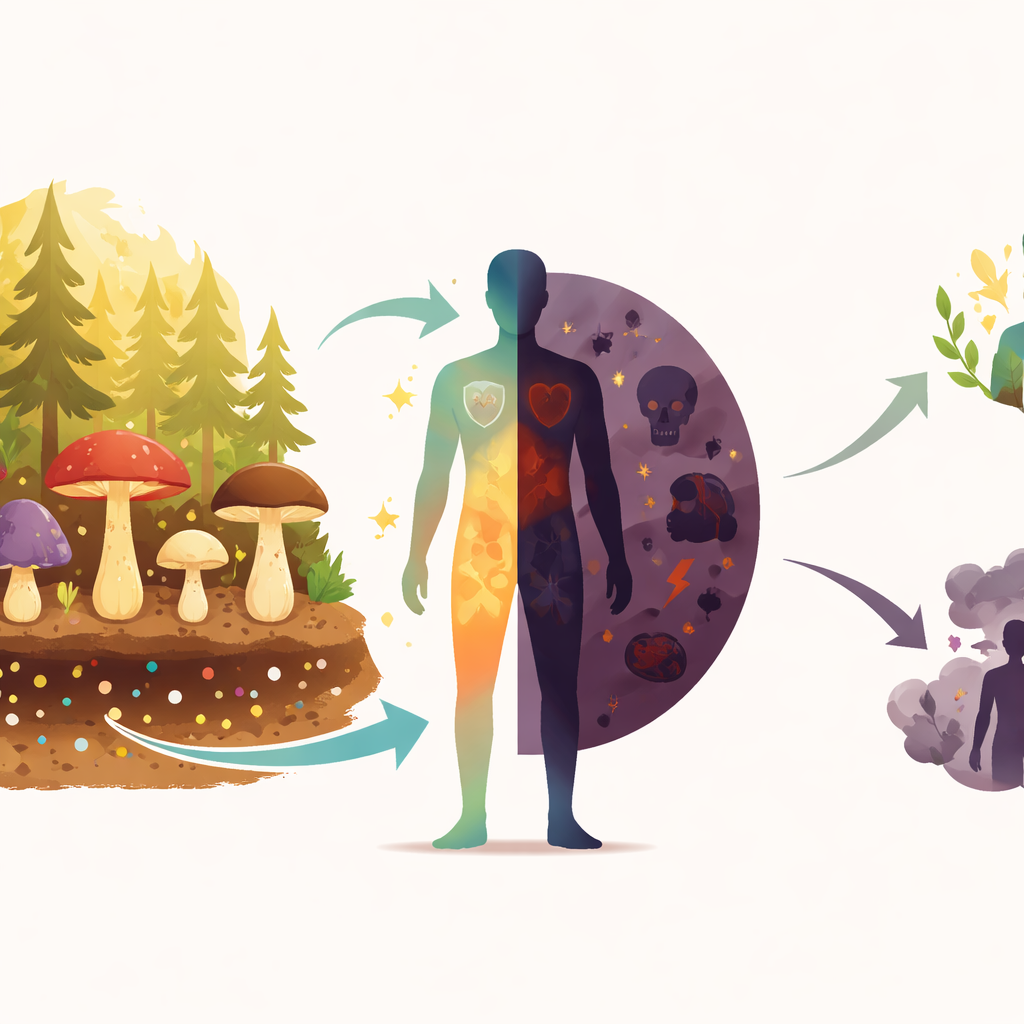
Wild mushrooms are often celebrated as superfoods packed with flavor and health‑boosting compounds. But these same fungi can also act like tiny sponges, soaking up pollution from the soil and air. This study asks a simple but urgent question: when we eat wild mushrooms, do we gain more from their natural antioxidants than we risk from the toxic metals they may contain—and how big is that risk for adults and, especially, for children?
Food from the Forest Floor
The researchers focused on six edible wild mushroom species commonly found and eaten in parts of Türkiye. They collected them from forested areas in the Bingöl and Van provinces between 2018 and 2020, dried and powdered the samples, and then examined them in detail. On one side, they measured helpful compounds, particularly phenolic substances that act as antioxidants and can help neutralize harmful free radicals in the body. On the other side, they measured four toxic metals—cadmium, lead, arsenic, and mercury—that can accumulate in mushrooms from polluted soils and air and then enter the human diet.
Balancing Helpful Compounds and Hidden Metals
To gauge the “good side” of these mushrooms, the team assessed antioxidant activity and the total amount of phenolic compounds. One species, Tricholoma populinum, stood out with the strongest antioxidant performance and the highest phenolic content, while Laccaria laccata lagged behind with the weakest antioxidant profile. The mushrooms also showed differing abilities to slow lipid peroxidation, a process linked to cell damage. Overall, the results confirmed that these forest foods can be rich natural sources of bioactive substances with potential benefits for human health and even medical or food applications.
Measuring Toxic Passengers
The “dark side” emerged when the researchers looked at elemental impurities. Using a sensitive technique called ICP‑MS, they quantified cadmium, lead, arsenic, and mercury in each mushroom species and confirmed the accuracy with certified reference materials. Levels varied strongly from one species to another. Laccaria laccata contained the highest concentration of cadmium, close to or above the upper ranges reported in other studies, while Morchella importuna had the most arsenic and Infundibulicybe geotropa carried the most mercury. Lead was present in all species at levels comparable to those found in other countries. These patterns reflect both local environmental pollution and the natural tendency of some mushroom species to concentrate certain metals more than others.
From Forest to Dinner Plate to Body
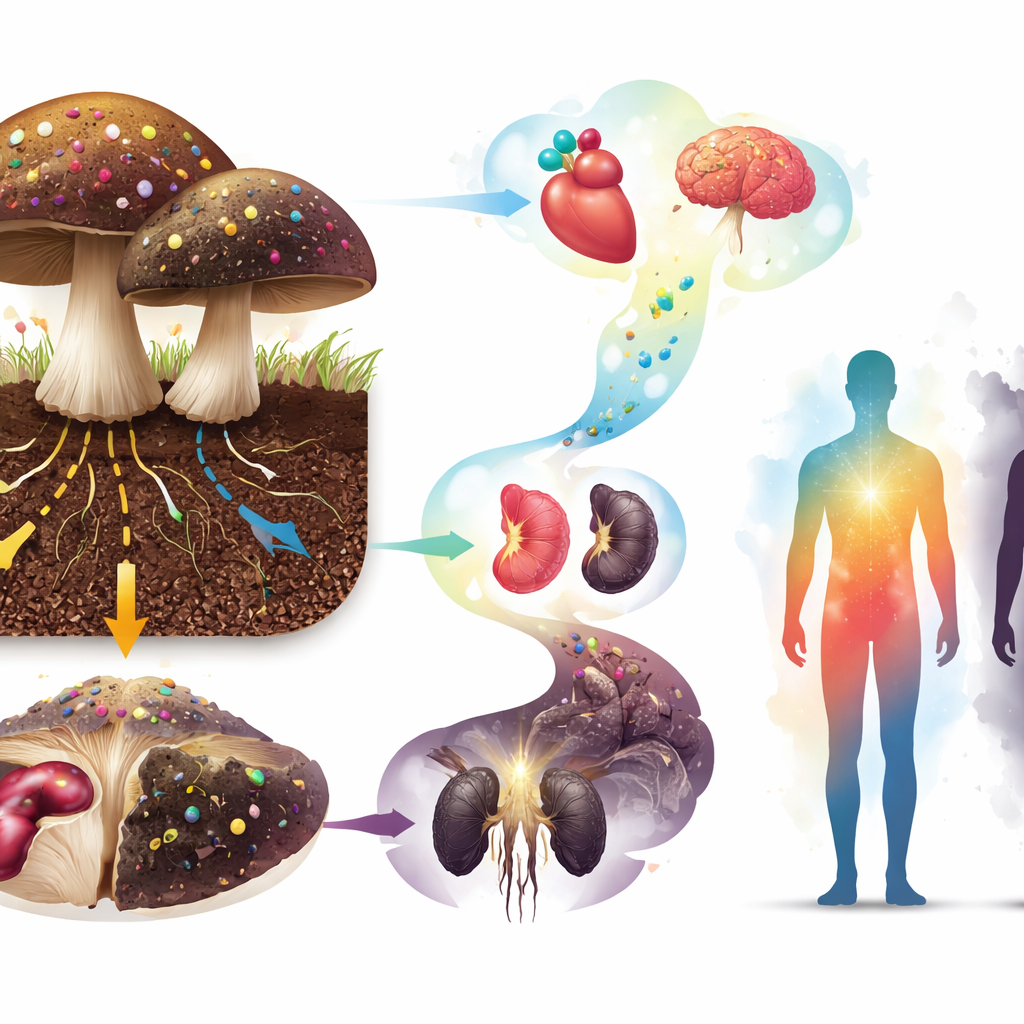
To understand what these numbers mean for people, the authors translated metal concentrations into estimated daily intakes for adults and children, assuming realistic mushroom consumption patterns. They then calculated standard health‑risk indicators: non‑cancer risk (the hazard index, HI) and lifetime cancer risk (total carcinogenic risk, TCR). Aided by Monte Carlo simulations running 10,000 scenarios, they captured the uncertainty in how much people eat, how much they weigh, and how variable metal levels can be. For adults, some mushrooms—especially Tricholoma scalpturatum—showed non‑cancer risks below the usual safety threshold (HI less than 1), whereas for children all six species exceeded that benchmark, meaning potential concern even for effects other than cancer.
Cancer Risks and the Most Worrisome Species
When the team examined cancer risk, the picture became more troubling. Cadmium turned out to be the main driver of carcinogenic risk in both adults and children, with contributions from arsenic and mercury edging several species close to or above levels considered unacceptable for long‑term exposure. For every mushroom species tested, the combined lifetime cancer risk from the four metals (TCR) exceeded 1 in 10,000, a threshold often treated as a warning flag in environmental health. Among the six species, Laccaria laccata was the most problematic, combining low antioxidant benefits with high metal contamination and the largest modeled risks over a lifetime.
What This Means for Mushroom Lovers
For non‑specialists, the message is not that all wild mushrooms are poisonous, but that they can quietly carry industrial and agricultural pollution to our plates. This study shows that even mushrooms with impressive natural antioxidant powers may still pose meaningful health risks if they grow in contaminated environments or belong to species that readily concentrate dangerous metals. Children, because of their smaller body size and developing organs, are especially vulnerable. The authors argue that wild mushrooms should be evaluated not just for their culinary and medicinal appeal, but also for their role as gateways for pollutants into the food chain. Regular monitoring, species‑specific guidance, and public education can help people keep enjoying wild mushrooms while reducing long‑term health risks.
Citation: Canbolat, F., Acar, İ., Okumuş, E. et al. Carcinogenic and non-carcinogenic risk assessment of elemental impurities and bioactive compounds in six wild mushrooms using Monte Carlo simulation. Sci Rep 16, 11755 (2026). https://doi.org/10.1038/s41598-026-38659-5
Keywords: wild mushrooms, heavy metals, food safety, health risk assessment, antioxidant activity