Clear Sky Science · en
High-content CRISPR activation screens identify synthetically lethal RNA-based mechanisms to sensitize cancer cells to targeted T cell cytotoxicity
Turning the Body’s Assassins Back on Cancer
Our immune system comes equipped with professional “hit cells” called T cells that can recognize and kill cancer cells with remarkable precision. Yet many tumors learn to dodge these attacks, blunting the power of today’s immunotherapies. This study explores an emerging idea: instead of only blocking genes that help cancer escape, what if we could switch on specific RNA messages inside cancer cells to make them exquisitely vulnerable to T cell attack—while leaving healthy cells largely unharmed?
Why Cancer Cells Escape the Immune Hit Squad
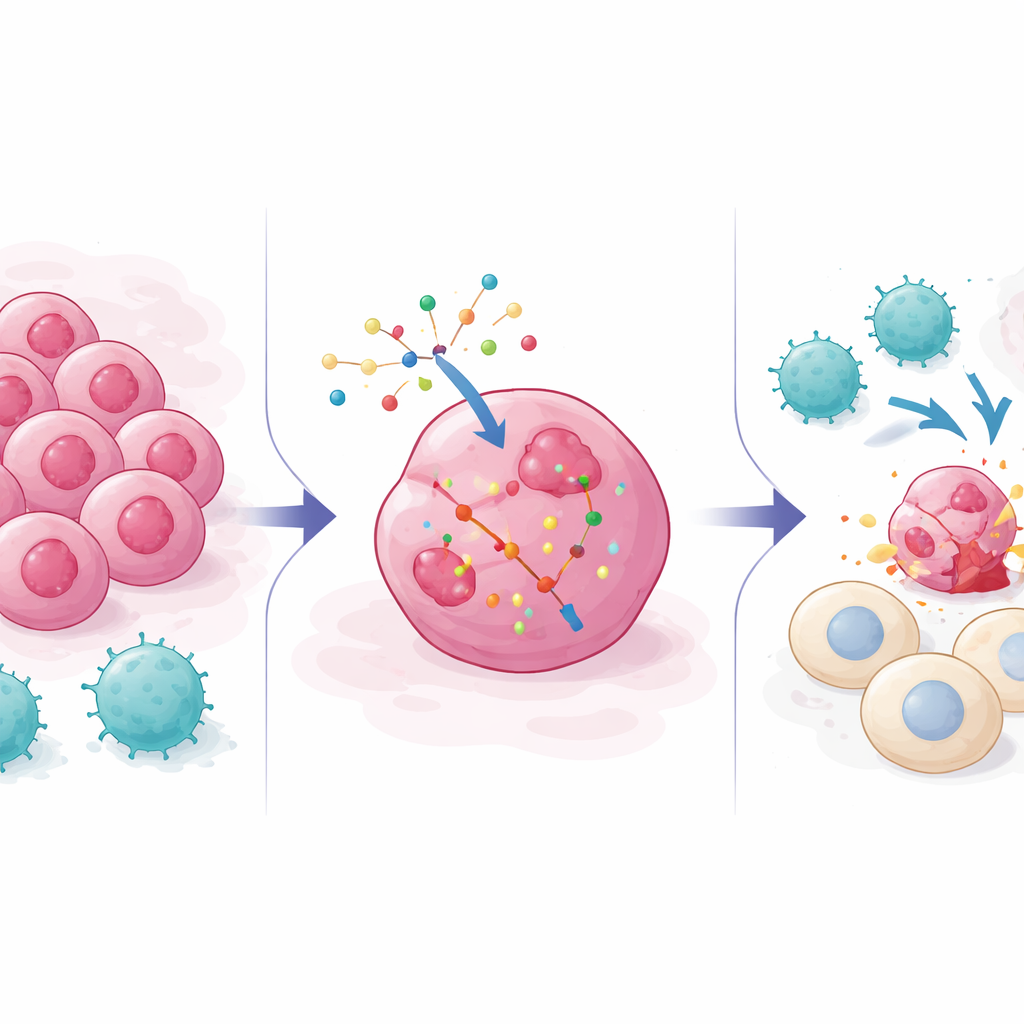
Modern cancer treatments, from checkpoint inhibitors to engineered T cell therapies, rely heavily on CD8 T cells that recognize telltale molecules on tumor cells and then kill them. But tumors often adapt: they can hide the very markers that T cells look for, dampen alarm signals such as interferons, or dial up survival pathways that block cell death. Previous genetic screens mostly used “knockouts,” turning genes off to see which ones help tumors resist immune attack. Those efforts mapped many escape routes but did not show how to push cancer cells in the opposite direction—toward greater sensitivity to T cells—using tools like RNA-based drugs that add or boost gene activity rather than remove it.
Scanning Thousands of Genes for Hidden Weak Spots
The researchers used CRISPR activation, a technology that acts like a programmable volume knob for genes, to systematically turn up nearly 3,000 genes in melanoma cells while exposing them to T cells engineered to recognize a shared tumor antigen. By tracking which genetic changes made cancer cells die more or less often, they identified two main groups: “resistance” genes that protected cancer cells, and “sensitizing” genes that made them much easier for T cells to kill. Sensitizing genes included well-known cell-death players such as CASP3 and BID, as well as less obvious regulators of RNA processing and 3D genome organization, like SAFB and TSPYL2, and signaling molecules such as Wnt ligands. Testing individual hits confirmed that dialing these genes up could either shield cancer cells or prime them for destruction, even in different cancer types and in cells infected by cancer-causing viruses.
RNA-Based Synthetic Lethality: Only Dangerous in the Crosshairs
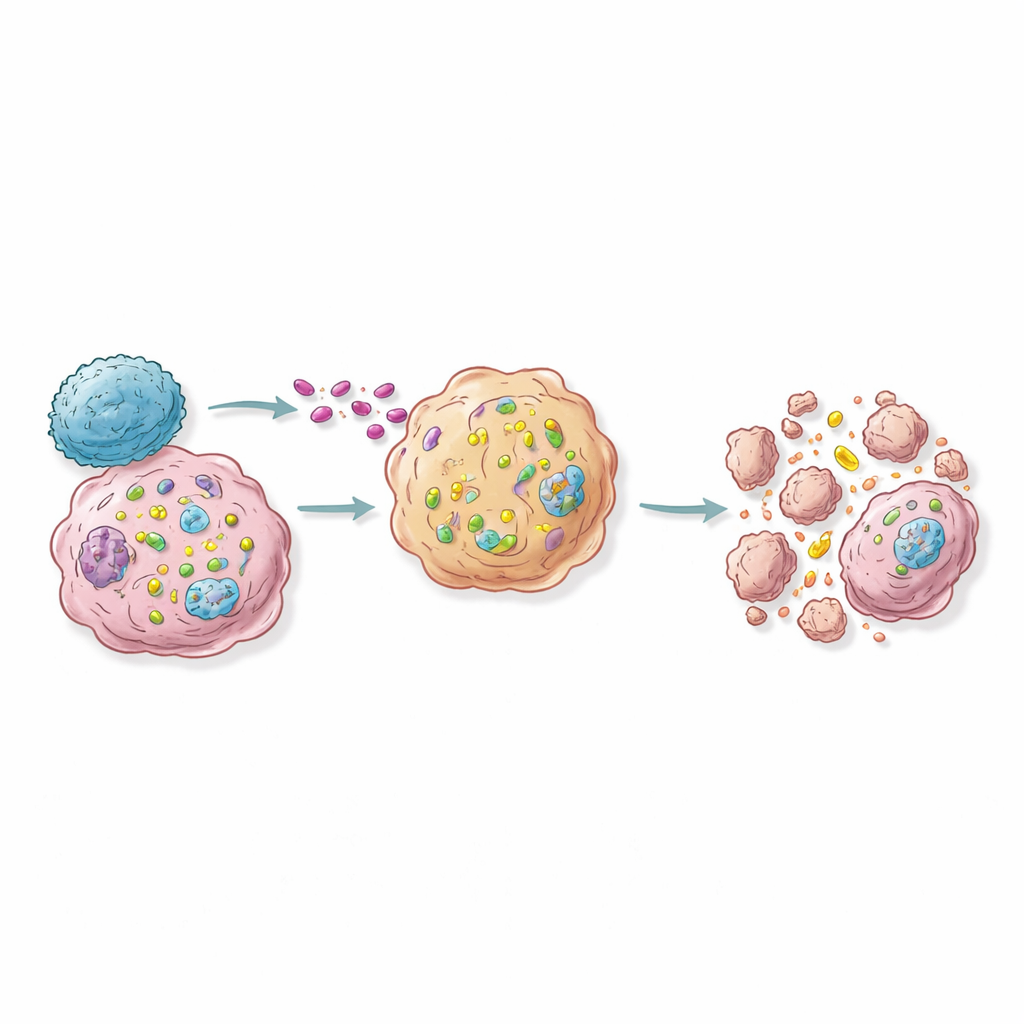
A central concept emerging from the work is “immune RNA-based synthetic lethality.” Some genes, such as CASP3, are not especially harmful when overexpressed in cancer cells growing alone. However, once T cells engage their targets, the extra CASP3 protein is rapidly converted from a dormant form into a powerful executioner that drives apoptosis—the programmed cell death pathway. The team showed that delivering CASP3 RNA into tumor cells did not impair their growth in isolation but markedly boosted T cell–mediated killing, and that blocking caspase activity could rescue these cells. Other genes like SAFB behaved even more selectively: turning SAFB up barely changed the cancer cell’s day-to-day transcriptome, yet dramatically enhanced killing specifically through the granzyme–perforin pathway that T cells use, leaving responses to common inflammatory molecules largely untouched.
Peering Inside Tumors One Cell at a Time
To understand how these sensitizing and resistance genes work in real tissue, the authors combined CRISPR activation with Perturb-seq, a high-throughput method that reads out the RNA profiles and genetic perturbations of thousands of individual cells at once. They then extended this to “in situ Perturb-seq,” which detects perturbation barcodes and gene activity directly in intact tumor slices at single-cell resolution. These spatial maps revealed networks of genes that tumors co-opt to survive T cell attack, including hubs involving extracellular matrix components and cell-surface receptors. They also uncovered how cancer-cell perturbations reshape nearby immune and stromal cells. For example, cancer cells forced to overexpress certain Wnt ligands were surrounded by T cells with a more activated state, and laboratory experiments confirmed that soluble Wnt3a could supercharge human T cell killing and cytokine production.
From Gene Maps to Future RNA Immunotherapies
In mouse models, activating a handful of top “sensitizing” genes in only a fraction of tumor cells was enough to slow or even prevent tumor growth and to enlarge nearby lymph nodes packed with immune cells, indicating a ripple effect beyond the modified cells. The study suggests a roadmap for next-generation therapies: deliver RNA molecules or gene-activating constructs that selectively raise the activity of key sensitizing genes in tumors, or engineer therapeutic T cells to exploit these pathways. For a layperson, the takeaway is that scientists are learning how to rewire cancer cells so that, when the body’s own T cells arrive, those cells become booby-trapped from within. Rather than broadly boosting immunity—which can cause serious side effects—this strategy aims to make only the dangerous cells fatally sensitive to a precise immune strike.
Citation: Akana, R.V., Yoe, J., Laveroni, O. et al. High-content CRISPR activation screens identify synthetically lethal RNA-based mechanisms to sensitize cancer cells to targeted T cell cytotoxicity. Nat Genet 58, 841–853 (2026). https://doi.org/10.1038/s41588-026-02561-7
Keywords: cancer immunotherapy, T cell killing, CRISPR activation, RNA therapeutics, synthetic lethality