Clear Sky Science · en
Evaluation of the effectiveness of social mobilization for vaccination among healthcare and non-healthcare workers in emergency situations
Why this study matters to everyday life
When a fast-moving disease like COVID-19 threatens a community, getting people vaccinated quickly can help bring life back to normal. But public messages and campaigns do not affect everyone in the same way. This study looks at how large-scale vaccination drives in China influenced the willingness of both medical staff and members of the general public to get COVID-19 shots during different stages of the pandemic. Understanding these patterns can help design smarter, fairer vaccination campaigns in future emergencies.
How emergency vaccine drives were rolled out
The researchers examined China’s COVID-19 vaccination effort across three key periods: before any major outreach (2020), during the height of nationwide campaigns (2021–2022), and after the main push, when vaccination became more routine (2023). Using surveys from more than 3000 healthcare workers and over 3700 non-healthcare workers, they asked people to look back and report how willing they were to get vaccinated in each phase, and what shaped their thinking. The team also measured factors such as trust in vaccines and health services, feelings of responsibility toward others, social pressure, and the influence of family, friends, and doctors. 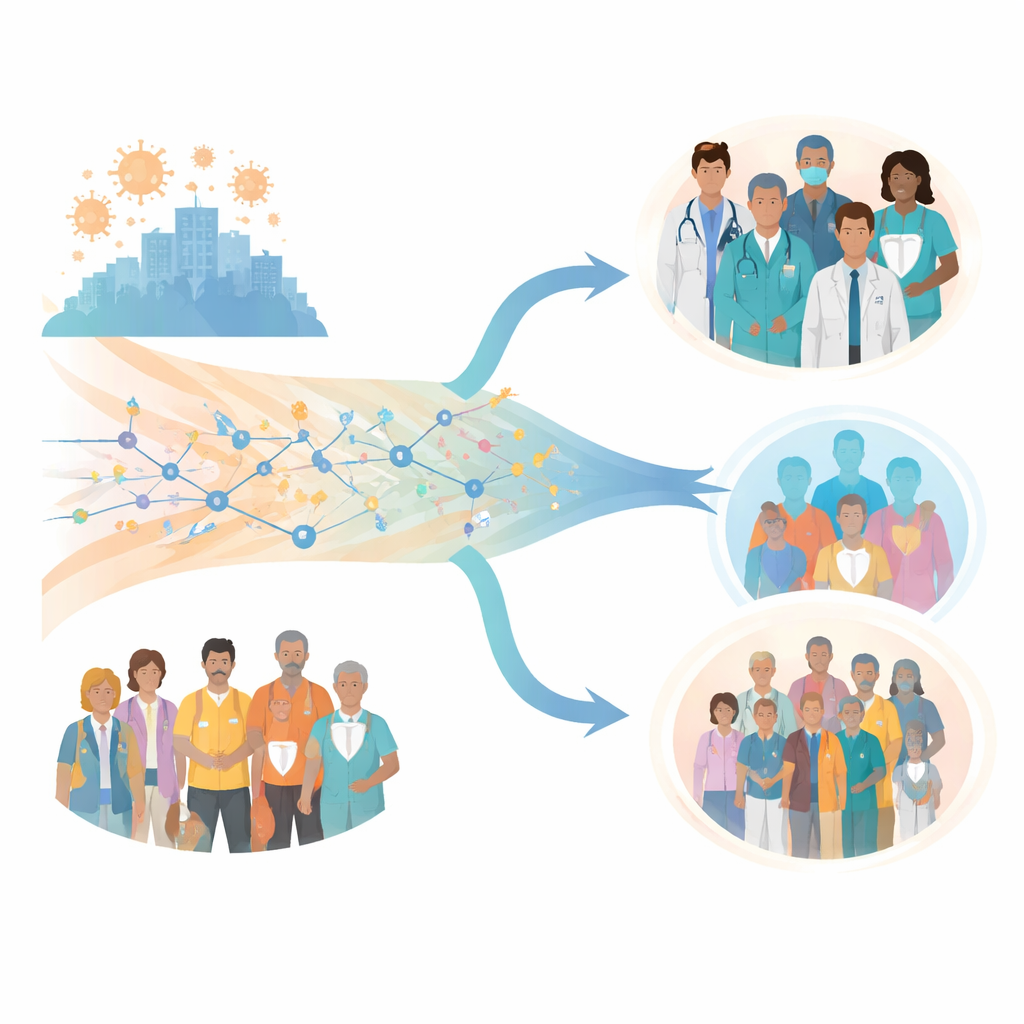
What motivated medical workers
For doctors, nurses, and other healthcare workers, the study found that a sense of duty to protect patients and the wider community was the strongest driver of vaccine willingness during the main campaign period. Their willingness to get vaccinated rose modestly when social mobilization was most intense, then leveled off afterward. Medical workers who felt a strong obligation to others and who trusted the health system’s resources and values were much more likely to say they would get vaccinated. In contrast, those who felt they lacked control over their own decisions, paid little attention to what they could learn from others, or went against the advice of family and friends were less willing. Social campaigns appeared to amplify these patterns, strengthening both positive and negative influences.
What moved the general public
For people outside the health sector, the story was different. Their willingness to get vaccinated steadily increased during and after the main campaign. The single most powerful positive force was social identity: feeling that getting vaccinated fit with the norms and values of the groups they cared about. Advice from doctors also played a central role; ignoring a doctor’s recommendation was strongly linked with lower willingness. Trust in vaccine supplies and services mattered, but mostly when combined with these social forces. As with healthcare workers, people who felt pushed rather than in control, or who did not pay much attention to what others around them were learning and doing, were less likely to be willing to get vaccinated.
Hidden pathways that shape decisions
To look beneath the surface, the researchers used statistical models to map how these influences connected to each other. For healthcare workers, feelings of personal control affected willingness largely through their impact on learning from peers and the broader professional environment. For non-healthcare workers, doctor advice shaped willingness partly by strengthening trust and a sense of belonging to pro-vaccination communities. Across both groups, social norms—what people felt others around them were doing and expecting—became more important over time. In other words, once vaccination was widely accepted in a community, that acceptance itself became a powerful force sustaining willingness, even after the most intense campaigns had ended. 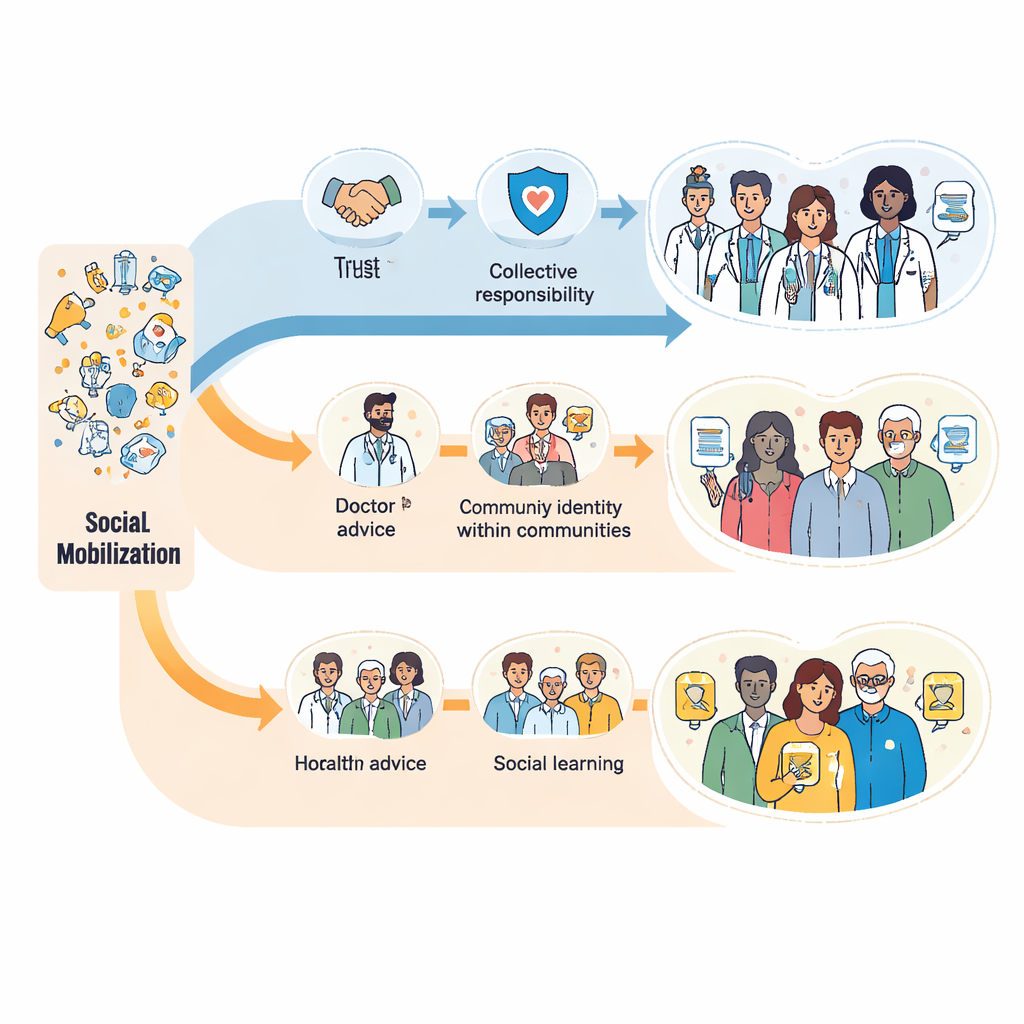
What this means for future outbreaks
The study concludes that there is no one-size-fits-all approach to promoting vaccination in emergencies. For healthcare workers, messages that appeal to professional duty, shared responsibility, and peer accountability are likely to be most effective. For the general public, strategies that highlight trusted medical voices, build a sense of community identity around vaccination, and encourage learning from peers may work better. Because the research is based on a single country and on people’s memories of past attitudes, it cannot prove cause and effect, but it offers strong evidence that tailoring outreach to different groups—and adapting messages over time as social norms evolve—could make future emergency vaccination campaigns faster, fairer, and more successful.
Citation: Xu, Q., Zhang, X., Xie, T. et al. Evaluation of the effectiveness of social mobilization for vaccination among healthcare and non-healthcare workers in emergency situations. npj Vaccines 11, 75 (2026). https://doi.org/10.1038/s41541-026-01392-1
Keywords: emergency vaccination, social mobilization, COVID-19 vaccines, healthcare workers, vaccine hesitancy