Clear Sky Science · en
Mainstreaming genomic testing for mitochondrial disease in Australia
Why this matters for everyday health
Many families wait years to learn why they or their children are unwell, especially when symptoms are puzzling and affect many parts of the body. This study looks at how Australia is using whole-genome tests to speed up answers for people suspected of having mitochondrial disease, and whether these powerful tests are reaching those who need them most.

Modern DNA tests step into routine care
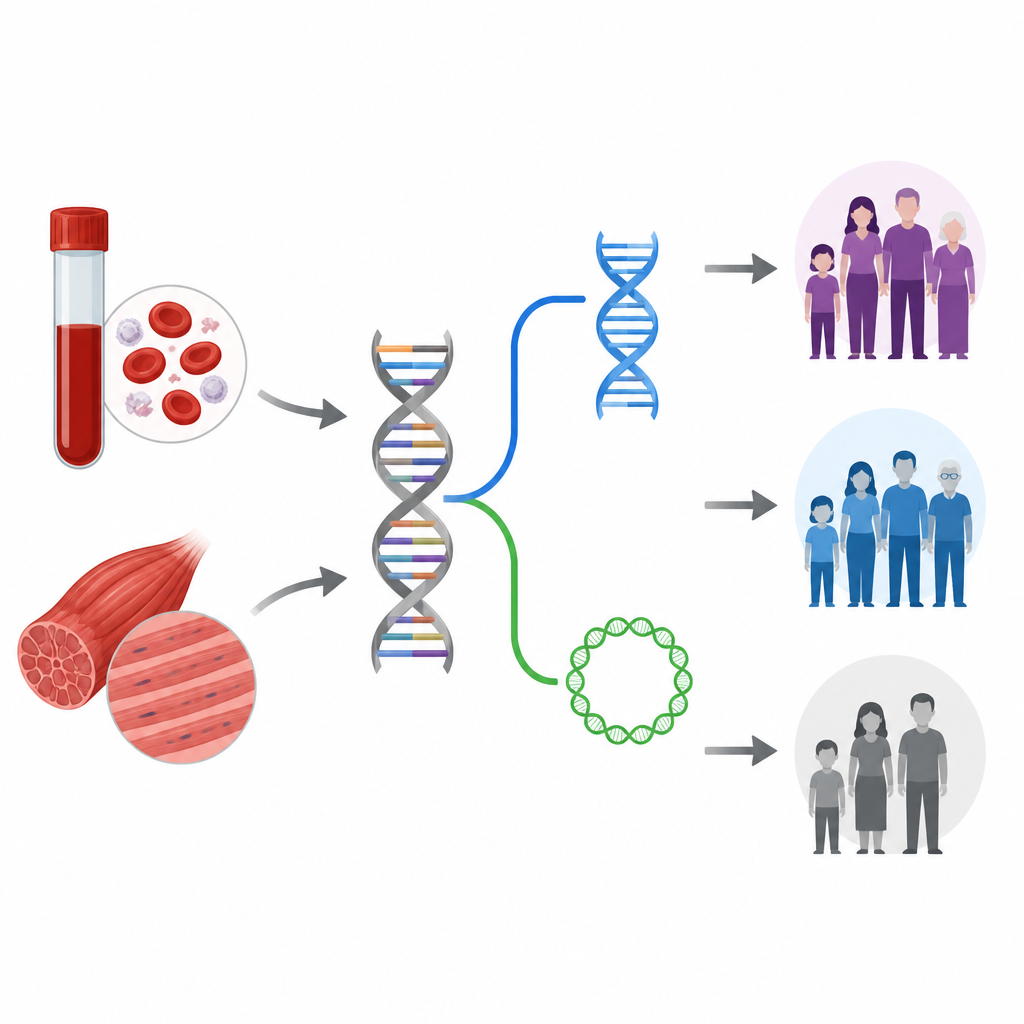
Mitochondrial diseases arise when the cell’s tiny power stations do not work properly and can affect the brain, muscles, heart, and other organs at any age. Until recently, getting a firm diagnosis often took close to a decade, with many invasive and piecemeal tests along the way. Whole-genome sequencing offers a single, wide-angle look at nearly all of a person’s genes, including both standard chromosomes and the separate DNA stored in mitochondria. In late 2023, Australia began publicly funding this kind of testing for people in whom doctors strongly suspected a mitochondrial problem.
Who was tested and where they lived
The researchers reviewed the first 300 people across Australia who received publicly funded genome tests for suspected mitochondrial disease between November 2023 and May 2025. Patients ranged from infants to 96-year-olds, with just over half being adults. Most samples were taken from blood, and about two in five cases included DNA from both the patient and their parents, which helps find new changes not seen in either parent. The study found that most referrals came from neurologists, clinical geneticists, and metabolic specialists, and that people living in major cities, particularly in New South Wales and Victoria, were far more likely to be tested than those in regional or remote areas.
What the tests actually found
Overall, one in five people received a clear genetic diagnosis from their genome test. Just over half of these confirmed cases involved genes already known to cause mitochondrial disease, most often in mitochondrial DNA itself. Strikingly, almost half of all diagnoses were not mitochondrial disorders at all but other genetic conditions that mimic them, especially neurodevelopmental syndromes in children. Several of these alternative diagnoses pointed to treatments or careful health monitoring, such as other metabolic conditions or cancer risk syndromes. The test also succeeded in solving some cases where earlier gene panels or exome tests had failed, including complex DNA rearrangements and large deletions that genome sequencing can detect more reliably.
Gaps in access and unanswered questions
Despite being available nationwide, uptake of the funded test was only about a quarter of what health planners had expected in the first year, though numbers rose over time. People in wealthier and poorer areas were tested at similar rates once population size was considered, suggesting that income level was less of a barrier than geography. However, those in regional and remote communities still had fewer tests per person than those in cities, echoing broader challenges in delivering advanced genetic services outside major centres. Most patients remained without a firm diagnosis, although a sizeable group carried gene changes that may later be reclassified as disease-causing as science advances.
What this means for patients and families
This study shows that publicly funded genome sequencing can bring meaningful answers for many people with suspected mitochondrial disease and can also reveal other hidden genetic conditions. At the same time, it highlights that where a person lives still shapes their chances of accessing this technology. The authors argue that to truly help patients, health systems must pair powerful tests with fair access, good support for non-specialist doctors, and ongoing follow-up as new discoveries turn uncertain results into clear diagnoses.
Citation: Ball, M., Baker, N., Lim, S.C. et al. Mainstreaming genomic testing for mitochondrial disease in Australia. Eur J Hum Genet 34, 658–666 (2026). https://doi.org/10.1038/s41431-026-02053-6
Keywords: mitochondrial disease, genome sequencing, genetic diagnosis, health equity, Australia