Clear Sky Science · en
Plant-based diet quality, fat mass, and cardiovascular disease: A mediation analysis of mid-aged adults in the UK Biobank
Why this research matters to everyday life
Heart disease remains one of the biggest killers worldwide, and what we eat and how much body fat we carry are two major pieces of that puzzle. Many people are turning to plant-based eating, but not all plant-based diets look the same: some center on vegetables and whole grains, others on fries and sugary drinks. This study asked whether the quality of a plant-based diet is linked to later heart problems, and whether changes in body fat help explain any link, using data from thousands of middle-aged adults in the UK.
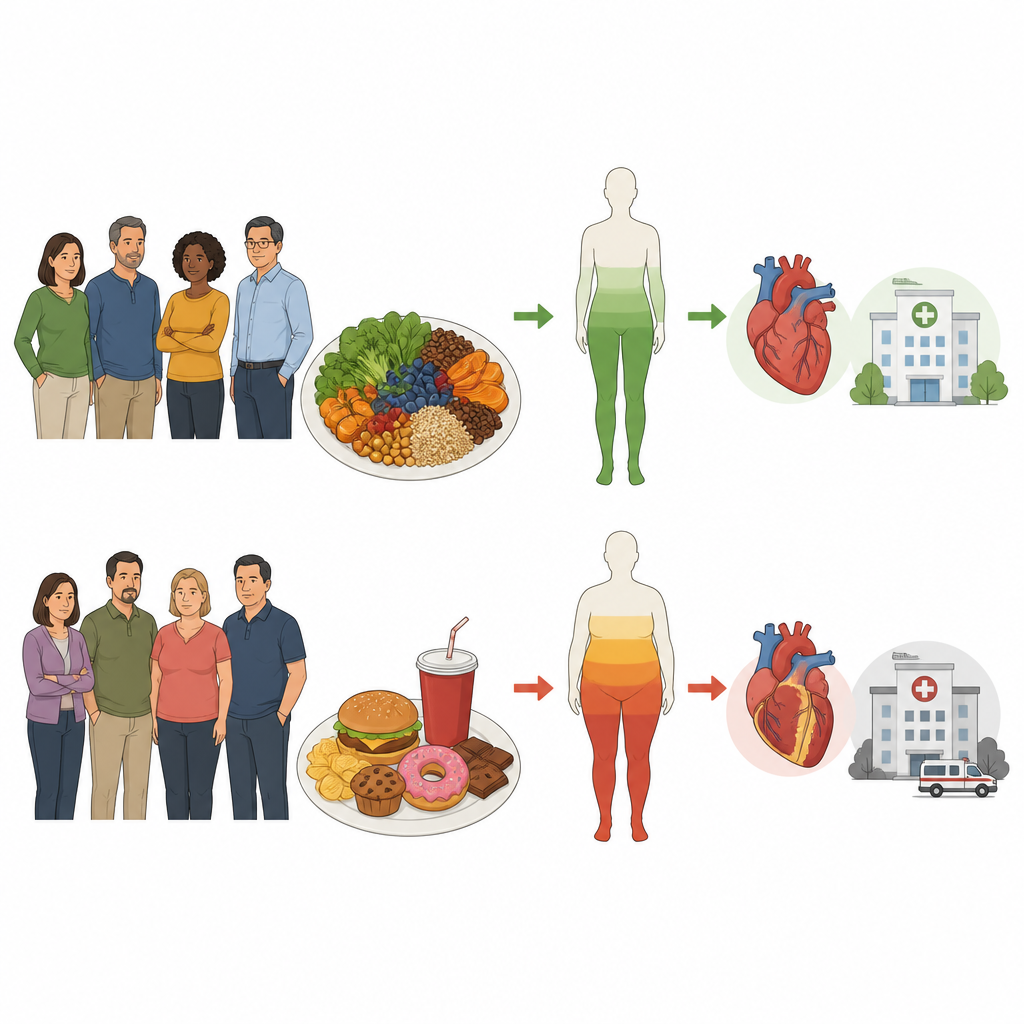
Different kinds of plant-based eating
The researchers worked with more than 14,000 adults aged 40 to 69 from the UK Biobank study, who had completed several detailed online food questionnaires. They scored each person’s diet in three ways: an overall plant-based index that counted all plant foods, a healthy plant-based index that rewarded whole grains, fruit, vegetables, and legumes, and a less healthy plant-based index that scored highly for items like sweets, sugary drinks, and refined grains. This approach allowed them to separate simply eating “more plants” from eating mostly minimally processed plant foods.
Tracking body fat and heart health over time
To measure body fat more precisely than with body weight alone, participants later underwent body scans using dual X-ray absorptiometry, which estimate the percentage of fat in the body. The team then followed people for about 11 years, using linked hospital and death records to identify new heart and blood vessel problems, such as heart attacks and strokes, along with deaths from cardiovascular disease or from any cause. By lining up the timing of diet reports, body fat scans, and later health events, they could probe how diet and fat mass might be connected to future heart outcomes.
How diet quality related to body fat and risk
People who scored higher on the overall and healthy plant-based diet indices tended to have a lower percentage of body fat, while those whose diets were richer in less healthy plant foods had higher body fat. In several analyses, higher body fat was linked to more cardiovascular events, more deaths from cardiovascular disease, and more deaths from all causes, even after taking diet quality into account. Surprisingly, the researchers did not find clear evidence that any of the three plant-based diet scores were directly associated with later cardiovascular events or deaths when considered on their own, either before or after adjusting for fat mass.
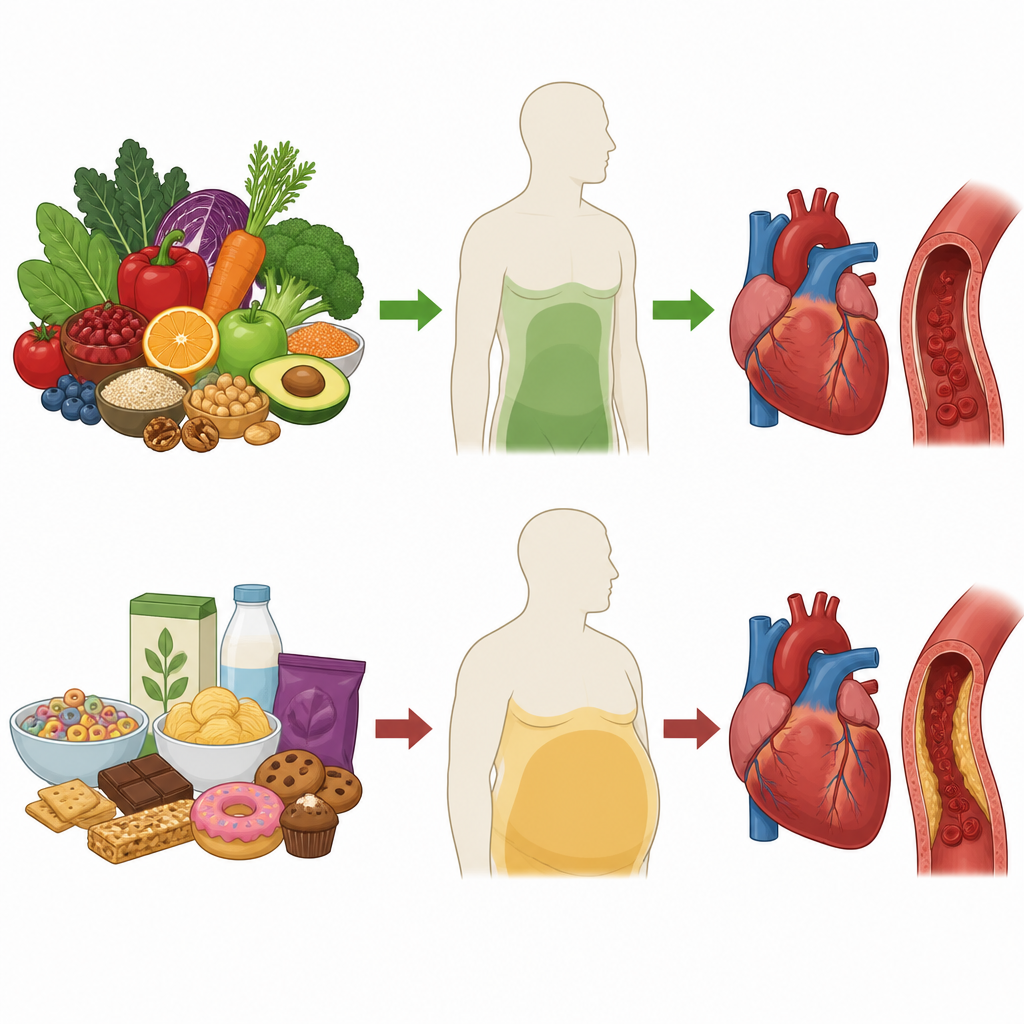
The hidden pathway from food to the heart
Although the direct link between plant-based diet scores and heart outcomes was not strong, a more subtle pattern emerged. Using statistical mediation analysis, the researchers looked for indirect pathways running through body fat. They found that higher scores on the overall and healthy plant-based indices were associated with slightly lower risk of cardiovascular events and cardiovascular deaths through their association with lower fat mass. In contrast, higher scores on the less healthy plant-based index showed indirect pathways toward higher cardiovascular risk via higher fat mass. Some of these patterns were more apparent in women, hinting that sex may influence how diet, fat, and heart disease interact.
What this means for everyday choices
For the average person, these findings suggest that the heart benefits of plant-based eating may depend not just on eating plants, but on focusing on whole and less processed plant foods that support lower body fat over time. The study did not show a strong direct link between plant-based diet quality and heart disease or death on its own, and the indirect effects through fat mass were modest. Still, the results support the idea that body fat is one important route through which diet patterns may influence heart health. Future large, long-term studies will be needed to clarify how strongly improving plant-based diet quality and managing fat mass together can reduce cardiovascular risk.
Citation: Marchese, L.E., McNaughton, S.A., Hendrie, G.A. et al. Plant-based diet quality, fat mass, and cardiovascular disease: A mediation analysis of mid-aged adults in the UK Biobank. Eur J Clin Nutr 80, 483–490 (2026). https://doi.org/10.1038/s41430-026-01731-4
Keywords: plant-based diet, body fat, cardiovascular disease, diet quality, UK Biobank