Clear Sky Science · en
Small molecule screening identifies cytotoxic endoplasmic reticulum-associated degradation inhibitors in multiple myeloma
Turning a Weakness of Cancer Cells into a New Target
Multiple myeloma is a blood cancer that arises from plasma cells, the body’s antibody factories. These cells are constantly churning out proteins, which makes them unusually dependent on an internal quality‑control system that finds and destroys misfolded proteins. This study explores whether that built‑in vulnerability can be exploited with a small‑molecule drug to kill myeloma cells, including those that have stopped responding to current treatments.
A Hidden Cleanup Crew Inside Overworked Cancer Cells
Inside every cell, the endoplasmic reticulum acts as a protein assembly line. When proteins are made incorrectly, a process called ER‑associated degradation, or ERAD, marks them for disposal and sends them to the cell’s waste‑processing machinery. Myeloma cells, which manufacture huge quantities of antibody proteins, lean heavily on ERAD to stay alive. Existing drugs called proteasome inhibitors block the final step of this waste system and have improved survival for patients, but most tumors eventually become resistant. Researchers therefore set out to find drugs that strike earlier in the cleanup process, directly at ERAD, in the hope of shutting down myeloma cells in a different way.
Screening Old Drugs for a New Purpose
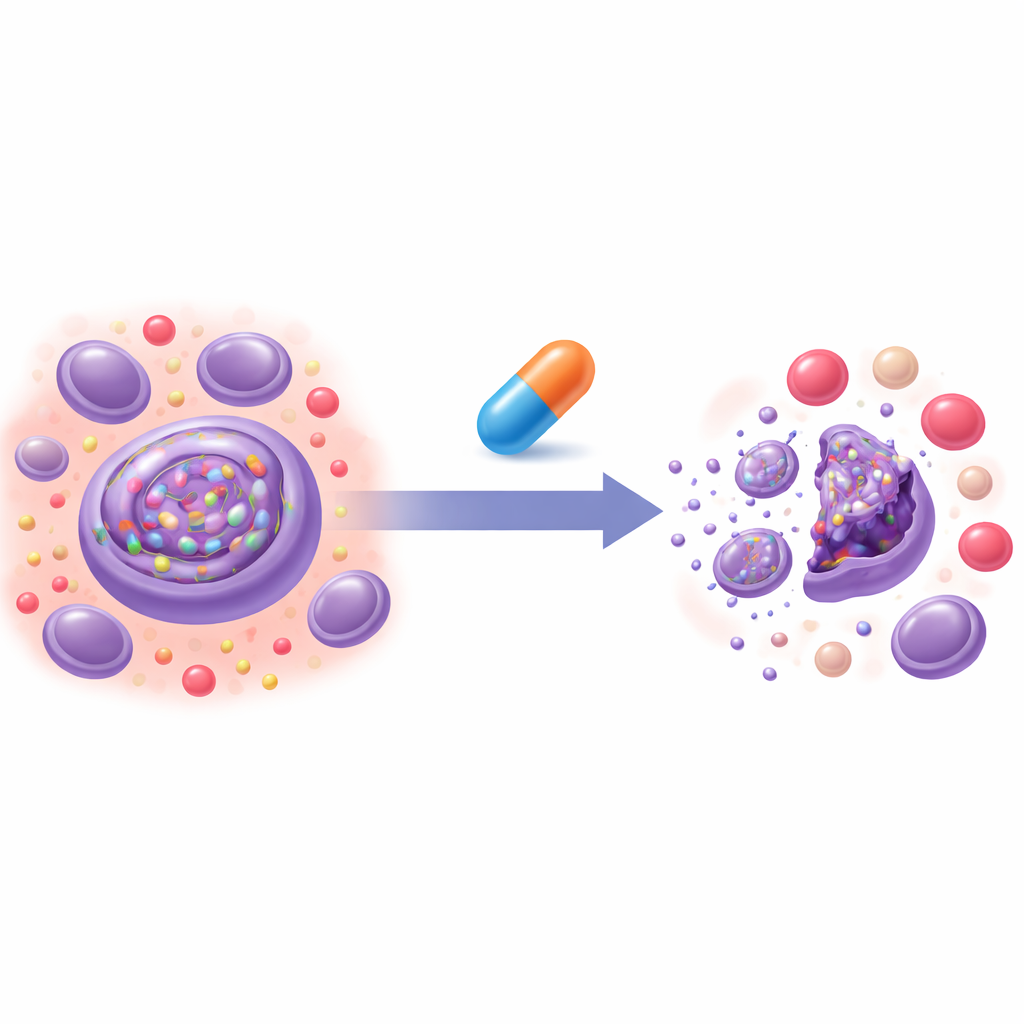
The team built a cell‑based test that reports how quickly a model “bad” protein is broken down by ERAD. Using this assay, they screened about 2,200 existing compounds from an FDA repurposing library. Among several candidates, they identified omaveloxolone (also known as RTA408), a drug already approved for a rare neurological disease, as a potent blocker of ERAD. RTA408 slowed the breakdown of multiple proteins that normally depend on ERAD, including both proteins floating inside the cellular compartment and those embedded in its membrane. At the same time, it left many key free‑floating (cytosolic) proteins relatively untouched and did not significantly disrupt the cell’s main garbage‑disposal machinery, indicating a focused action on the ER protein quality‑control system rather than a broad shutdown of protein turnover.
Rapid, Selective Killing of Myeloma Cells
When the researchers treated a panel of myeloma cell lines with RTA408, cell survival dropped sharply within hours at low drug concentrations, regardless of whether the cells were sensitive or resistant to proteasome inhibitors. A related compound, RTA402, showed similar effects. Importantly, the drug’s ability to kill cancer cells did not depend on its known role in boosting an antioxidant regulator called NRF2, implying a previously unrecognized mode of action. In cells from patients, RTA408 efficiently wiped out malignant plasma cells from both newly diagnosed and heavily pretreated individuals, while sparing most T cells and myeloid cells and showing only intermediate effects on normal B cells. In mice bearing human myeloma tumors, repeated dosing with RTA408 markedly slowed or prevented tumor growth, supporting its potential as a real‑world therapy.
An Unexpected Route to Cell Death
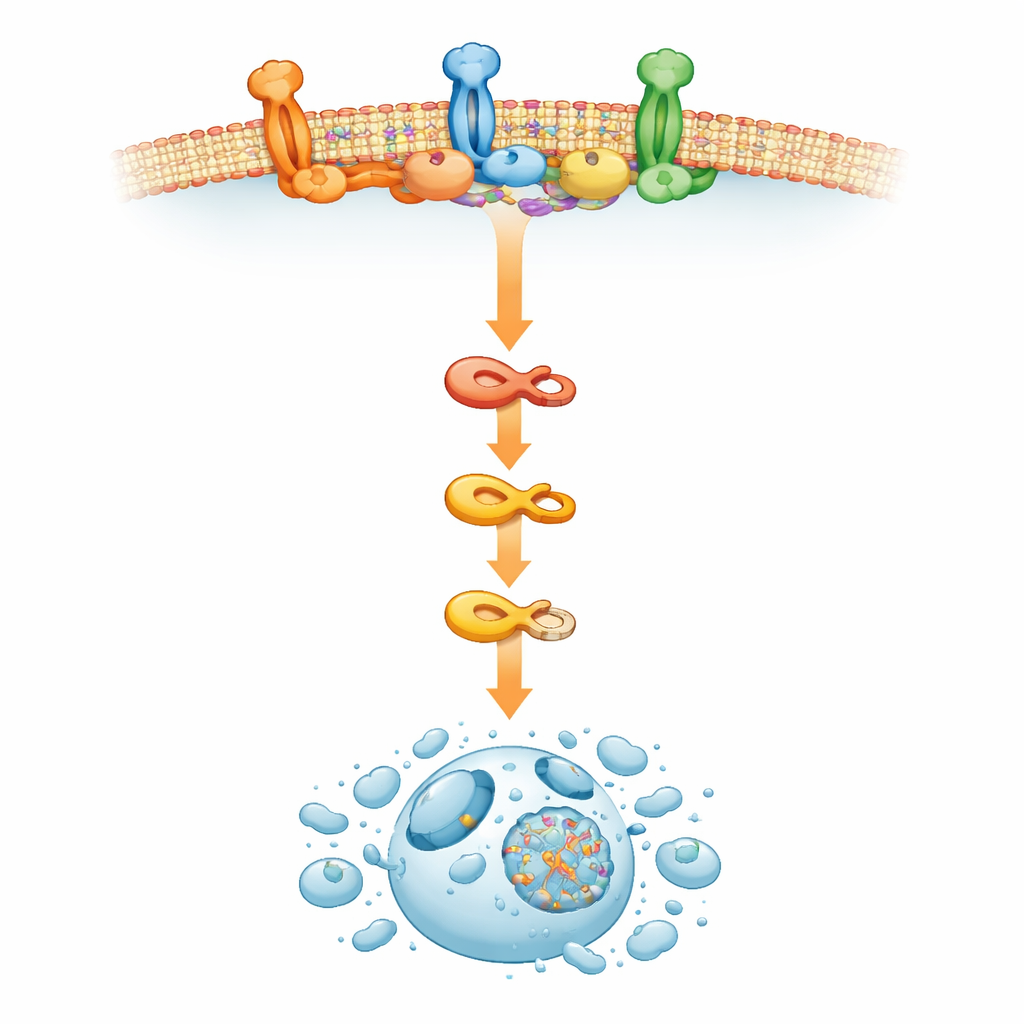
Because blocking ERAD is thought to cause protein “traffic jams” and stress inside the cell, many scientists assumed that any resulting cell death would be driven by a well‑known stress pathway called the unfolded protein response. The authors confirmed that this stress response did switch on after RTA408 treatment, but careful experiments showed it was not the main trigger for the rapid wave of cell death. Instead, the drug quickly activated a different route: the so‑called extrinsic death pathway, which normally responds to danger signals at the cell surface. RTA408 rapidly switched on an enzyme called caspase‑8 and its downstream partners, and blocking these enzymes chemically or by deleting key adaptor proteins (FADD and RIPK1) protected cells from dying. Surprisingly, removing individual death receptors on the cell surface did not rescue the cells, pointing to a more global disturbance in how these receptors are organized.
How Cell Membrane “Islands” Tip Cells Over the Edge
To understand what was driving this unusual activation of the death machinery, the team turned to the cell’s outer membrane. There, specialized cholesterol‑rich patches known as lipid rafts serve as tiny signal‑processing platforms. The study found that ERAD inhibition by RTA408 reshaped these rafts, causing a buildup of raft markers and promoting the assembly of the death‑inducing signaling complex that activates caspase‑8. When researchers disrupted lipid rafts or blocked cholesterol production, RTA408 could no longer trigger early cell death, even though signs of internal stress inside the cell remained. This indicates that, in myeloma cells, interfering with ERAD sends ripples that reorganize the membrane, bringing together death‑pathway components in a way that drives the cancer cell to self‑destruct.
What This Could Mean for Patients
In simple terms, this work identifies an approved drug that can selectively sabotage a crucial housekeeping system in myeloma cells, pushing them toward a form of programmed death that depends on how proteins and fats are arranged in their outer membrane. Because RTA408 works differently from current proteasome‑blocking drugs and remains effective in resistant cells and in animal models, it offers a promising new angle for treating this still‑incurable cancer. At the same time, the study reveals an unexpected link between the cell’s internal quality‑control machinery and the organization of surface “death switches,” opening up fresh avenues for designing therapies that exploit the unique stresses faced by antibody‑producing cancer cells.
Citation: Kropp, E.M., Matono, S., Wang, O.Y. et al. Small molecule screening identifies cytotoxic endoplasmic reticulum-associated degradation inhibitors in multiple myeloma. Cell Death Dis 17, 303 (2026). https://doi.org/10.1038/s41419-026-08526-2
Keywords: multiple myeloma, protein quality control, ER-associated degradation, caspase-8 apoptosis, drug repurposing