Clear Sky Science · en
Self-help cognitive behavioural therapy for hot flushes and night sweats during androgen deprivation therapy for prostate cancer: the MANCAN2 randomized controlled trial
Why this matters for men with prostate cancer
Hormone treatments for prostate cancer save lives but often come with a hidden cost: sudden waves of heat, night sweats and poor sleep that can wear people down over time. These symptoms may sound minor, but when they happen many times a day and night, they can fuel anxiety, low mood and even tempt men to stop a treatment that is helping control their cancer. This study asked whether a simple, nurse-guided self-help programme using talking-therapy techniques could give men better control over these hot flushes and night sweats, and improve their quality of life.
The common side effect no one talks about
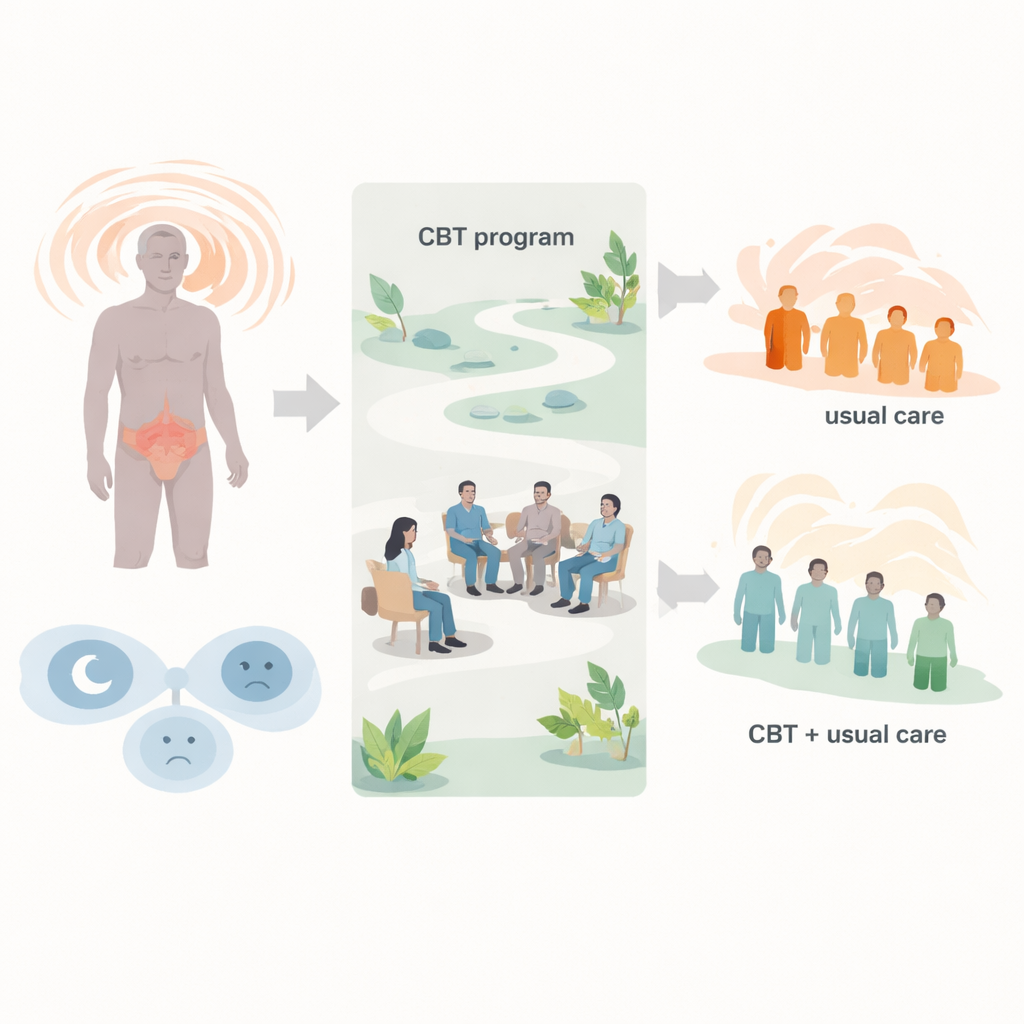
Up to half of men with prostate cancer receive androgen deprivation therapy, a treatment that sharply lowers male hormones to slow or shrink tumours. While effective against cancer, this drop in hormones commonly triggers hot flushes and night sweats, affecting around 8 in 10 men and often lasting for years. These episodes can leave men drenched, exhausted and embarrassed, and are linked with poor sleep, worry, depression and everyday difficulties. Drug options exist but can cause their own side effects, and many men prefer to avoid adding yet another pill. That has led researchers to explore psychological approaches that help people cope better with the experience of symptoms, rather than trying to remove them entirely.
A practical self-help course guided by nurses
The MANCAN2 trial tested a four-week self-help course based on cognitive behavioural therapy (CBT), a well-established method that helps people change unhelpful thoughts and habits. One hundred and sixty-two men from nine UK cancer centres, all on hormone therapy and bothered by hot flushes and night sweats, were randomly assigned either to usual medical care alone or to usual care plus the CBT programme. The CBT group received a booklet and audio guide that taught stress management, paced breathing, and ways to respond differently to flushes, night sweats and disrupted sleep. They also joined two group workshops about a month apart, run by trained prostate cancer nurses, which showed men how to use the materials and encouraged peer support.
What changed in the short term
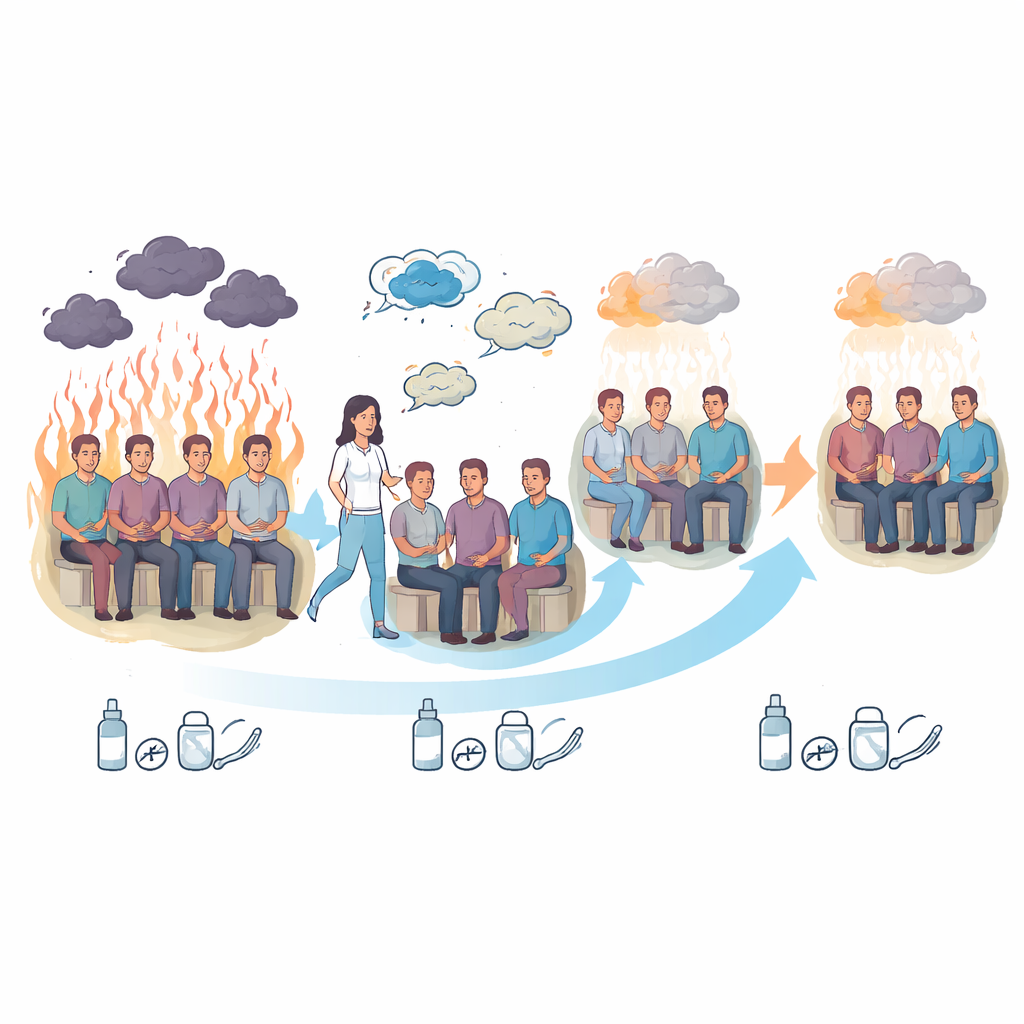
Researchers followed the men at the start, six weeks and six months later. The main measure was how much of a “problem” hot flushes and night sweats were in daily life, rated by the men themselves. At six weeks, men who had the CBT course reported that these symptoms were less troublesome than those who had usual care alone. They also showed modest but meaningful improvements in anxiety and depression scores. Interestingly, more men in the usual-care group had stopped their hormone treatment by six months, while none in the CBT group had done so, hinting that feeling better emotionally and more in control of symptoms may help men stay on their cancer therapy.
What lasted and what faded over time
By six months, however, the advantage of the CBT group in how problematic they found hot flushes and night sweats had disappeared. Both groups showed some natural easing of symptoms over time, and the early gains from the four-week course were no longer clearly visible. Other measures, such as sleep quality, everyday functioning and general quality of life, also did not differ between groups at that later point. The researchers suggest that a brief self-help course may not be enough on its own to keep men practising the techniques, especially as motivation can dip and other health issues arise with age.
What this means for care going forward
To a layperson, the message is that a short, guided self-help course can offer men on prostate cancer hormone therapy some early relief from the emotional and day-to-day impact of hot flushes and night sweats, and may help them stick with their treatment. But without ongoing support or booster sessions, the benefits tend to fade by six months. The study also shows that existing prostate cancer nurse specialists can successfully deliver this kind of programme, making it a realistic option for clinics. Future work will need to find ways to keep men engaged with the strategies for longer and to build CBT into broader support packages, so that managing side effects becomes an integral part of cancer care rather than an afterthought.
Citation: Crabb, S.J., Morgan, A., Stefanopoulou, E. et al. Self-help cognitive behavioural therapy for hot flushes and night sweats during androgen deprivation therapy for prostate cancer: the MANCAN2 randomized controlled trial. Br J Cancer 134, 1413–1419 (2026). https://doi.org/10.1038/s41416-026-03375-4
Keywords: prostate cancer, hot flushes, cognitive behavioural therapy, androgen deprivation therapy, men's health