Clear Sky Science · en
Whole-genome sequencing reveals an East Asian-specific rare variant of INPP5J associated with Alzheimer’s disease
Why this study matters to families
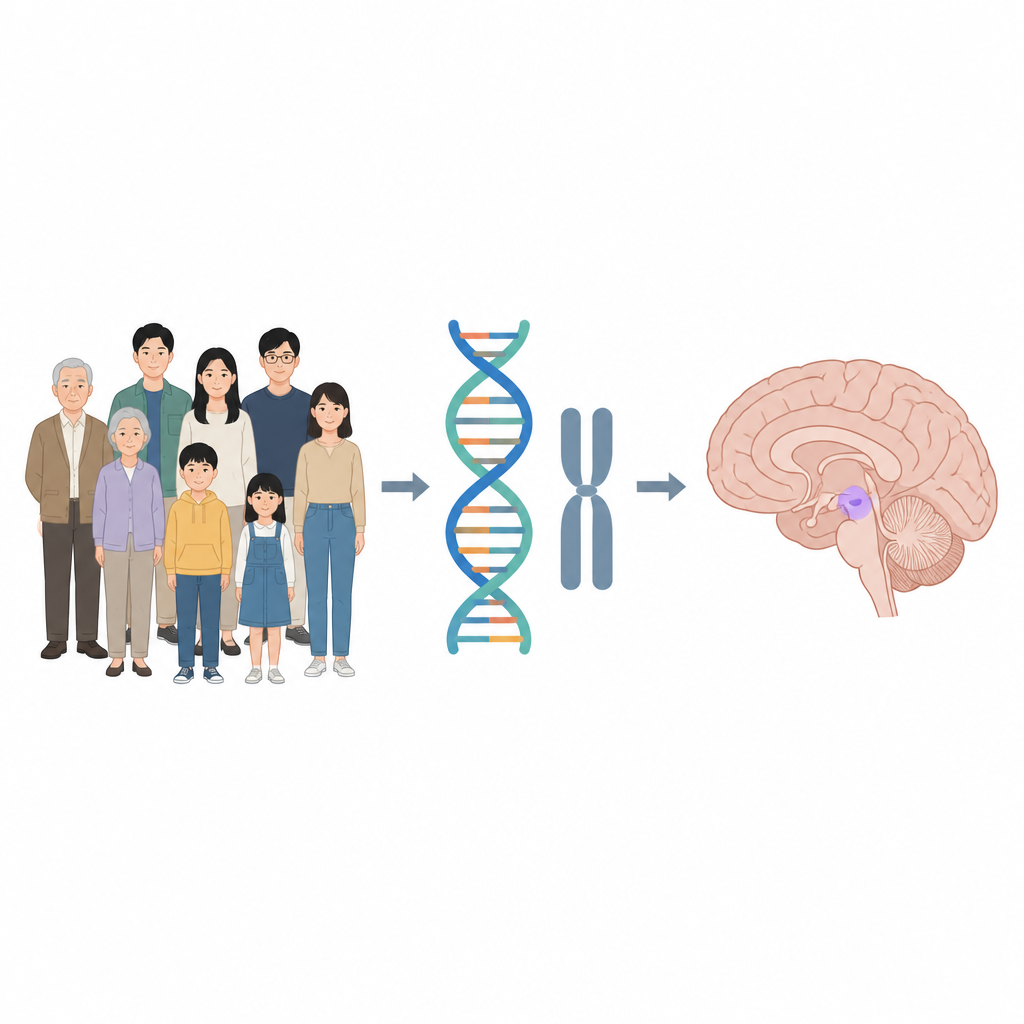
Alzheimer’s disease is a leading cause of memory loss in older adults, but doctors still cannot cure it. Researchers know that our genes play a major role, yet most genetic studies have focused on people of European ancestry. This study looks instead at Japanese individuals and uncovers a rare gene change that appears to be unique to East Asians and may raise the risk of late-onset Alzheimer’s disease. Understanding such population-specific risks can bring us closer to more precise diagnosis and future treatments for diverse communities.
Looking for clues in the full DNA code
The team used whole-genome sequencing, which reads nearly every letter of a person’s DNA, on 325 Japanese patients with late-onset Alzheimer’s disease and 1,603 cognitively healthy older adults. They then compared the two groups to search for genetic differences. As expected, they confirmed the strong effect of a well-known risk marker in the APOE gene, often called the APOE ε4 variant, by repeating the test in a much larger group of 4,768 additional people. But APOE explains only part of the inherited risk, so the scientists also searched for rare changes in genes that might have been missed by earlier, more limited scans.
Rare genetic changes and a neuron-focused gene
To hunt for rare changes, the researchers grouped unusual DNA variants within each gene and tested whether they appeared more often in patients than in healthy controls. One gene stood out: INPP5J, which makes a protein involved in handling chemical signals inside brain cells. They found two rare changes in this gene that were linked to Alzheimer’s disease. These changes slightly alter the protein’s structure. When the team checked large international DNA databases, one of the variants was seen more commonly in East Asians, while the other was found only in East Asian data and not in any other population. This suggests that the risk connected to these changes may be specific to East Asian groups.
From gene variant to altered brain chemistry
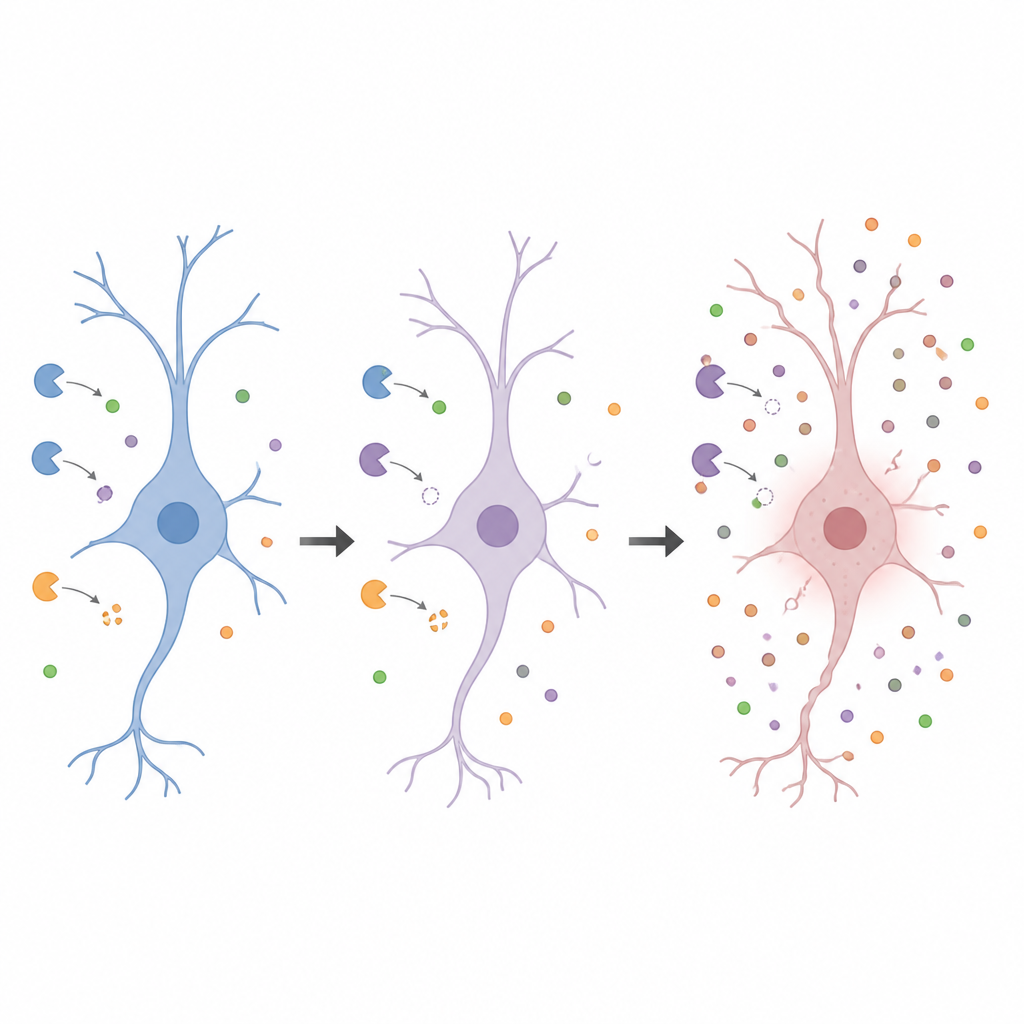
The next question was whether these rare changes actually affect how the INPP5J protein works. The researchers produced both the normal and the altered proteins in the lab and measured their ability to remove phosphate groups from a signaling molecule that helps control activity in neurons. One of the changes, called p.K687T, clearly weakened the protein’s activity compared with the normal version, while the other, p.R15W, did not show a clear effect in this test. INPP5J is mostly active in neurons rather than in immune cells of the brain, and it helps balance molecules that regulate pathways linked to cell survival and the build-up of abnormal tau protein, a key feature of Alzheimer’s disease. Reduced INPP5J activity could disturb this balance and encourage harmful changes in neurons.
Fitting into a wider picture of brain disorders
INPP5J belongs to a family of related proteins that all fine-tune the same type of signaling molecules. Other family members are already known to play roles in brain health. For example, variants in a sister gene, INPP5K, can cause a form of childhood muscle disease with cataracts and learning problems when the enzyme is weakened. Changes in yet another relative, OCRL, lead to Lowe syndrome, which also involves intellectual disability. In Alzheimer’s disease, the related gene INPP5D affects how brain immune cells respond to protein plaques. Together, these links support the idea that even subtle shifts in this signaling family can shape brain function and vulnerability to cognitive decline.
What this means for people at risk
This study does not show that the INPP5J variant alone causes Alzheimer’s disease, but it suggests that a rare, East Asian-specific change in this gene may increase risk by weakening a protective brain enzyme. By combining large-scale DNA sequencing with laboratory tests of protein function, the researchers highlight a new piece of the puzzle connecting gene variants, neuron chemistry, and memory loss. In the future, such insights could guide more tailored risk assessments and point toward new strategies that protect or restore the delicate signaling balance inside brain cells.
Citation: Kimura, T., Yamakawa, A., Mitsumori, R. et al. Whole-genome sequencing reveals an East Asian-specific rare variant of INPP5J associated with Alzheimer’s disease. Transl Psychiatry 16, 267 (2026). https://doi.org/10.1038/s41398-026-04027-0
Keywords: Alzheimer’s disease, genetics, East Asian populations, rare variants, neuronal signaling