Clear Sky Science · en
Pupil-based arousal self-regulation: impact on physiological and affective responses to emotional stimuli
Training Your Eyes to Calm Your Nerves
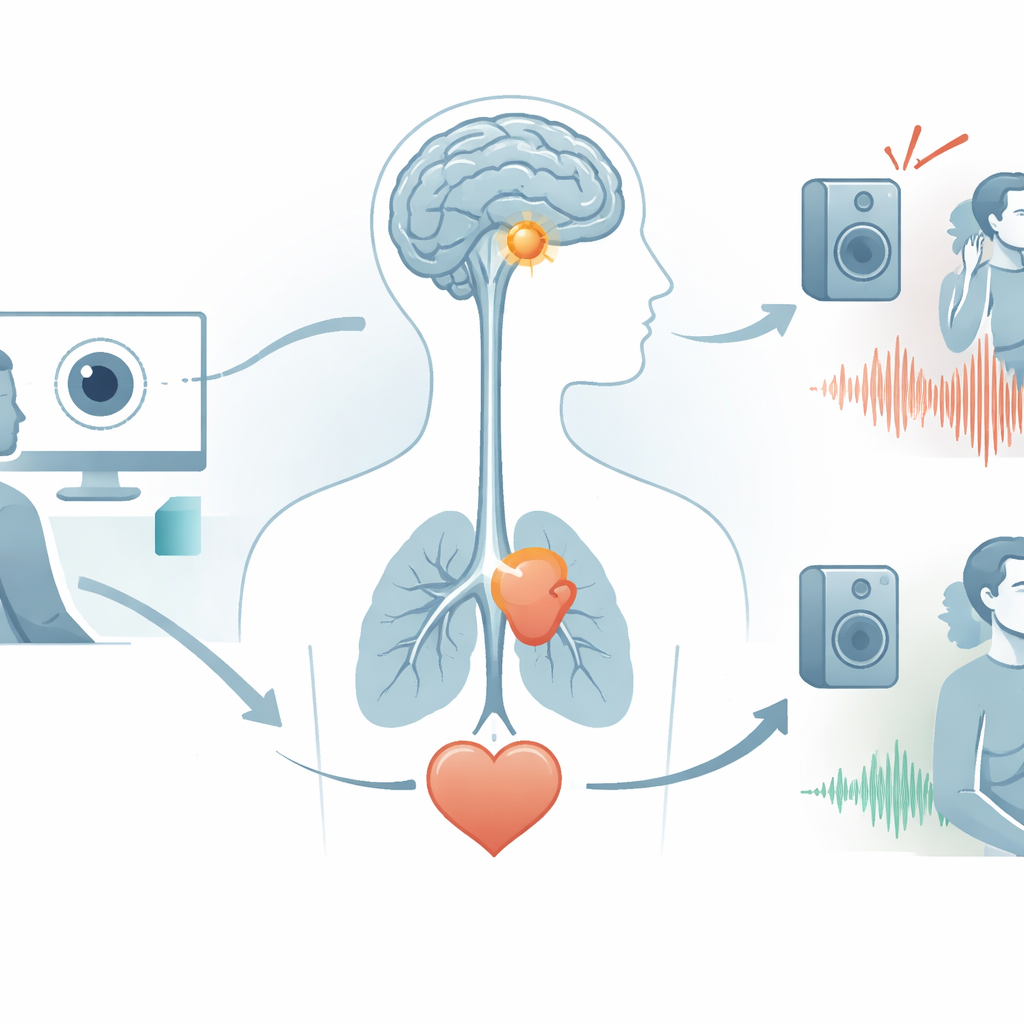
Imagine being able to dial your body’s stress level up or down just by using your mind—without medication or special equipment beyond a simple eye tracker. This study explores a new method that teaches people to control their internal arousal state by learning to change the size of their pupils, the dark openings in the eyes that subtly expand and contract with alertness. Because pupil size is tightly linked to deep brain systems involved in stress and emotion, this “pupil-based biofeedback” could one day offer a way to reduce overreactive responses to disturbing sights and sounds, such as those seen in anxiety and stress-related disorders.
How Eye Signals Reflect Inner Alertness
Deep in the brainstem lies a small region that helps set our overall level of alertness and prepares the body to respond to threat. When this system becomes overactive or poorly regulated, it has been linked to anxiety, depression, and cardiovascular problems. Under steady lighting, changes in pupil size closely track shifts in this internal arousal system. Earlier work by the same team showed that, with real-time feedback of their pupil diameter, people can learn to intentionally make their pupils larger (raising arousal) or smaller (lowering arousal). Brain imaging suggested that this training actually alters activity in the brain’s arousal centers, not just the eyes.
Putting Pupil Control to the Emotional Test
In the new experiment, 23 healthy adults first completed three training sessions where they practiced making their pupils bigger or smaller while seeing immediate visual feedback. Later, in a separate session, they used these learned strategies just before and during the playback of emotionally negative or neutral sounds—such as harsh or calm everyday noises. Sometimes they aimed to increase pupil size, sometimes to decrease it, and sometimes they simply counted backwards as a non-regulatory control task. After each sound, they rated how strongly they felt, how aroused they were, and whether the sound felt pleasant or unpleasant, while their pupil size and heart activity were continuously monitored.
What Changed in Feelings and Body Responses
Across the group, negative sounds reliably felt stronger and more unpleasant than neutral ones, confirming that the sounds worked as emotional triggers. Surprisingly, simply being in an upregulated, downregulated, or neutral pupil state at the time of sound presentation did not, on average, change how intense people said their emotional experience was. Yet individuals differed. Those who had become particularly good at shrinking their pupils during training tended to report weaker emotional reactions to negative sounds later on, especially when they were in the downregulation or control conditions. In other words, people who mastered lowering pupil-linked arousal seemed less shaken by disturbing sounds, even when they were not explicitly trying to regulate in that moment.
Hidden Effort in the Eyes and the Heart
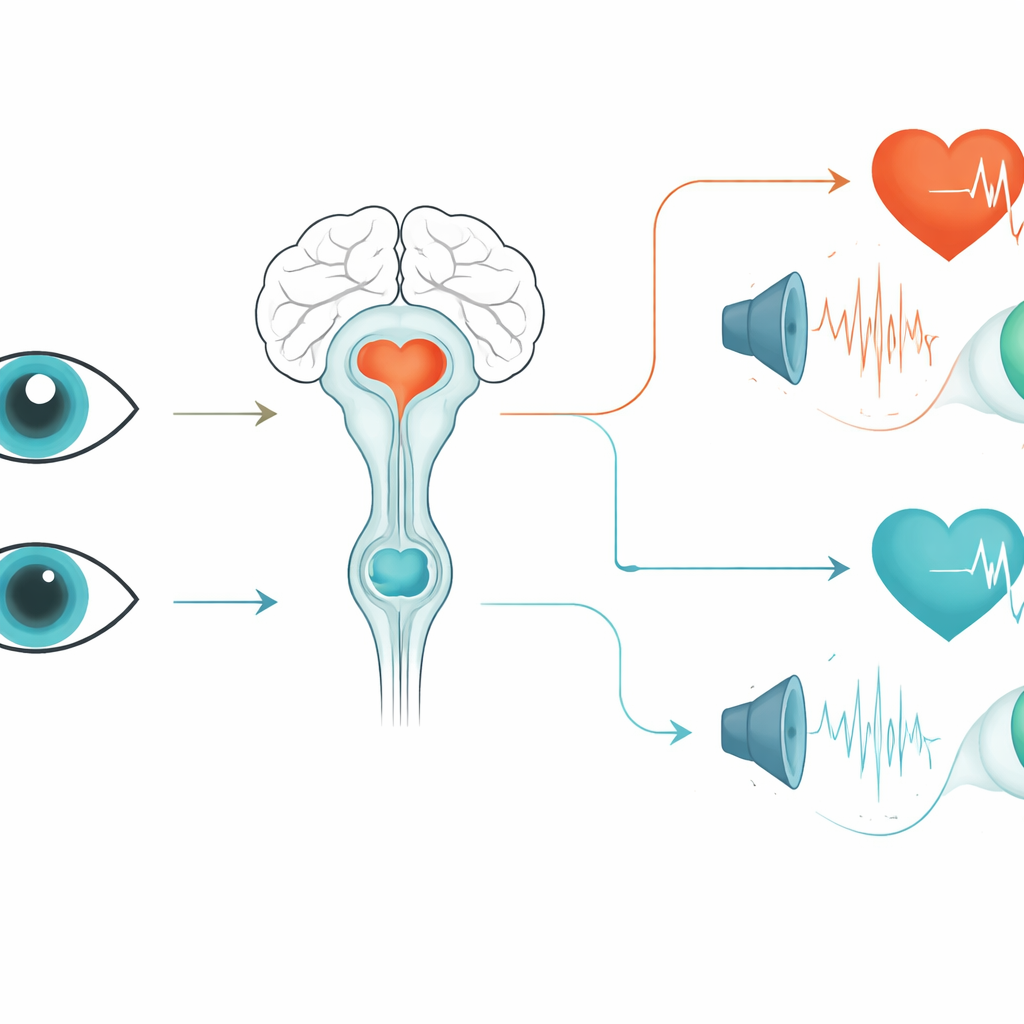
The body’s automatic responses told an additional story. Both negative and neutral sounds caused the pupils to widen, and negative sounds did so more strongly. On top of that, pupil dilation during sound playback was greater when participants were actively trying to raise or lower their pupil size than when they were just listening, suggesting that regulation itself requires effort from the arousal system. However, the heart behaved differently: when participants downregulated their pupils, their heart rate slowed more during the sounds than in the other conditions, indicating a shift toward a calmer, parasympathetic state. This combination—larger pupil shifts associated with regulation effort but stronger heart deceleration during downregulation—suggests that people can engage arousal-related brain circuits in a way that simultaneously promotes bodily calm.
Why This Matters for Stress and Anxiety
This proof-of-concept study shows that training people to control their pupils can subtly shape how strongly they react to emotional sounds and how their bodies respond under stress. While the immediate, moment-to-moment eye control did not transform subjective feelings at the group level, those who became skilled at lowering their pupil-linked arousal felt less overwhelmed by negative sounds and showed heart patterns consistent with a calmer state. For people prone to hyperarousal and exaggerated reactions—such as some individuals with anxiety or stress-related disorders—pupil-based biofeedback may one day offer a simple, non-invasive tool to practice dialing down their internal “alarm system” and soften the impact of challenging emotional situations.
Citation: Imhof, J., Raschle, N.M., Wenderoth, N. et al. Pupil-based arousal self-regulation: impact on physiological and affective responses to emotional stimuli. Transl Psychiatry 16, 191 (2026). https://doi.org/10.1038/s41398-026-03937-3
Keywords: pupil biofeedback, arousal regulation, emotion and stress, anxiety and hyperarousal, heart and brain responses