Clear Sky Science · en
Sintilimab (PD-1 inhibitor) plus lenvatinib as conversion therapy followed by sequential surgery (SILENSES) for advanced unresectable hepatocellular carcinoma: a phase II, expansion trial
Turning an Inoperable Cancer into a Surgical Option
Liver cancer is often discovered too late for surgeons to safely remove it, leaving patients to rely on drugs that can only slow the disease. This study explores a new strategy: using powerful drug combinations first to shrink and tame advanced liver tumors, and then operating once they become removable. For people facing what was once considered an inoperable diagnosis, this approach offers a realistic path toward long-term survival and even potential cure.
A Tough Cancer That Arrives Quietly
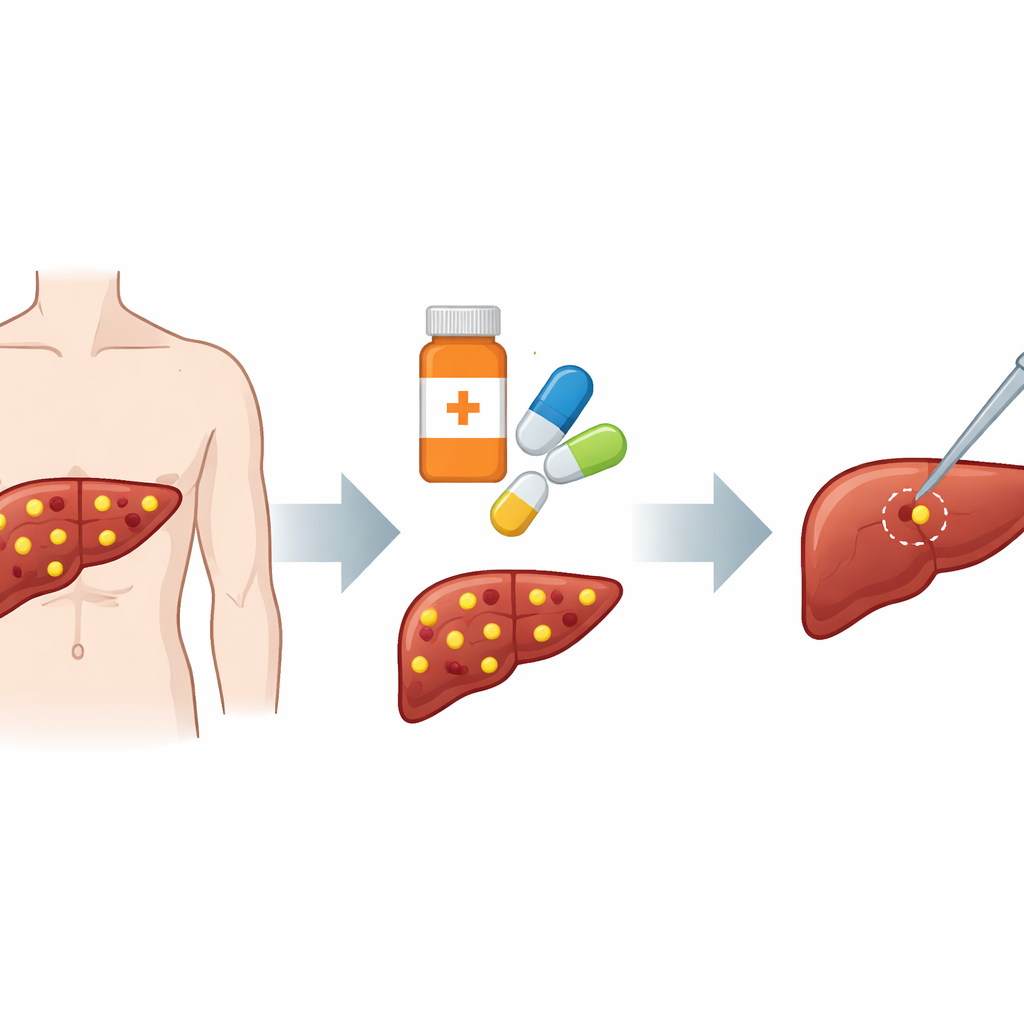
Hepatocellular carcinoma, the most common form of liver cancer, is a leading cause of cancer deaths worldwide and is especially common in East Asia. When caught early, surgery can be highly effective, with many patients living five years or longer. But because symptoms often appear late, more than half of patients are diagnosed only after the tumor has grown large, spread within blood vessels, or reached other organs. At that point, the cancer is labeled “unresectable,” meaning it cannot be safely cut out, and doctors must rely on medicines alone.
A Two-Drug Plan to Make Surgery Possible
The research team tested a combination of two modern cancer drugs in 120 patients with advanced, previously untreated, unresectable liver cancer. One drug, sintilimab, helps the immune system recognize and attack cancer cells by blocking a molecular “brake” on immune cells. The other, lenvatinib, targets the tumor’s blood supply and growth signals. Patients took lenvatinib by mouth every day and received sintilimab through a vein every three weeks. Every couple of months, doctors checked scans and liver function to decide whether the tumors had shrunk and the remaining liver was strong enough to withstand surgery.
From Drug Response to the Operating Room
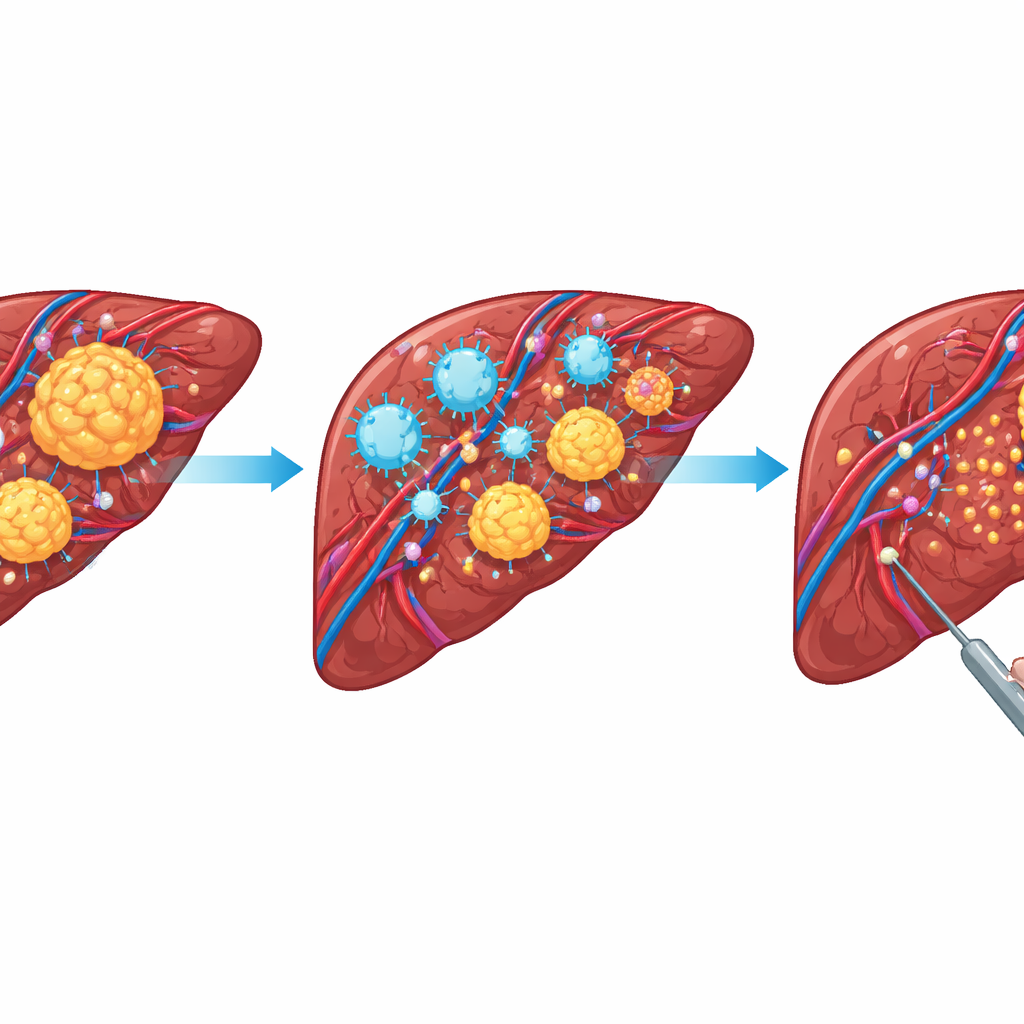
About 56% of patients (67 out of 120) improved enough on this drug combination to be considered suitable for surgery by a multidisciplinary team. Sixty of them went on to have part of their liver removed, sometimes along with tumor clots blocking major veins. Surgeons were able to remove all visible cancer with clear margins in 97% of these operations. When the removed tissue was examined under the microscope, more than three-quarters of surgical patients showed strong treatment effects, and over a third had no living tumor cells left in the main mass.
Longer Lives and Delayed Recurrence
After a median follow-up of nearly three and a half years, half of all patients in the study were still alive at three years, and about 43% were alive at five years. The results were especially striking for those who had surgery: roughly 74% of operated patients were alive at five years, compared with far fewer in the non-surgery group, whose median survival was only about one year. Among surgical patients, the typical time before the cancer returned or the patient died was about 40 months. The depth of response—how completely the tumor cells were destroyed in the removed tissue—strongly predicted both overall survival and how long patients stayed free of recurrence.
Balancing Benefits and Risks
The drug combination was powerful but not harmless. Nearly all patients experienced some side effects, most commonly high blood pressure, skin reactions, and fever. About a third developed severe treatment-related problems, and four patients died from complications such as heart inflammation and bleeding. Surgical complications were less frequent and did not cause deaths, but some patients developed serious postoperative issues. Overall, the safety profile was considered manageable, especially given the significant survival gains in those who reached surgery.
What This Could Mean for Patients
This study suggests that for many people with advanced liver cancer once deemed inoperable, a carefully planned sequence of combination drug therapy followed by surgery can substantially extend life and may offer a shot at long-term control. While the trial was conducted at a single center and did not include a comparison group receiving other treatments, it adds strong support to the idea that shrinking tumors first and then operating can transform outcomes. For patients and families facing an advanced liver cancer diagnosis, this emerging “conversion therapy” strategy may soon become an important option to discuss with their care team.
Citation: Lu, S., Zhang, W., Li, J. et al. Sintilimab (PD-1 inhibitor) plus lenvatinib as conversion therapy followed by sequential surgery (SILENSES) for advanced unresectable hepatocellular carcinoma: a phase II, expansion trial. Sig Transduct Target Ther 11, 167 (2026). https://doi.org/10.1038/s41392-026-02708-2
Keywords: liver cancer, conversion therapy, immunotherapy, targeted therapy, surgical resection