Clear Sky Science · en
Analysis of textile fragments from the 1988 radiocarbon samples of the Turin Shroud
A Cloth That Still Sparks Debate
The Turin Shroud is one of the world’s most famous pieces of cloth, believed by some to be the burial shroud of Jesus and dismissed by others as a medieval artwork. For decades, arguments have raged over its true age, especially after radiocarbon tests in 1988 pointed to the Middle Ages. This article takes a fresh look at tiny fabric fragments left over from those tests, asking a simple but important question: did the laboratories really date original shroud material, or could the samples have come from a later repair or been altered by hidden contamination?
Why the Shroud’s Fibers Matter
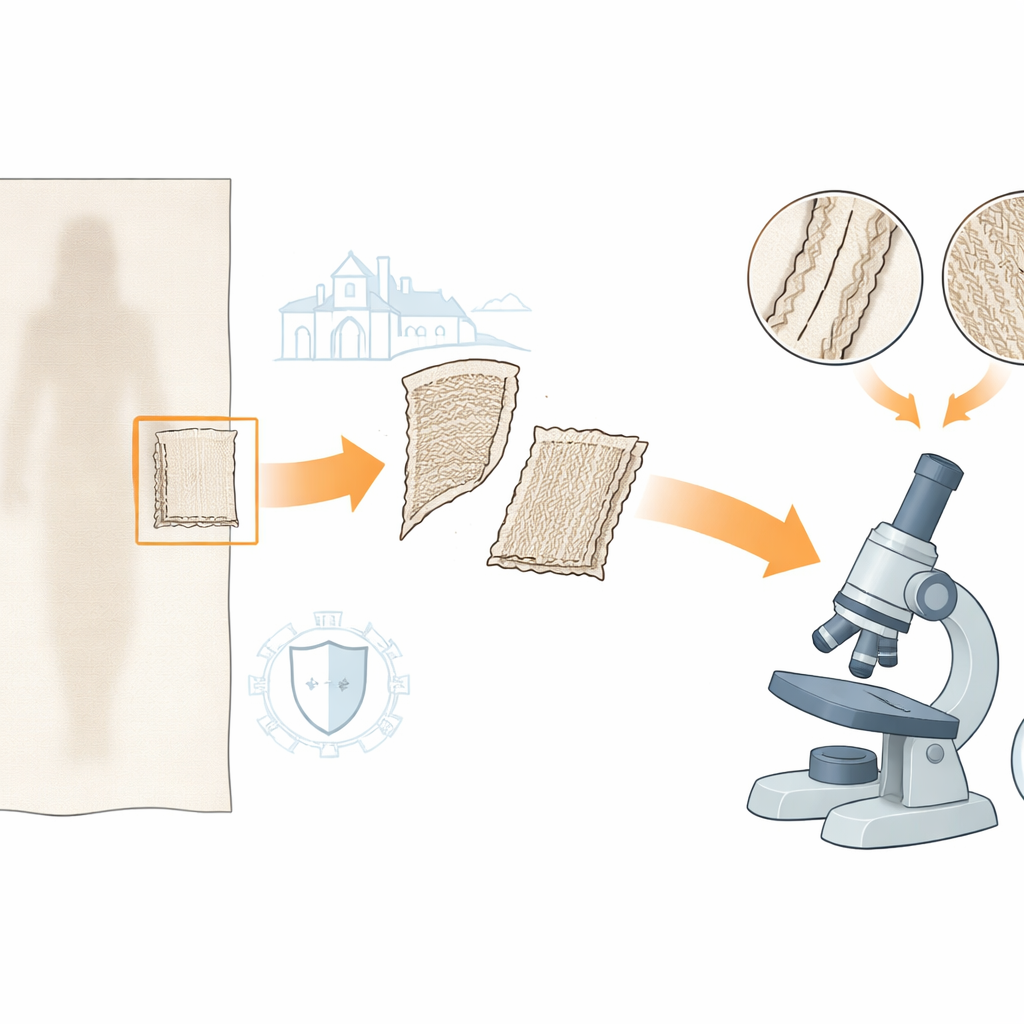
The story begins with the 1988 radiocarbon dating, when three laboratories in Oxford, Zürich, and Arizona analyzed small samples and reported a date range of 1260–1390 CE. That result suggested the cloth was medieval, not from the time of Jesus, and it has been challenged ever since. Some critics claim the dated material was from a later patch, or that smoke, coatings, or other contamination skewed the result. Others argue that high levels of radiation or unusual chemical changes might have distorted the apparent age. The current study narrows the focus to two leftover fragments, A1A and A1B, stored at the University of Arizona, to check whether they truly match the rest of the shroud and whether they show any signs of such hidden alterations.
Looking Closely at Ancient Threads
To answer these questions, the authors treat the fragments like forensic evidence. Using high-powered light microscopes and an electron microscope, they study the fibers, the way the yarns are twisted, and how the threads are woven together. They also compare the shroud pieces with two linen control samples that were dated at the same time in 1988: one from a burial at Qasr Ibrim in Nubia and another associated with an Egyptian mummy. The team checks whether the shroud fragments are made from flax, how fine the threads are, which direction the yarn twist follows, and whether the distinctive “herringbone” pattern reported in earlier studies is really present in these specific slivers of cloth.
What the Microscopes Revealed
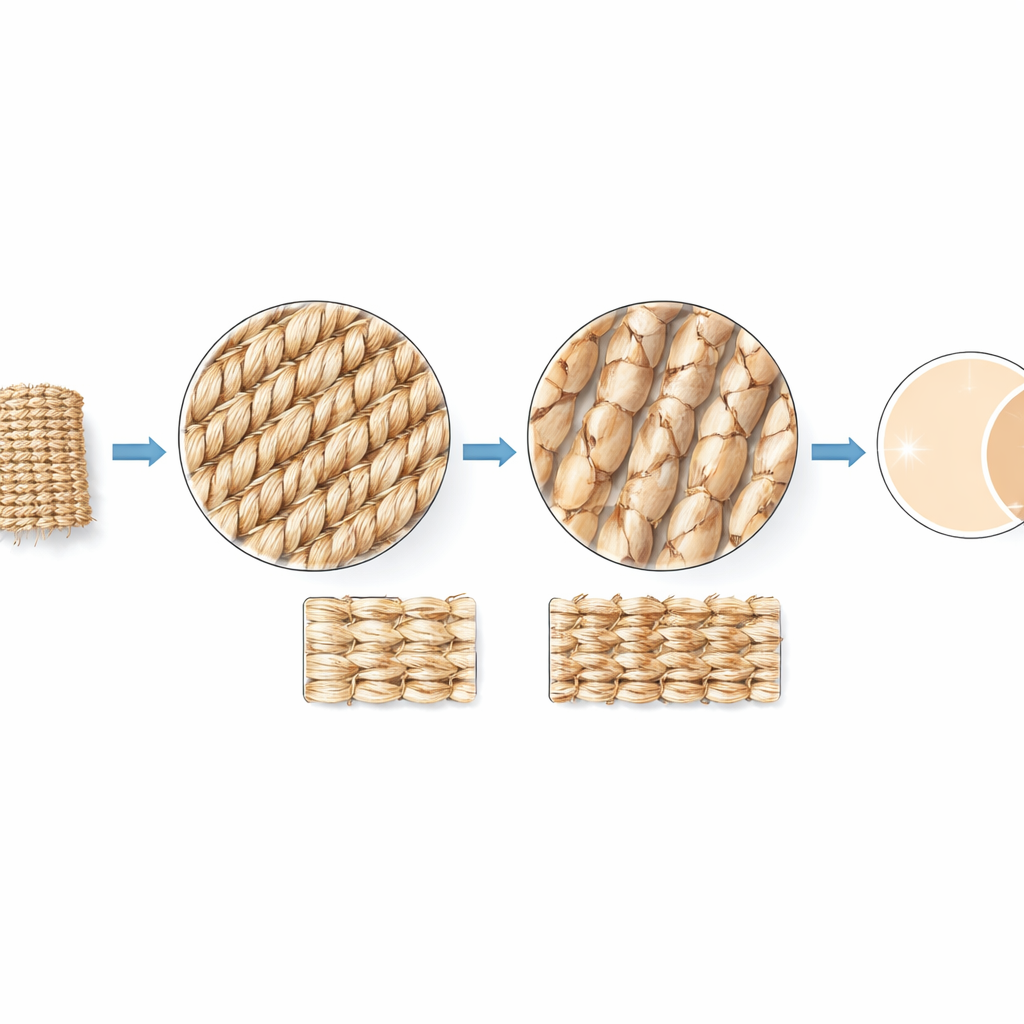
The fibers in both A1A and A1B are confirmed as flax, the plant used to make linen. They show the expected microscopic features of flax and no trace of cotton or other foreign fibers that might hint at a disguised repair. The yarns are spun in a clockwise, or “z,” direction and woven into a dense 3/1 twill that creates the characteristic herringbone effect—exactly what has been described for the main body of the Turin Shroud. Thread counts in the fragments closely match earlier measurements from the full cloth. When the researchers zoom in further with an electron microscope, they see worn, aged fibers with small bits of debris, but nothing like coatings, crusts, or heavy encrustations that could seriously distort a radiocarbon date. In short, these fragments look like integral pieces of the original shroud, not later patchwork.
A Cloth Unusual for Its Time
Comparing the shroud fragments with the archaeological control textiles adds another twist. The control pieces, firmly dated from earlier centuries, are plain-weave linens with lower thread counts and less regular yarns. By contrast, the shroud fragments are more finely spun, more tightly packed, and woven in an uncommon 3/1 herringbone twill. Surveys of historic European textiles show that such high thread counts are relatively rare in early fabrics, and the specific twill pattern is especially unusual in linen. Taken together, these traits suggest a technically advanced and high-quality textile, one that stands apart from the simpler burial linens used as controls.
What This Means for the Shroud’s Age
The study does not redo the radiocarbon dating, nor does it attempt to settle the religious or historical debates surrounding the Turin Shroud. Instead, it tests two pivotal claims: that the 1988 samples were taken from a repair, and that heavy contamination may have made the cloth look younger than it is. The authors find no evidence for either idea. The fragments appear to be genuine pieces of the main shroud with no major contaminating coatings that would have strongly skewed the radiocarbon measurements. At the same time, the textile’s unusual fineness and weave pattern make it a standout cloth for the Middle Ages, and possibly for earlier periods as well. The work therefore supports the technical integrity of the original dating samples, while highlighting how distinctive—and still puzzling—the shroud’s textile craftsmanship really is.
Citation: Freer-Waters, R., Jull, A.J.T. Analysis of textile fragments from the 1988 radiocarbon samples of the Turin Shroud. npj Herit. Sci. 14, 263 (2026). https://doi.org/10.1038/s40494-026-02530-7
Keywords: Turin Shroud, radiocarbon dating, historic textiles, linen fibers, heritage science