Clear Sky Science · en
Selective media exposure and political polarization in a high-choice media environment: evidence from South Korea
Why our daily news choices matter
In a world where news is always at our fingertips, it is easy to assume that more options naturally lead to more balanced views. This study, based on people in South Korea, shows that the opposite can happen. When individuals repeatedly choose news from very similar outlets, their political views tend to drift toward the extremes over time. The research explains how everyday viewing and reading habits can quietly shape the health of public debate and democracy.
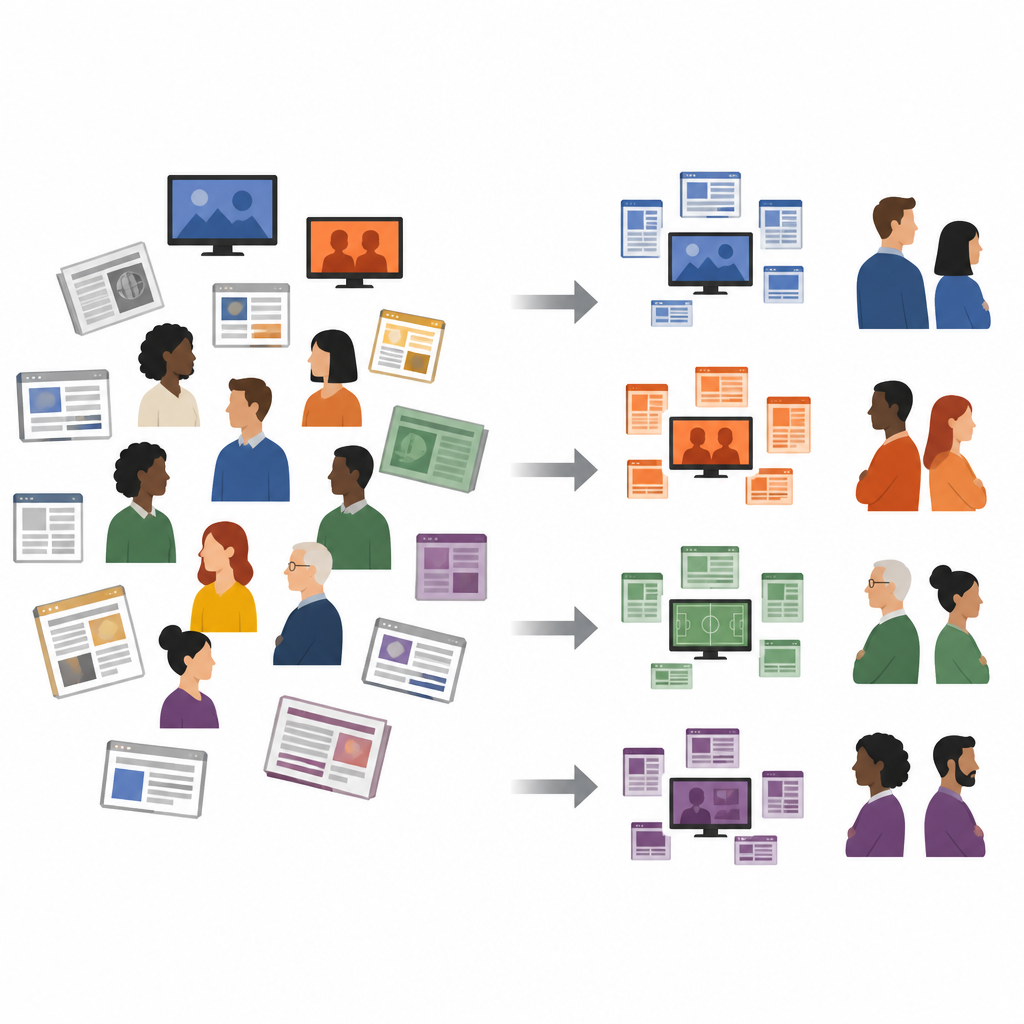
From many channels to personal news bubbles
Modern media offers countless television channels, newspapers, and online news sites. Instead of everyone watching the same evening news, people now build personal mixes of outlets that suit their tastes. The authors call this mix a media repertoire. In South Korea, where news brands are clearly seen as conservative or progressive, people can easily assemble lineups that match their leanings. The study asks whether these personalized lineups, taken as a whole, are linked to people becoming more politically hardened over time.
Measuring how similar someone’s news diet is
Rather than labeling outlets as left or right, the researchers created a new measure called Average Media Relatedness. It looks at which outlets tend to be used together by many people, building a kind of map that shows which news sources are close cousins in topic and outlook. For each person, the measure captures how tightly clustered or diverse their chosen outlets are. A higher score means a more uniform news diet, while a lower score reflects a mix of different kinds of sources. This approach focuses on what people actually use, not just how experts classify outlets.
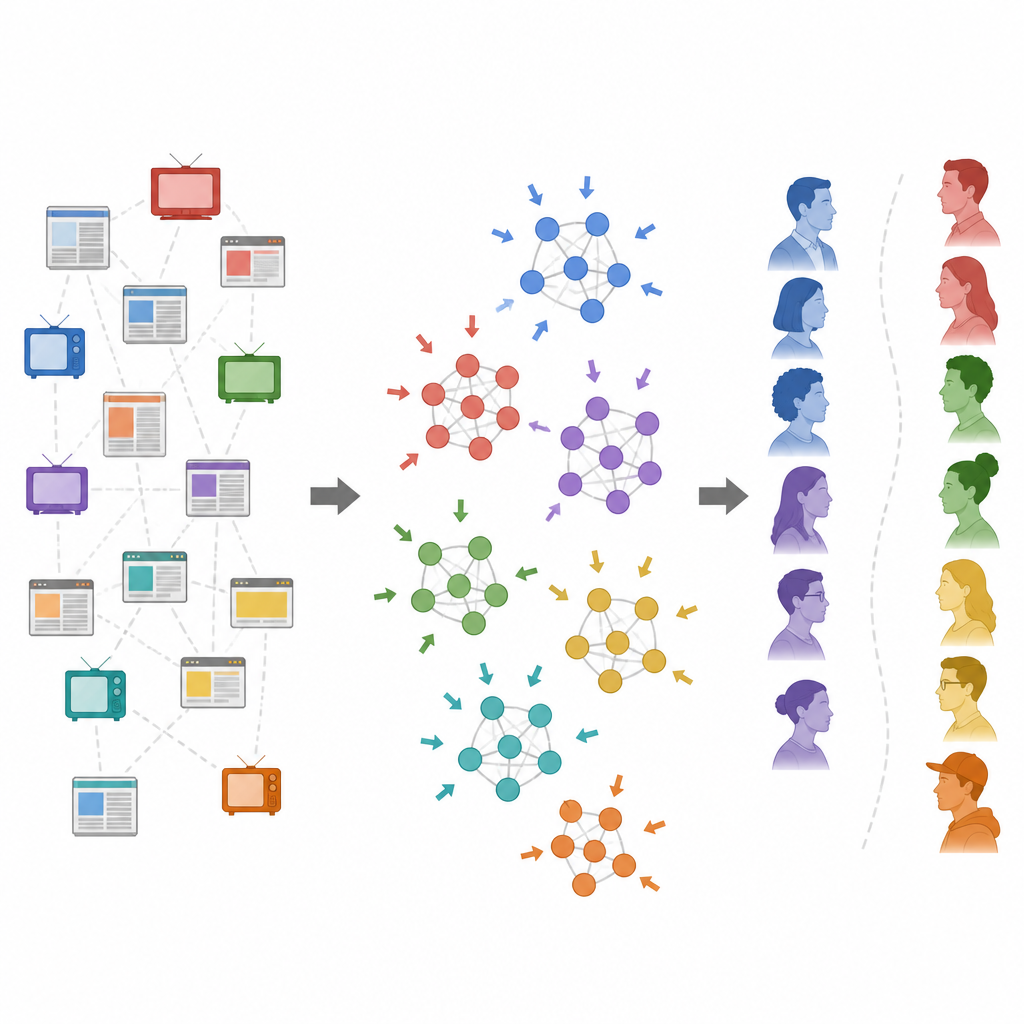
Tracking changes in political views over time
The team drew on survey data that followed the same South Korean adults from 2012 to 2016. Participants regularly reported which TV channels, newspapers, and professional online news sites they used, and in 2012 and 2016 they also rated their own political stance on a simple scale from liberal to conservative. The researchers then calculated whether each person’s views moved toward the political center, stayed the same, or shifted toward the extremes. They compared these changes with how homogeneous each person’s media repertoire had been in the preceding years, while also accounting for factors such as age, education, income, and region.
What the patterns reveal about polarization
The analysis showed a clear positive link between having a highly uniform news repertoire and becoming more polarized. People who mostly consumed outlets that tended to be used together by others were more likely to move toward more extreme positions, compared with those who sampled a wider range of outlets. Demographic factors such as age, gender, and education did not explain this pattern. The result suggests that, even within traditional media like television and newspapers, people can build echo chambers that reinforce their existing leanings.
What this means for citizens and democracy
For nonexperts, the takeaway is straightforward: having more channels and websites does not automatically mean that people hear more sides of a story. If individuals keep turning to very similar news sources, their views can harden, making it harder to find common ground and easier for public life to become stuck. The authors argue that media literacy, tools that highlight the sameness of one’s news diet, and efforts to promote varied outlets could help broaden information worlds. In short, it is not the sheer number of choices that matters most, but how varied the choices we actually make turn out to be.
Citation: Kim, K., Choi, Y. & Lee, C. Selective media exposure and political polarization in a high-choice media environment: evidence from South Korea. Humanit Soc Sci Commun 13, 678 (2026). https://doi.org/10.1057/s41599-026-07034-0
Keywords: media polarization, selective exposure, news consumption, echo chambers, South Korea politics