Clear Sky Science · en
Emotion vs fact: the power of social media news framing in motivating young boycotters
Why online stories can change shopping choices
Young people today get much of their news and opinions from social media, where posts about global conflicts, ethics, and brands spread quickly. This study looks at how emotional and fact based news on these platforms can push Indonesian youth to boycott famous foreign food chains and switch their support to local brands instead.

How social media fuels modern boycotts
The researchers focus on boycott movements, where consumers refuse to buy from certain companies as a way to express their values. Past examples show that boycotts can seriously hurt sales and even close outlets. In Indonesia, online calls to avoid some foreign food brands have coincided with drops in store numbers and staff. For many young people, deciding what not to buy has become a way to show moral or political stands, not just a reaction to product quality or price.
Emotion versus fact in online news
News framing is the way stories are presented to highlight some aspects over others. On social media, this can be emotional, using anger, fear, or sympathy, or factual, stressing data and events. The authors argue that both types matter for boycotts. Emotional posts can grab attention and spark moral outrage, while factual posts can build a clearer picture of a brand’s links to conflicts or unethical behavior. Young users do not passively scroll past this content; they like, share, and comment, helping the news spread and shape opinions of brands.
What the survey of young Indonesians reveals
The team surveyed 328 Indonesians aged 18 to 25 who had seen boycott related content on social media. Using a statistical approach that connects several factors at once, they examined emotional news framing, factual news framing, trust in social media, negative views of foreign brands, positive views of local brands, intention to boycott, and intention to buy local products. They checked that their questions reliably measured each idea before testing how these ideas were linked.
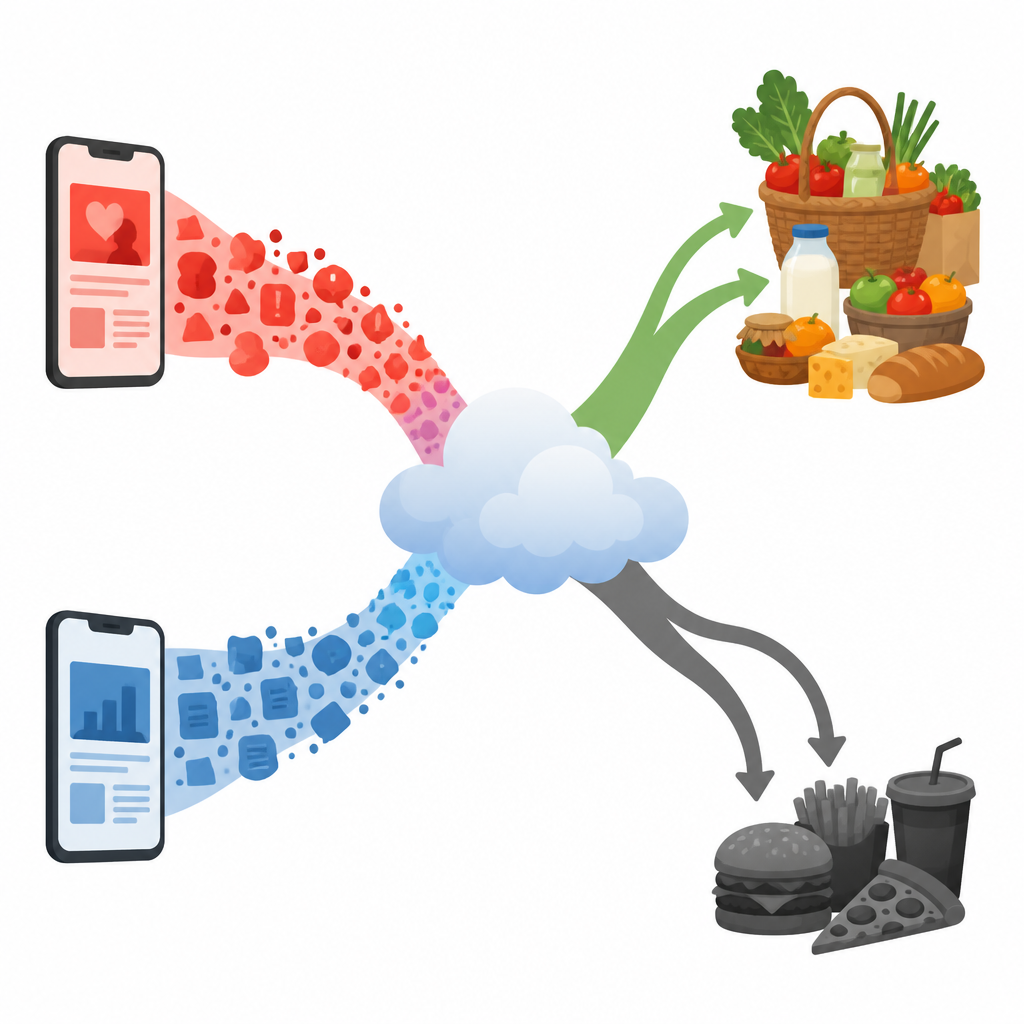
The paths from feelings and facts to action
The results show clear patterns. Emotional news framing strongly increases trust in what young people see on social media and directly raises their intention to boycott foreign food brands. Factual news framing, in contrast, does not directly push them to boycott, but it does increase both trust in social media and negative views of the targeted foreign brands. Trust in social media makes those foreign brands look worse while at the same time improving the image of local brands. A better image of local food brands then leads to stronger plans to buy from them, suggesting that boycotts go hand in hand with a shift toward domestic alternatives.
What this means for brands and young consumers
Overall, the study concludes that emotionally framed boycott news on social media is a powerful trigger for young people to avoid certain brands, while factual posts quietly reshape brand images in the background. Trust in social media does not always turn directly into boycott action, but it does help foreign brands look suspect and local brands look more attractive, nudging purchases toward local products. For companies, this means that monitoring and responding to emotional online stories is crucial, especially when young audiences are involved, while for consumers it highlights how the mix of feelings and facts in their feeds can redirect both their protests and their everyday shopping.
Citation: Sari, D.K., Games, D., Besra, E. et al. Emotion vs fact: the power of social media news framing in motivating young boycotters. Humanit Soc Sci Commun 13, 642 (2026). https://doi.org/10.1057/s41599-026-06987-6
Keywords: social media boycott, news framing, young consumers, brand image, local brands